
From salary delays to farm success: How a South Sudanese father builds a self-reliant future

For years, David Mangok Ador believed his family’s survival depended on a government salary that often arrived months late. As the Payam Administrator of Kuac South and a father of ten, he frequently found himself and his household struggling in the face of uncertainty. But when he encountered a training that challenged how he viewed work and opportunity, David began to realise his future did not have to depend on a paycheck alone.
David Mangok Ador, 37, is the Payam Administrator of Kuac South in Gogrial West County, Warrap State. A husband and father of ten, David once relied entirely on his government salary to support his large household. But the salary was often delayed for months, leaving his family under constant financial strain.
“There were times when life was very hard,” David recalls. “Sometimes my children went to the market just to look for something to eat.”
Although he farmed occasionally, it was only on a small scale and not enough to consistently feed his family or pay school fees.
Everything began to change when he heard about the Empowered Worldview training through the church and local government. The sessions challenged his thinking about dependency and self-reliance.
“The training opened my eyes,” he says. “I realised I did not have to wait for my salary or humanitarian support to survive.”
After completing the training, David began farming seriously with his family. Today, everyone in the household contributes to the work. What started as a small effort has grown into a steady source of food and income.
This year, despite limited rainfall and a shortage of ox-ploughs, David harvested 18 sacks of groundnuts and more than 40 pumpkins, with additional crops still ready for harvest.
“For me, this is more than food,” he explains. “It is proof that self-reliance works. I don’t have to wait for my salary to survive. We have our land and each other.”
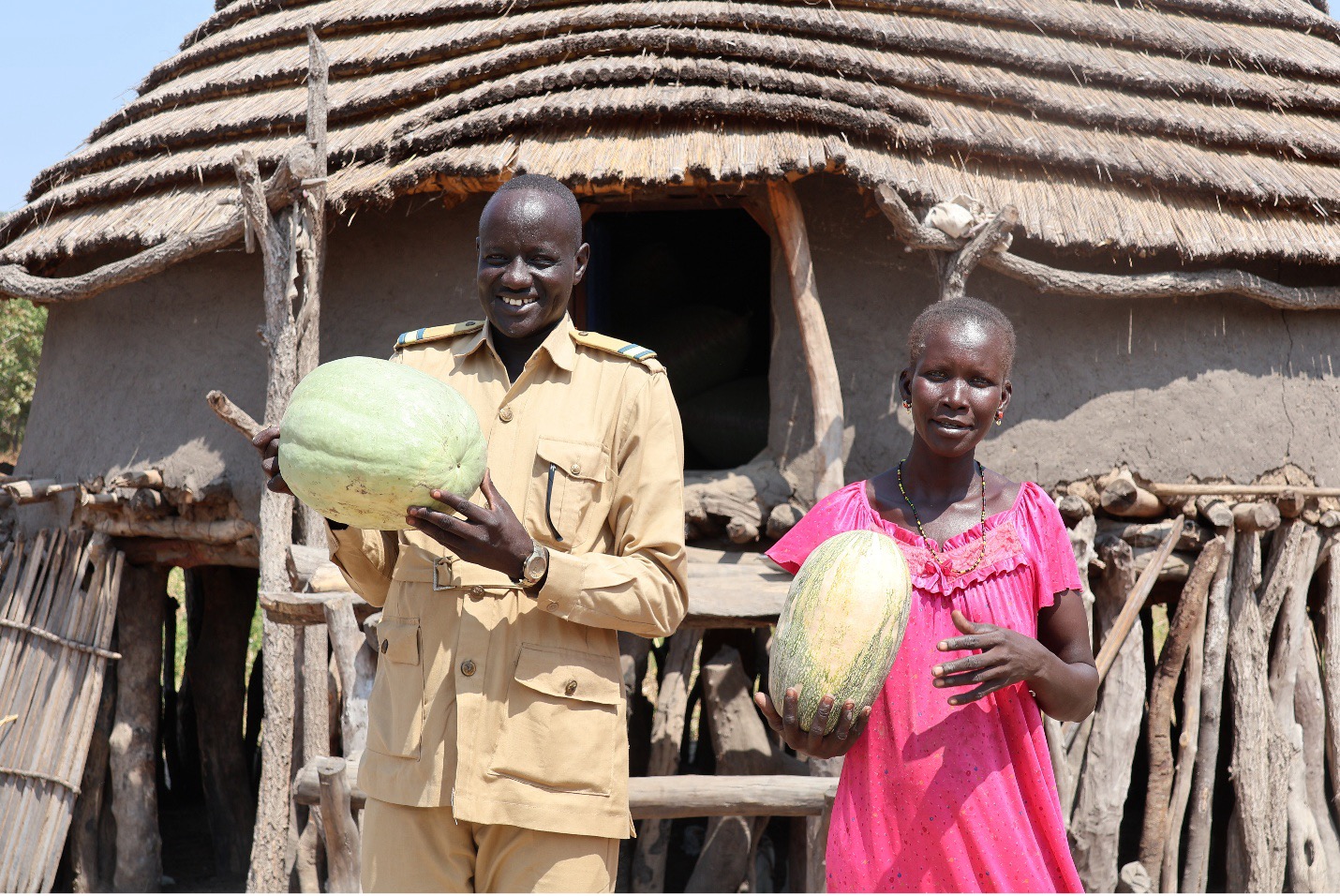
He now pays his children’s school fees on time and ensures they remain in class. Farming has brought stability and renewed confidence to his family.
David says he will continue farming even without external support. “I have discovered the strength of working with what we already have,” he says.
In community meetings, he encourages others to change their mindset about overdependence and to embrace farming and hard work. He believes that if more community members receive the training, they will begin to build their own future rather than wait for aid.
David’s story demonstrates that when knowledge, teamwork, and determination come together, families can rise above uncertainty and create lasting hope.
About Empowered Worldview
Empowered Worldview (EWV) is World Vision’s biblically grounded approach to empowering individuals, faith actors, and communities to drive lasting change. Its goal is to mobilise people’s God-given gifts, talents, and resources — spiritual, social, physical, and economic — to improve sustainable child well-being.
EWV addresses dependency mindsets by promoting dignity, personal responsibility, and initiative. Through a curriculum rooted in biblical principles, participants reflect on identity, hope, and vision for the future, building confidence to take action.
In South Sudan, EWV has helped families work together, start businesses, and create brighter futures for their children.
Story and photos by Stella Inyaa/World Vision