
Syrian father: ‘Our children’s future is worth protecting’

By Sevil Omer and Mohammad Bataineh
Just a year ago, Mohammed Mansor was living a middle-class dream: He had a great job, beautiful home and more than enough money to pay the bills and take vacations.
"We had everything," Mohammed said.
Mohammed's wife, Hanah, stayed in their two-story home in Da'raa, in southwestern Syria, and took care of the kids – a family blossoming to include four daughters and three sons, each busy with play dates and mommy-and-me outings. "Helping my children with homework was the most difficult part of my day," Hanah said with a gentle laugh. "I would try and help them as much as I could, but they knew more."
Mohammed and Hanah spoke to World Vision in October at their Za'atari Refugee Camp home, a collection of tents and trailers, called caravans, in the second largest camp in the world and the fourth-largest population center in Jordan. "We don't want to be here," Hanah said.
They never imagined their lives would be shattered so quickly in the summer of 2012. The family would fear for their lives as they fled the besieged nation, running away with them only the clothes on their backs and memories of friends as they headed on buses and cars to the Jordanian border.
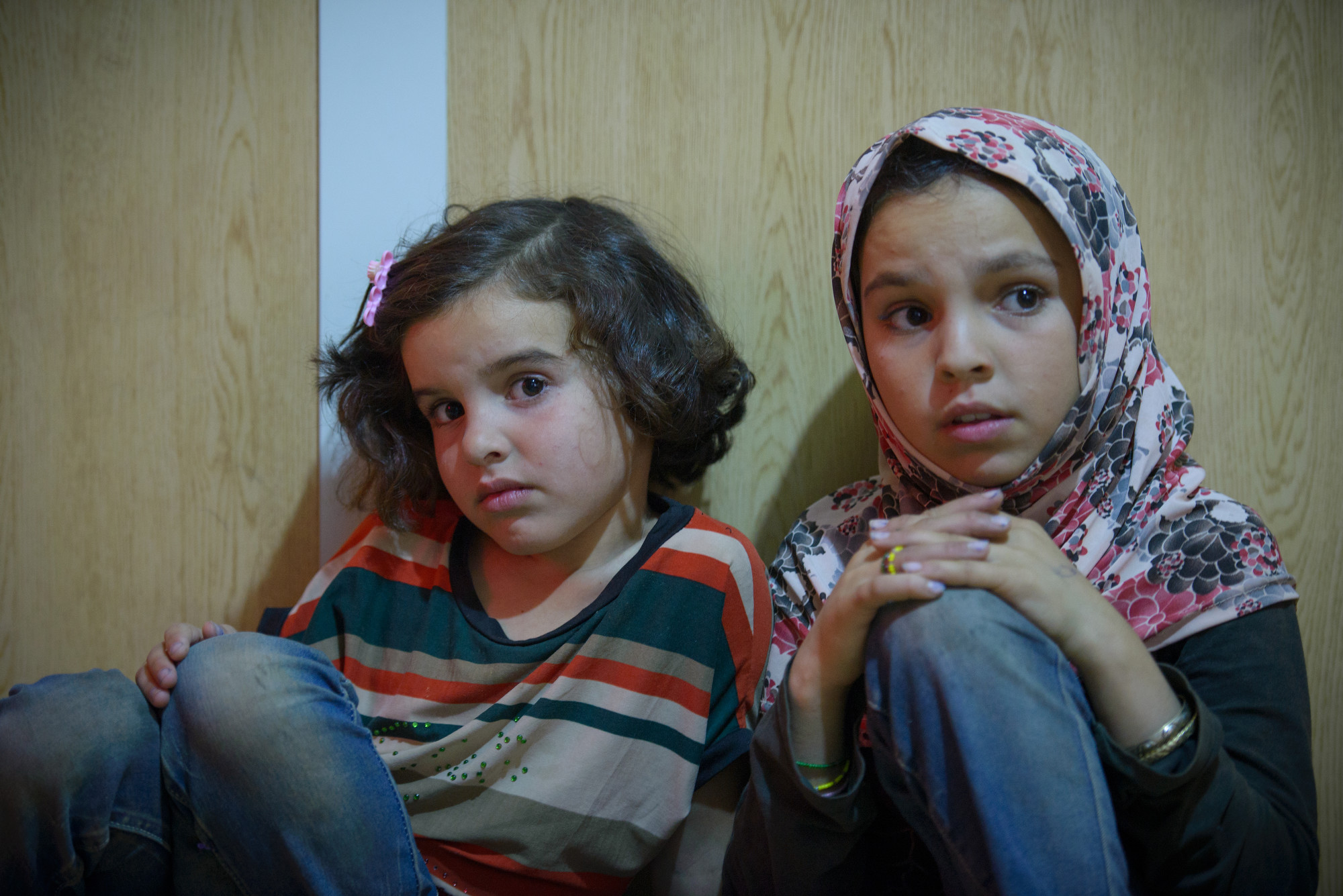
Their eldest daughter, 11-year-old Rama, recalled how she and her siblings stumbled in the dark, "hiking up and down mountains," as they made their way on foot to Za’atari, a journey so harrowing Rama described herself being "so scared I didn’t talk."
Mohammed said: "I will forget everything if I could just go back to my house with my family."
Like Mohammed and his family, no one wants to be here.
‘Disgraceful humanitarian calamity’
More than 3 million Syrians, half of them children, have poured into neighboring countries as refugees, creating what the United Nations called "a disgraceful humanitarian calamity."
Syria's nearly three-year civil war has claimed at least 100,000 lives, including 7,000 children, according to the United Nations. Five million people have been displaced within Syria, and thousands more are leaving Syria every day and heading to Lebanon, Turkey, Iraq and Jordan.
Like Mohammed's family, working- and middle-class families from Syria have fled to Jordan with little or no savings. Families say if they did have money they used for their children's safe passage out of hell. Thousands more are stuck in makeshift camps along the border, each waiting to escape to a place where tensions are growing between refugees and locals.
Resources are scarce and water is even scarcer. Business owners and refugees alike are plummeting into debt. An increasing number of children are turning to the camp streets to find work, whatever it takes to feed their families.
The Jordanian government is coping with the crisis. It is ultimately responsible for Za’atari, where the United Nations High Commission for Refugees is the lead governing agency. Once a camp is opened, there is no way to close it.
Everyone and everything caught up in the Syrian refugee crisis is stretched thin – and it there is never enough.
‘I am afraid for my children’
Za’atari refugee camp is divided into 12 districts, each managed by an appointed community leader or "mukhtar." Mohammed's family was among the first to settle in Za’atari. They live in District One and an aluminum shed away from the busiest part of the camp: the marketplace, dubbed the Avenue des Champs-Élysées.
There are grocery stores, shoe shops, hair salons and even a wedding dress vendor. Restaurants, candy parlors and a pool hall are full of refugees. Mohammed started his own business here, too. He and a friend pooled together their last dinar and bought a TV. They sold it and with the profit bought another and another.
In the refugee world at Za’atari, Mohammed’s home is among the "haves" in this "have-not" existence. The family’s mobile units resemble storage units – sheds to park lawn mowers, store bicycles or stash sporting and recreational gear.
For Mohammed's family, it is where they eat, pray and sleep. It is meticulous and lined with cots distributed to each family registered as a refugee. It is a place where Hanah, who used to have modern-day appliances like a washing machine, now scrubs tarps and their few items of clothing with cups of water. There is electricity, reliable as anything here, and primarily used it watch TV, a lifeline to deadly events back home.
It’s also where the children are safe and study.
"I'm afraid for my children," Mohammed said. He said he created a minute-to-minute itinerary for the children, each with their expected times of departure and arrival from school. "I will make and keep a schedule with their times, to track them coming and going to school. It is a dangerous place. You never know."
‘We all want to be free’
Za’atari’s maze of tents and caravans cover an enormous expanse of sand and rock. Dust devils swirl in the distance. Chain-link fence topped with razor wire protects the mobile units belonging to international aid agencies and distribution sites.
But refugees can come and go.
Rama said there are too many children scrambling up and down the dirty and dusty alleys of the Za'atari camp.
"Children should be in school," Rama said. "I want to ask the parents and their children why they are not in school. School is for their future."
Rama attends one of the three schools at the camp, but feels it is not enough to spark learning. Her father agreed.
“I worry about all the children who are not able to access school,” Mohammed says. “Missing one day is not bad, but one month, one year? They will never catch up. Children are our future, and we all want to work hard for our children’s future. Our children’s future is worth protecting.”
Rama hopes to become a doctor one day, “because I want to help the children who are hurting and in pain.”
Mohammed shared equal measure of hope and trepidation of his family’s return to his country and the future of his homeland.
Mohammed said: "I’m Syrian! I lived with all faiths, Christians, Muslims and Jews. My neighbors are Christians. We cared for each other. They are caring for my house and business while I am here. I would do the same for them because we all want to be free."
World Vision is increasing its presence in Za’atari, where Mohammed’s children have benefited from a recent diaper distribution led by the organization. World Vision was able to distribute diapers to at least 17,000 babies in Za’atari, where most mothers have no income. Mohammed’s family also lives in alley plagued by floods and potholes where World Vision will be doing drainage work this month.
WV’s Mohammad Bataineh in Jordan served as an Arabic-English translator.