
World Vision Syria Response: Adapting Urban and Peri-Urban WASH Programming in Earthquake-Affected Northwest Syria

Following a series of earthquakes in February 2023, World Vision Syria Response implemented an integrated WASH and livelihoods project to restore and strengthen essential water and sanitation services in earthquake-affected urban and peri-urban communities in Northwest Syria. The project operated in a context of protracted displacement, damaged municipal infrastructure, declining humanitarian funding, weak public-service systems, and increasing climate-related water stress. From June 2024 to February 2026, World Vision partnered with Action for Humanity to reach 943,699 project participants, including 20,211 people living with disabilities, across host communities, internally displaced populations, and camp-adjacent settlements.
World Vision rehabilitated more than 15 kilometres of water networks and approximately 11.7 kilometres of sewer networks, restored eight water points and thirteen water stations, installed water storage tanks, and supported the operation of critical pumping stations, along with the Sijjo Wastewater Treatment Plant.
Project impact and lessons learned
Systems-Based Infrastructure: In dense urban and peri-urban areas, WASH services depend on interconnected networks, pumping stations, storage reservoirs, wastewater systems, and power supply, all requiring municipal-level operation and maintenance. As a result, WV prioritised restoring complete service chains, covering energy, staffing, tariff collection, water quality monitoring, and spare parts, rather than isolated infrastructure assets. This was especially critical during the shift from emergency response to recovery.
Coordination in Dense Urban Space: Because urban infrastructure work disrupts access to roads, households, markets, and underground utilities, the project required continuous field supervision and community engagement. This meant coordinating closely with local councils, water directorates, WASH committees, contractors, and the WASH Cluster to navigate narrow streets, build contractor capacity, and secure community acceptance and support.
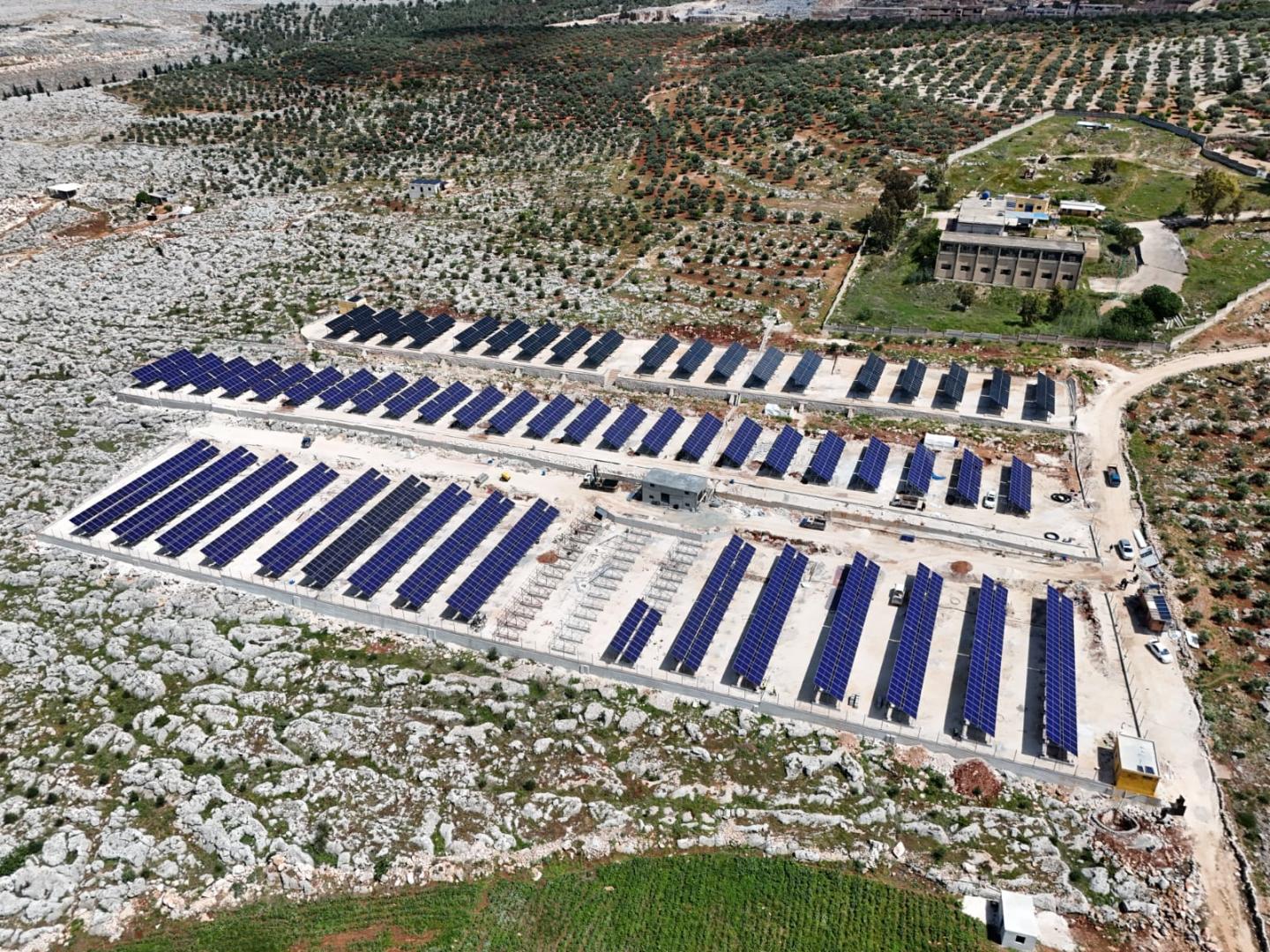
Sustainability Through Renewable Energy and Cost Recovery: To sustain services beyond the emergency phase, the project introduced renewable energy to cut dependence on diesel and unstable electricity, reducing operational costs. WV also developed a tariff-based cost recovery model with communities and local authorities that achieved around 90% beneficiary participation. Community acceptance was essential: households were more willing to pay when service reliability improved, and payment was transparently linked to continued operation.