
Partnering for Community-Level Urban Sanitation, El Salvador

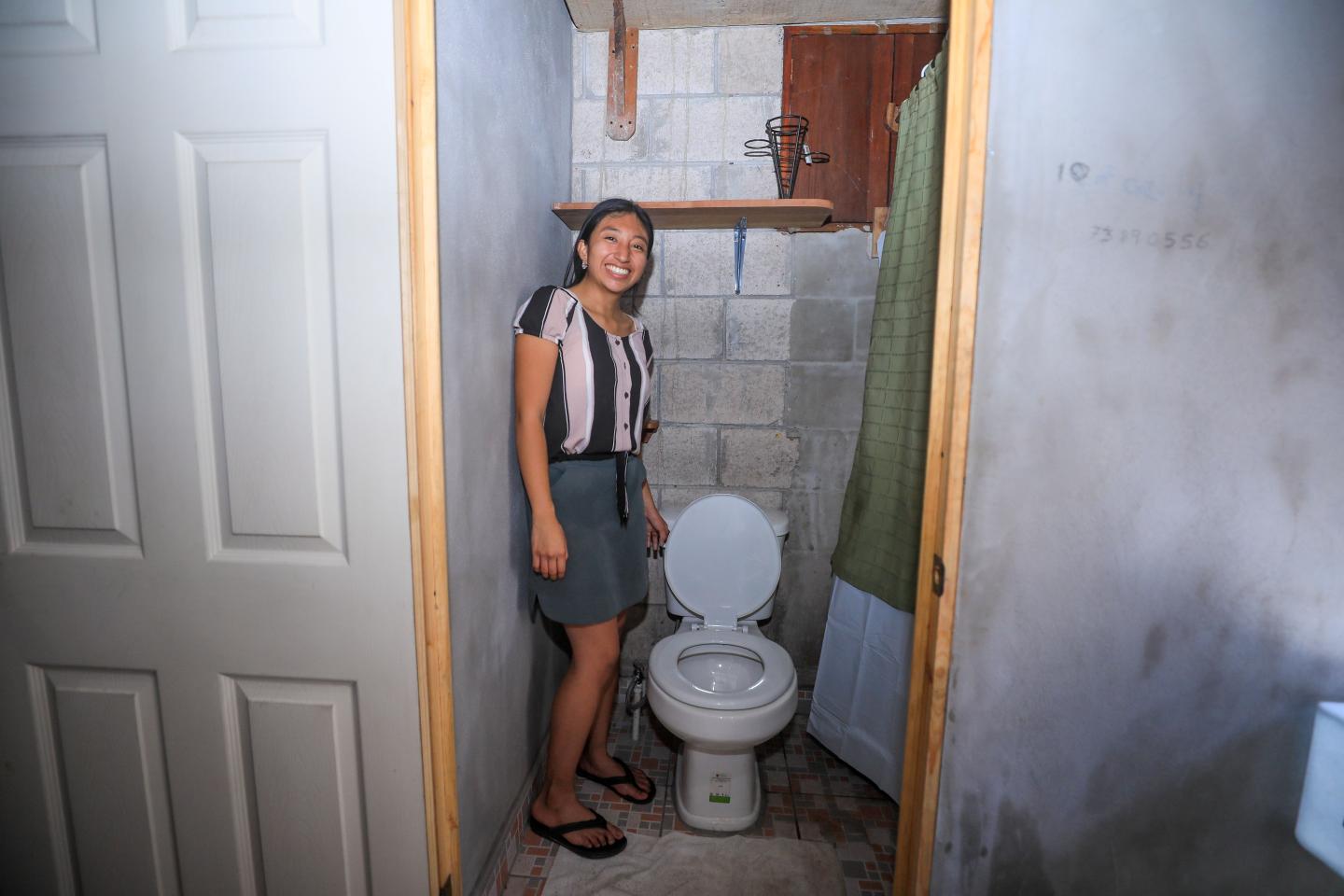
World Vision in El Salvador implemented its first urban sanitation project in Cristo Redentor 2, a community in the district of San Salvador, where for years only 13 overcrowded, unsanitary public toilets served more than 245 people. Completed in October 2025, the project was delivered through a multistakeholder collaboration led by community based organisations/local authorities; Fundación Rafael Meza Ayau (FRMA), together with FUNDASAL, Parroquia Cristo Redentor, and the community development association. Within this collaboration, World Vision contributed community engagement expertise, complementing FRMA's technical and institutional knowledge of the urban context.
Through this partnership, the project installed sanitation services directly inside the homes of 90 families, including in-home sanitary facilities (flush toilets, showers, and sinks), a wastewater collector, an improved vault system for safe excreta disposal, and wastewater drainage wells.
Project impact and lessons learned
Partnership Is Not Optional in Urban Contexts: The formal regulatory environment, technical complexity, and need for institutional relationships make inter-organisational alliances a prerequisite. In urban settings, no single actor can move the project forward alone. In this context, World Vision's entry point was not infrastructure construction itself, but community engagement, social management, and complementing what FRMA brought technically and institutionally.
Sequencing Around Permits and Approvals: Urban sanitation projects require multiple government permits and authorisations, and the time required to obtain these approvals can significantly extend project timelines and affect planning and resource allocation. World Vision's involvement was most strategic when required permits were already secured, or had a high level of certainty of approval, allowing for more efficient investments, better resource planning, and reduced administrative delays.
Urban-Specific Technical Solutions: Solutions like wastewater collectors, drainage wells, and vault systems reflect the technical requirements of dense urban environments, shifting away from traditional rural sanitation options such as pit latrines.
Building on this pilot, World Vision El Salvador, in continued partnership with FRMA, is developing a second urban sanitation project for 2027, aiming to replicate and scale the model in another San Salvador community.