
Urban Inclusive WASH Project, Burkina Faso

The current trend of conflict-based displacement in Burkina Faso has been from rural to urban areas, and by March 2023, more than 2 million people were internally displaced, losing their land and livelihoods. In response, World Vision in Burkina Faso piloted an inclusive urban WASH project in the urban and peri-urban area of Ouagadougou from December 2023 to September 2024. This project was designed to reach children, internally displaced people, and host households together by extending WASH access through shared infrastructure at the community and institutional level.
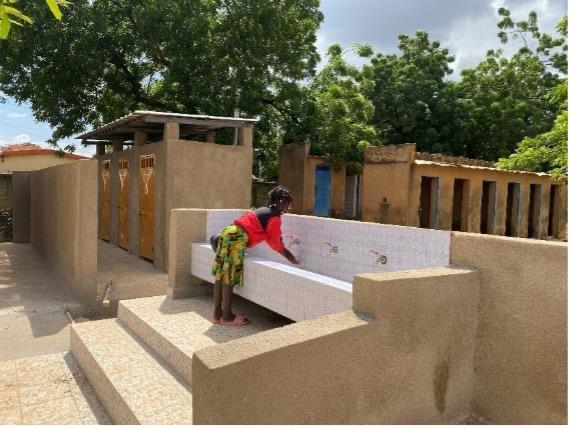
To address the needs of the most vulnerable, this project intentionally focused on building disability-inclusive WASH infrastructure, including three disability-friendly latrines and two accessible handwashing stations with taps, handrails, and ramps. At the community level, menstrual dignity kits were distributed to 237 vulnerable women, including 77 girls, and, at the school level, four school WASH clubs were formed and trained on maintaining school WASH facilities, menstrual hygiene management, and safe hygiene practices.
In total, the project reached 22,677 participants, including 14,552 children.
Project impact and lessons learned
Community Cohesion and Support for Latrines: Nearby residents who lacked latrines vandalised and used the newly constructed school latrines, prompting World Vision to conduct awareness-raising activities with community leaders and teachers to encourage the local community to respect their intended purpose. Engaging the broader community in planning and implementation is essential where there are competing needs, as continuous community involvement fosters ownership and prevents vandalism.
Addressing Infrastructure Needs Beyond WASH: Although the project identified WASH needs at the Songdin Healthcare Centre, World Vision found that any WASH intervention there would not achieve its intended impact, as critical infrastructure such as perimeter fencing, waste management systems, and safety measures were missing.
Sustainability through Capacity Building: Along with rehabilitating boreholes in communities and schools, the WASH team focused on building community capacity to maintain and manage these systems with 10 Water User Associations. In the urban context, these associations should work closely with local (urban/water) ministries to help manage the long-term issues that can arise.