
Working Together to stop Human Trafficking

For a whole week, between October 14 and 18 Iasi and Vaslui Area Development Programmes (ADPs) of World Vision Romania organized various activities to raise awareness about human trafficking, including: a photography exhibition, informational sessions, film presentations, debates and a flash mob in each of the three urban areas in which Iasi and Vaslui ADPs operate: Iaşi, Negreşti and Vaslui as well as in three rural communities belonging to the community development programme, “A Better Future for Our Children” from Vaslui. Together, more than 300 students participated in the urban events and more than 80 parents from the rural villages were been present at the meetings. None of the events would have been possible without the support of more than 80 student volunteers.
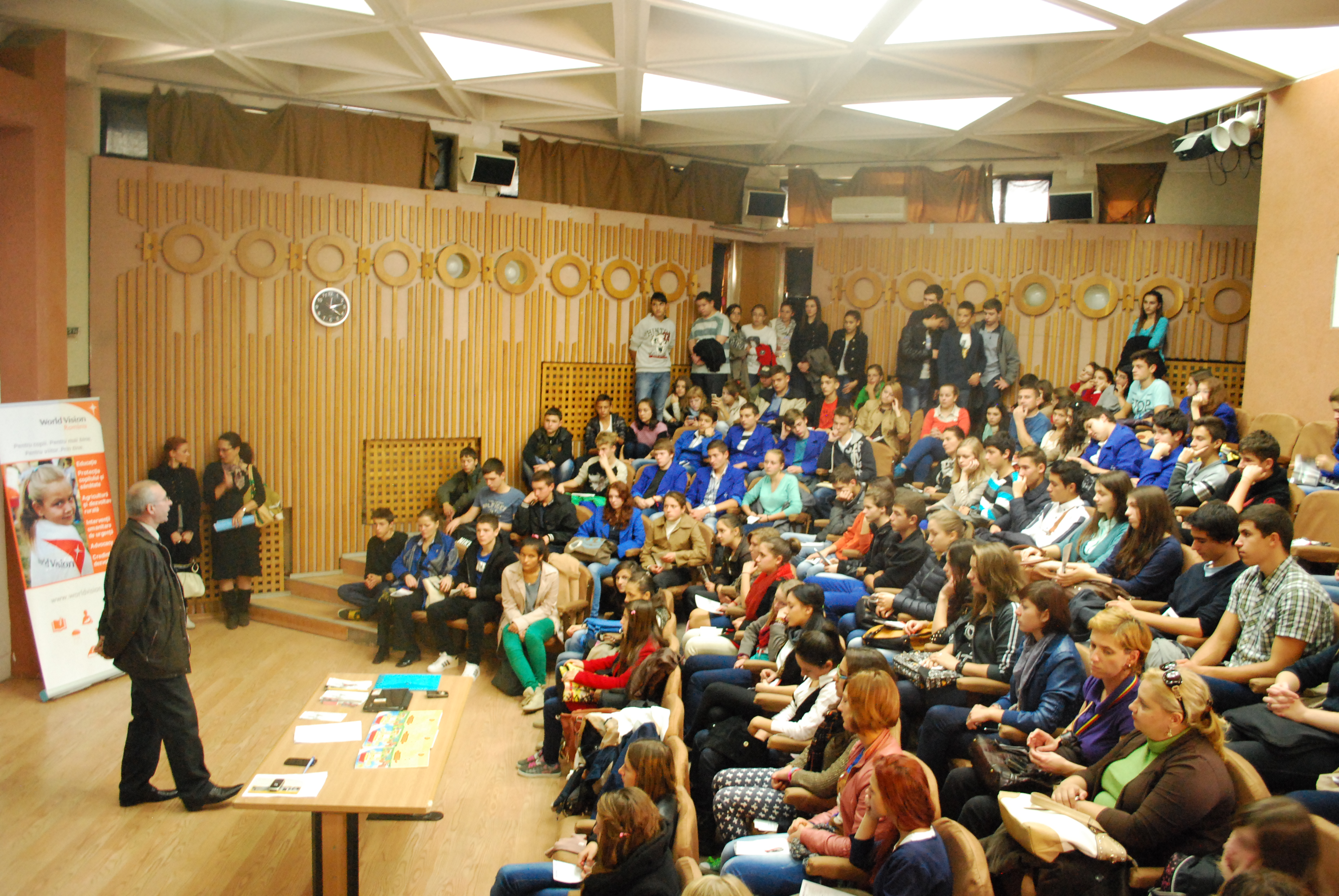
Each urban event brought together more than 100 children who were educated about the risks and possible consequences of human trafficking. What made these events different from other similar events in the past was that it was the children who delivered the information. Lucia Prisecariu, 14; Adrian Chrioşcă, 17; Luana Ipate 17, and Alexandra Nică 17, are all members of the World Vision’s A.R.T. Group. They helped design the activities, assisted by the members of the National Agency against Human Trafficking.
Afterwards, all the children were invited to see the short movie, "To end Human Trafficking," produced by World Vision. All of the sessions ended with a debate moderated by the representatives of the National Agency against Human Trafficking.
“Even if at first I thought it was going to be very difficult to talk in front of a large group of people, once I got started everything became more simple. It has been a real relief when I met students and I noticed that they were all our age. In the end, I can say that everything went surprisingly well,” said Adrian Chiroşcă, 17 years old.
One specific moment that left an impression on all of the children was the testimony of one human trafficking victim, as they shared with the National Anti-Trafficking Coalition. This is their test
At the same time, three photo exhibitions took place: at the Palas Mall of Iassy; the Silver Mall of Vaslui, and in the park of Negreşti. Some of the photographs on display were taken by the children of A.R.T. Group as part of the Photovoice trainings, which happened during July, 2013, to show how poverty is the main cause for human trafficking. Other photos were from a similar training that took place two years ago in Costuleni, Iassy, as part of the “Tell Your Story to the World” project.
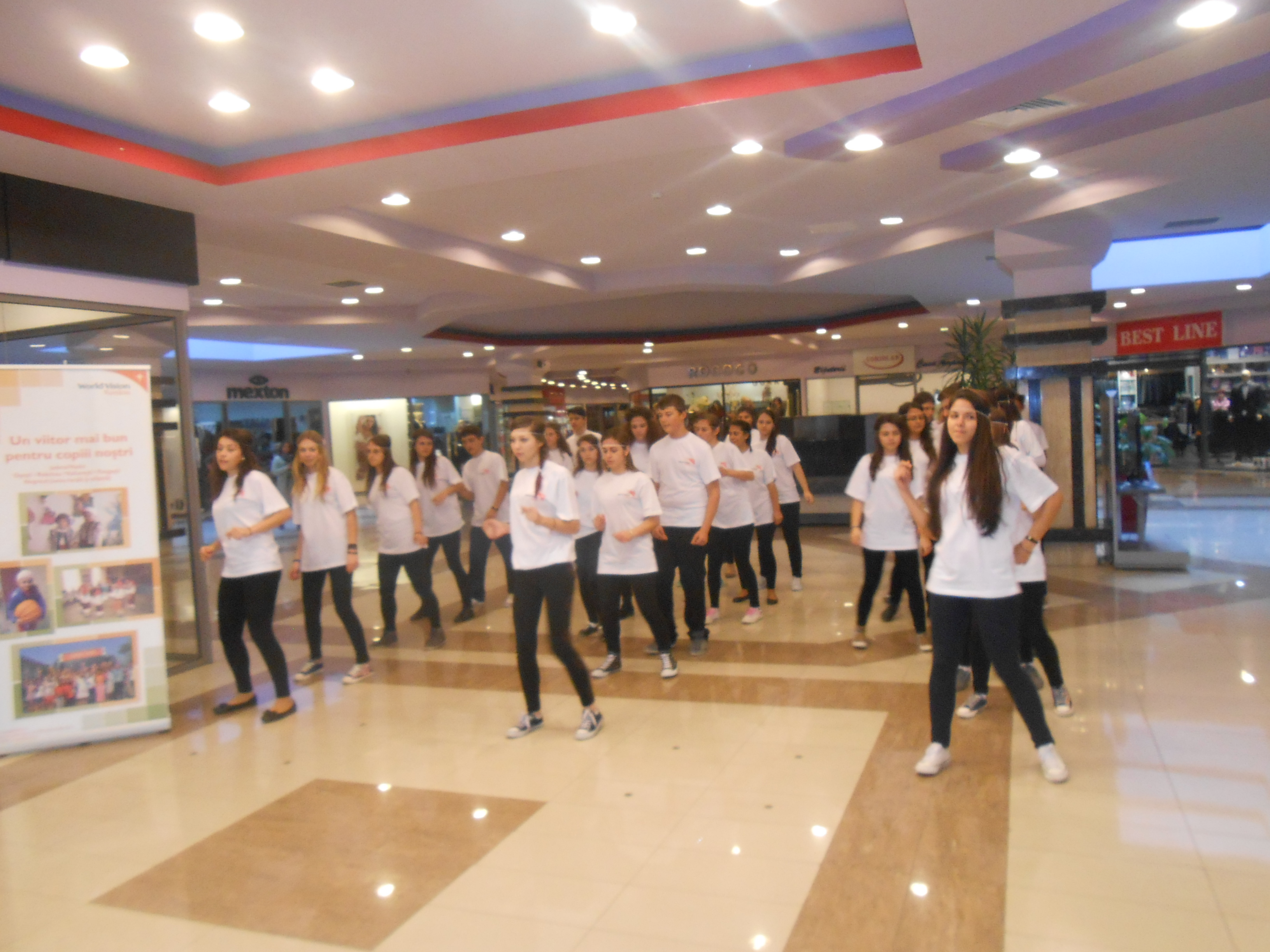
At the end of the week, on October, 18 – The European Day against Human Trafficking-- three simultaneous Flash mobs took place in Iaşi, Vaslui and Negreşti. Eighty children from the National Arts College, Octav Băncilă, and Nicolae Iorga high had the opportunity to use their dancing talents and special aptitudes for a good cause: increasing awareness about the risks of human trafficking.
“We wish to thank World Vision for giving us the chance to get involved and to use our talent in such a surprising event, aimed at raising awareness towards human trafficking. We are glad that we too, pupils from the National College of Arts, have had the opportunity to mark the 18th of October – The European Day against Human Trafficking,” said Dana, a dancer in the 10th grade.
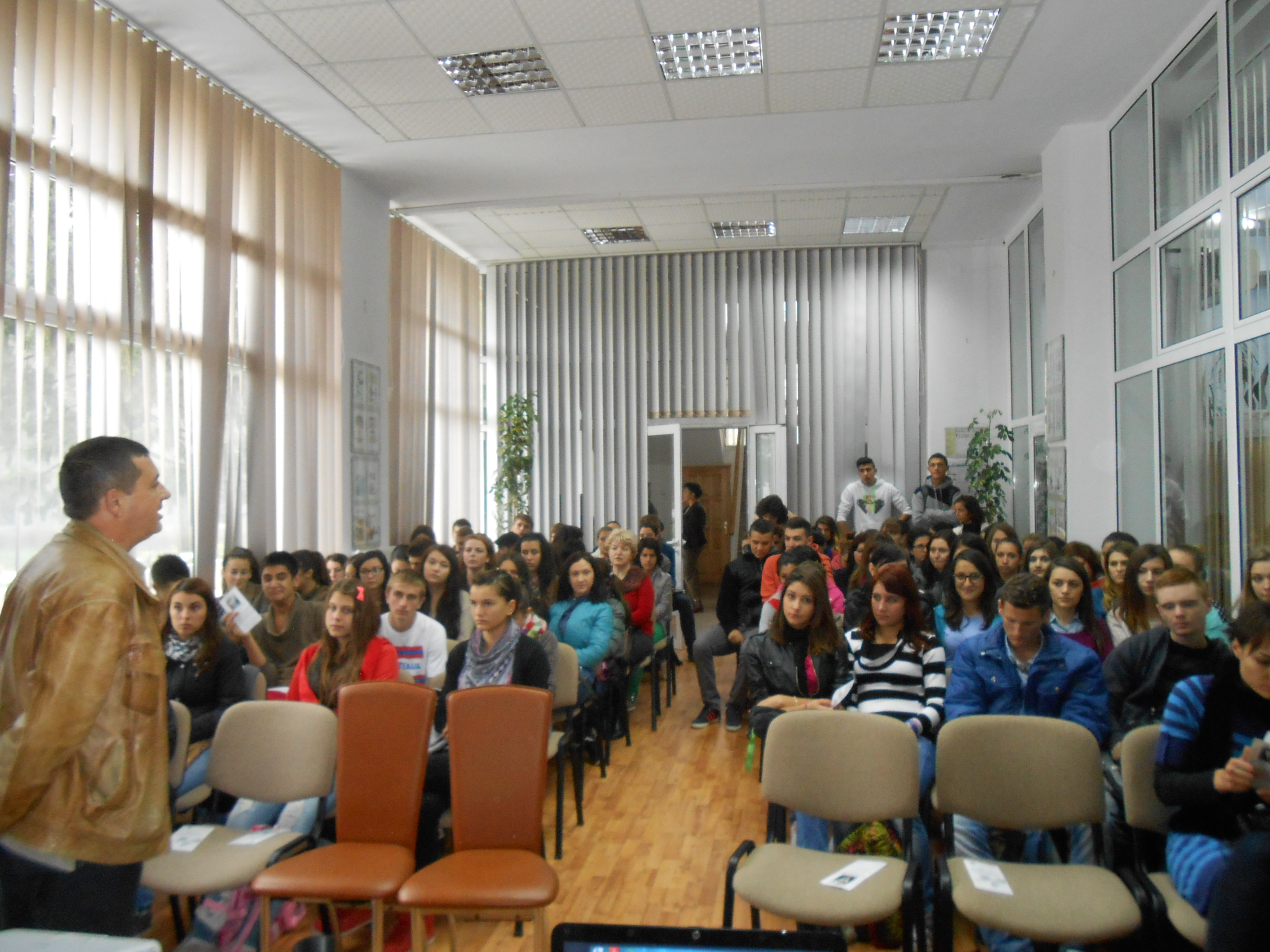
While other events were happening World Vision staff also organized three informational sessions for parents in rural areas. More than 80 parents participated in the meetings. World Vision staff and representatives of the General Direction for Child Protection and Social Assistance educated parents about human trafficking and engaged them in a debate. The information sessions were completed by watching Nefarious, a film about human trafficking.
“In order to prevent human trafficking, it is important for us to pay attention and to communicate more with our children. We have learned that in these situations, it is far better to prevent something from happening than to deal with the consequences of the situation,” said one mother who participated in the session.
“Very seldom do my children hitch-hike in order to get to school. At this meeting I understood how dangerous that is. I also learned about the institutions from which I can get more information if a certain company is safe for working abroad or not. I have learned that we need to be precautious and to double check all of the information,” added the same mother.
“The majority of victims of human trafficking come from the rural environment. In order to prevent these situations, we need to work to establish partnerships at the civil society level as well at a local authority level,” said Magda Cămănaru, Manager of ADPs Iasi and Vaslui.
“Starting from 2009, World Vision has initiated the community development program “A Better Future for Our Children”. Most of the activities have developed in rural communities and through the sector of civil society and children monitoring, we have signaled the cases found at risk. Through the A.R.T. Group, we have used children as a resource, the only ones who can reach easier to the heart and mind of other children,” she added.
According to the National Agency against Human Trafficking, in 2012, 1041 cases were identified, 554 of whom were trafficked during the last year. The gender distribution shows that 69 per cent of the victims are females and 31 per cent are males. The medium age of the trafficked victims was been 23, but most of the trafficked girls are 17.
“Both Iaşi and Vaslui are among the counties with the highest rate of victims of human trafficking in the area of sexual exploitation as well as working exploitation. As a general rule, there is an increasing number of victims,” said Vasile Dron, Chief of the Regional Center of National Agency against Human Trafficking, part of the Ministry of Internal Affairs. “It is enough reason for us to have informing and preventing activities in communities, schools, parental meetings, local authorities.”
The rural events have been assisted by the participation of representatives from the General Direction of Social Assistance and Child Protection. On October 18 – the European Day against Human Trafficking reached its first objective: bringing together representatives from civil society, local authorities and state institutions.
“Starting in 2007, we have developed special services for victims of human trafficking: a residential center and a permanent service that deals with emergency intervention for such cases,” said Beatrice Vlad, vice president of the General Direction of Social Assistance and Child Protection. “In order to be successful, preventing human trafficking is not just a governmental responsibility but also a common and coordinated effort with the support of non-profit organizations,” she concluded