

Handing Over the Future
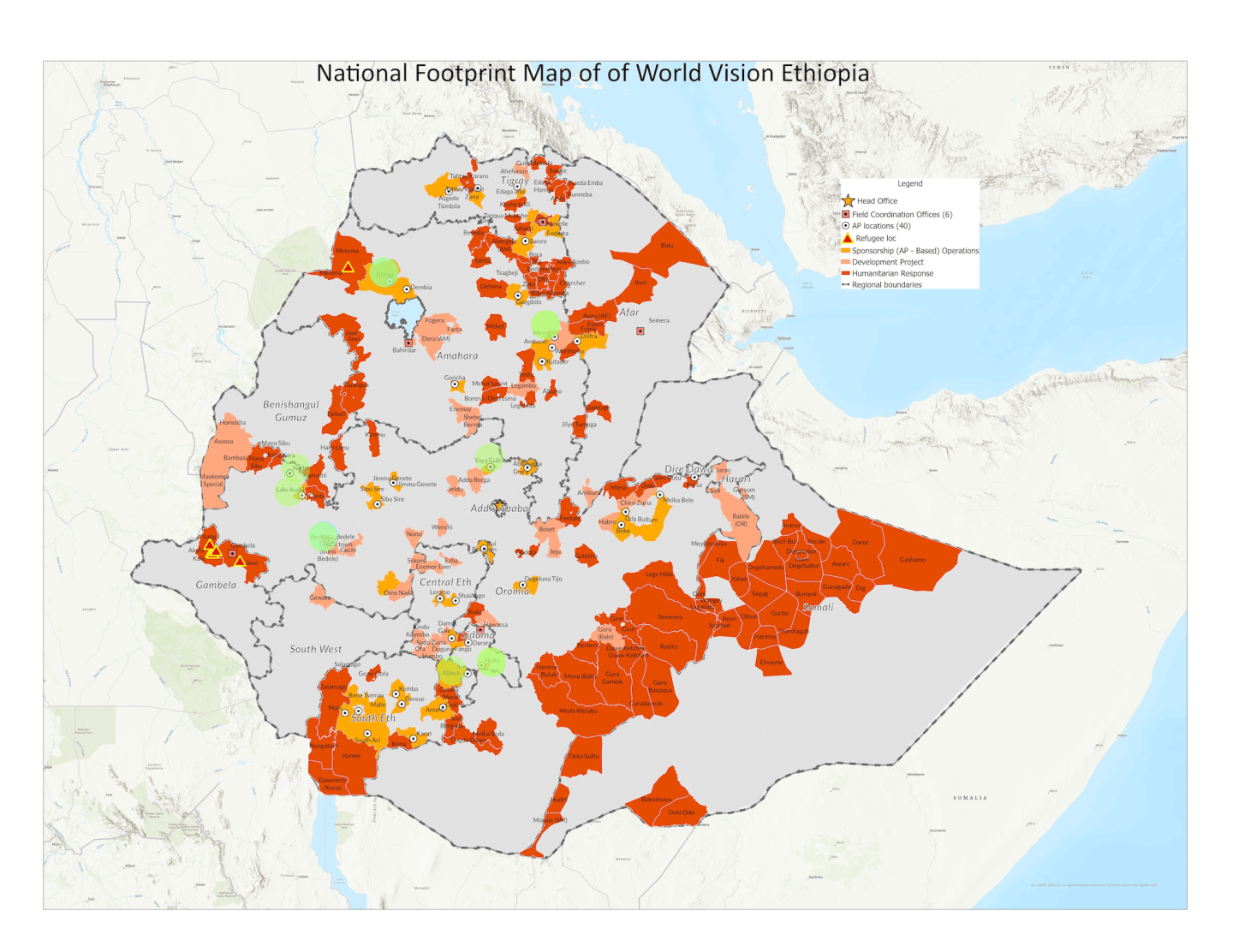
After years of working alongside communities, World Vision Ethiopia is transitioning out of these areas and handing over eight Area Programmes to the local community, partners and government to continue building these as woredas fit for Ethiopia's children.
Programme handover means responsibility moves increasingly into local hands. It is a moment to recognise what communities, partners and local institutions have built together and look towards what comes next.
Since 2005, World Vision Ethiopia has been implementing integrated development programmes in Lalo Assabi (2005), Hula (2007), Mersa (2008), Nedjo (2008), Yaya Gullele (2008), Abaya (2009), Bedele (2010), and Chilga (2012). Working alongside communities, government institutions, sponsors, and local partners, these eight Area Development Programmes (ADPs) addressed the interconnected drivers of child vulnerability through integrated interventions in education, health and nutrition, water, sanitation and hygiene (WASH), livelihoods, child protection, resilience, and community development. Through this holistic approach, the programmes helped children survive, learn, be protected, participate, and thrive while strengthening the local systems and institutions needed to sustain long-term development gains.
Collectively, the eight ADPs reached 1,056,607 people, including 669,250 children, through an investment of approximately US$91.7 million. Beyond expanding access to education, health services, safe water, livelihoods, and protection, the programmes strengthened household resilience, empowered communities, and reinforced local systems to lead their own development. Through sustained investments in local institutions, community structures, and partnerships, the programmes fostered greater local ownership and laid a strong foundation for sustaining impact. As all eight ADPs transition in September 2026 through a planned handover to communities, local institutions, and partners, they are continuing the journey toward healthier, safer, better-educated, and more resilient children, families, and communities.

Clean water keeps his dreams moving
"Now I can wash, drink, and return to class refreshed. Football is more than a game. It is my dream."- Bruk, 15
Mersa AP, located in Habru District of North Wollo Zone, Amhara Region, began operations in 2008 with support from the World Vision US Support Office. Over the last 18 years, the programme has reached more than 199,076 children and families through a funding portfolio of more than US$13 million. Through flagship initiatives such as the Integrated Livelihood and Nutrition Security Project (ILNS) and Integrated Water, Sanitation and Hygiene (I-WASH), alongside interventions in education, health, nutrition, and child protection, the programme has helped transform the lives of children and families. These investments strengthened household resilience, improved access to essential services, enhanced child well-being, and empowered communities to create a safer and more prosperous future for their children.
Building on nearly two decades of progress, World Vision Ethiopia is implementing a structured handover that transfers responsibility for programme achievements to communities, local institutions, and partners. By strengthening local capacities, systems, partnerships, and accountability mechanisms, the transition reinforces local ownership and supports sustaining impact. Guided by sustainability benchmarks and demonstrated local readiness, it ensures that communities can continue the journey of improving child well-being long after programme closure.

Choosing education over early marriage
“I was shocked… If I had been married, I would have lost my education, my dreams, and my future. It was like saving my life. I have already married the best thing that helps me grow, and that is my education.”- Agigniche, 15
Chilga Area Programme (AP), located in the Central Gondar Zone of the Amhara Regional State, began operations in October 2012 and, over the years, invested approximately US$10.8 million to reach 135,080 people, including 102,364 children and 32,716 adults, through integrated interventions in education, child protection, health and nutrition, WASH, livelihoods, and community strengthening. These investments expanded access to essential services, strengthened household resilience, improved child well-being, and contributed to tangible and lasting development gains.
As Chilga AP transitions through a planned handover in September 2026, World Vision Ethiopia is strengthening local ownership and reinforcing local systems to sustain impact beyond programme closure. Guided by achieved results, sustainability benchmarks, and demonstrated stakeholder readiness, this transition ensures that communities and local institutions can continue the journey toward lasting well-being for children and families.

Turning bread into a future
“The problems I went through are countless… I plan to transform this bread house into a cafeteria. I have everything now. Moving forward is a must.”- Bilise, 26
Lalo Assabi AP, located in the West Wollega Zone of Oromia Regional State, began operations in 2005 with support from World Vision Germany and France. Over 21 years (2005–2026), the programme reached 91,736 people, including 52,424 children, through an investment of US$13.5 million in Education, I-WaSH, ILaNS, CESP, and CPP. By addressing the interconnected drivers of child vulnerability, these investments helped children learn, survive, be protected, and thrive, expanding access to quality education and clean water, strengthening household food security and nutrition, and creating safer environments for children. Its most enduring achievement, however, is the stronger families, community ownership, and local systems now positioned to sustain these gains and carry the work of child well-being forward.
The transition of Lalo Assabi AP focuses on strengthening local ownership and continuing the journey of development through community-led systems and partnerships. Through a deliberate transition and handover process, World Vision Ethiopia is strengthening local capacities and reinforcing systems and networks built over two decades to sustain impact beyond programme closure. This approach reflects confidence in local stakeholders’ ability to maintain and build on the gains achieved for children and communities.

Helping a child grow strong
“I was worried because my child was becoming weaker and was not growing as he should… They taught me how to feed my child properly and how to help her grow strong. Now my child is playing and eating well. I can see real change.”- Belayinesh
Nedjo AP, located in the West Wollega Zone of Oromia Regional State, began operations in 2008 with support from partners in Germany. Over 18 years (2008–2026), the programme benefited 142,900 people, including 123,907 children, with a total investment of US$9.9 million. It pursued an integrated approach to child well-being through investments in education, WASH, health and nutrition, livelihoods, child protection, participation, and community engagement. These efforts helped children survive, learn, be protected, participate, and thrive, contributing to a reduction in school dropout from 30% to 5.5%, an increase in access to improved drinking water from 44% to 84%, and a decline in underweight among children under five from 22.6% to 8.7%. The programme also strengthened household resilience, child protection, and children’s sense of well-being, while building stronger local leadership, community ownership, and systems to sustain impact beyond the programme period.
With significant child well-being gains established, Nedjo AP is implementing a structured transition and handover to communities, local institutions, and partners to sustain impact beyond programme closure. By strengthening local systems, capacities, partnerships, and governance structures, the programme is deepening local ownership and enabling stakeholders to continue the journey toward resilient, community-led development guided by sustainability benchmarks and demonstrated readiness.

Finding her voice, speaking for others
"I was alive, but I felt forgotten… For a long time, I felt that nobody wanted to see me or hear me. Today, people listen when I sing and when I speak. I want to use my voice for children who are still being hidden.”- Demitu, Grade 12
Bedele AP, located in Buno Bedele Zone of Oromia Regional State, began operations in 2009 with support from sponsors in Singapore. Over 17 years (2009–2026), the programme reached 102,545 people, including 79,393 children, with a total investment of 8.5 million. The AP implemented integrated projects including education, I-WaSH, ILaNS, CESP, and CPP to improve child well-being through education, health and nutrition, WASH, livelihoods, and child protection. These integrated interventions helped children learn, survive, be protected, and thrive, while strengthening household resilience, access to essential services, community ownership, and local systems to sustain the gains achieved.
As Bedele AP enters its final phase, World Vision Ethiopia is facilitating a structured transition and handover that transfers ownership of programme achievements to communities, local institutions, and partners. By strengthening local capacities, systems, and partnerships, the programme is supporting local ownership and sustaining impact beyond closure. Guided by achieved results and demonstrated stakeholder readiness, the transition ensures communities can continue the journey of development for children, families, and communities.

A future built through education
"I have the chance to stay in school and dream about my future. I study hard because I want to become a banker and support my family."- Tomato, 11
Hula AP, located in Sidama National Regional State, began operations in 2006 across 18 primary focus kebeles, with support from World Vision Korea. Over nearly two decades, the programme reached 347,461 direct and 278,998 indirect participants through a total investment of more than US$15.84 million, addressing the interconnected needs of children and families through Education, Integrated WASH, Integrated Livelihood and Nutrition Security, Community Engagement and Sponsorship Programming, and Child Protection and Participation. Together, these investments helped children survive, learn, be protected, participate, and thrive, contributing to stronger learning outcomes, improved access to safe water and essential health services, better nutrition and household resilience, and safer and more supportive environments for children. Beyond direct services and infrastructure, Hula AP strengthened community ownership, local systems, and partnerships, leaving a lasting foundation for sustained child well-being and locally led development.
As World Vision Ethiopia concludes direct implementation in Hula, a planned handover is strengthening local ownership and continuing the journey through empowered communities and strengthened institutions. By embedding successful approaches within community and government systems and reinforcing local capacities and partnerships, the transition is designed to sustain impact beyond programme closure and enable communities to drive continued progress in child well-being.

From sponsored child to teacher
"World Vision’s support helped me stay in school and believe in my future. Today, I am a teacher, helping the next generation learn.”- Abenezer, 22
Abaya AP, located in the West Guji Zone of Oromia Regional State, began operations in 2007 with support from the World Vision United States Office. Over 19 years (2007–2025), the programme reached 131,281 people, including 88,784 children, through a total investment of more than US$12 million its core interventions included Start Education Early for Children (SEE4C), Integrated WASH (IWASH), Integrated Livelihood and Nutrition Security (ILaNS), Community Engagement and Sponsorship Planning (CESP), and Child Protection and Participation (CPP), complemented by Farmer Managed Natural Regeneration (FMNR) and emergency response initiatives. Together, these investments helped children survive, learn, be protected, and thrive by improving access to essential services, strengthening household resilience, enhancing learning outcomes, and creating safer environments for children while building stronger community and local systems to sustain progress.
With strong foundations in place, Abaya AP is entering a planned transition that secures the long-term sustainability of its achievements. Through a gradual handover to communities, local institutions, and partners, World Vision Ethiopia is strengthening local capacities, systems, and partnerships to sustain and expand programme gains. Guided by achieved results and sustainability benchmarks, the transition promotes local ownership, sustains impact, and continues the journey toward community-led development.