publication / March 9, 2026
Policy Overview | Famine Prevention & Food Security
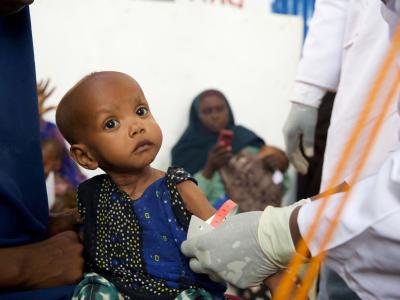
Famine is not a natural disaster and can be prevented. Across the world’s hunger hotspots, early warnings are clear, yet governments continue to act too late – or not at all. Conflict, blockades, and the denial of humanitarian access, not food scarcity, are driving a deepening hunger crisis, with children suffering first and longest. As aid budgets are cut, the gap between need and response is widening fast. This is a false economy: preventing famine costs far less than responding once lives are already lost. World Vision warns famine can be predicted and prevented – but only if leaders act early, protect civilians, and put children at the centre of hunger prevention.
publication / March 2, 2026
Policy Brief | Famine Prevention & Food Security
article / March 6, 2026
Bridging the Gap. Clean Water as a Foundation for Health and Education in Mwinilunga
On February 18, 2026, Sailung’a Health Facility in Mwinilunga District marked a major step toward improved health services. World Vision Zambia handed over a modern ablution block and water system to the facility. The new infrastructure strengthens access to safe water and sanitation for patients, mothers, children, and health workers.
article / February 25, 2026
Reaching the unreachable: how mobile clinics transformed access to care in Gaya
Before the project, access to healthcare in the Gaya area was extremely limited. Many isolated villages forced vulnerable families to walk for hours to reach health centers in Tounouga or Gaya, often arriving too late for proper treatment. The situation was worsened by seasonal floods in Dosso and Tillaberi, which cut off communities and left thousands without essential health services. According to Mrs. Edui Ramatou, Head of the Gaya 2 Health Center, common illnesses such as malaria, diarrhea, and respiratory infections were difficult to manage due to limited supplies and reliance on only two small health posts.
In response, World Health Organization supported the project “Anticipatory health assistance for at-risk and flood-affected populations,” implemented by World Vision Niger and ISCV. Completed in May 2025, the project introduced mobile clinics that brought care directly to villages. Monthly consultations increased from 1,000 to 1,800, while trained community health workers improved case detection and follow-up. For mothers, children, the elderly, and pregnant women, access to timely care greatly improved. Although the project ended, its positive impact continues, and communities hope for sustained support to strengthen resilience against future floods.
article / March 11, 2026
DR Congo: World Vision's Men Care Approach Is Transforming Male Roles For the Benefit of Families
In DRC, World Vision is helping transform traditional gender roles through its Men Care approach, supported by Aktion Deutschland Hilft (ADH). The programme trains community facilitators who lead discussions with fathers on positive parenting, shared household responsibilities, girls’ education, and non-violent family relationships. In its first phase, 660 men from Nyangezi and Nyantende participated. The initiative is already producing visible changes in families, with many men becoming more involved in domestic tasks, communication, and childcare. By encouraging fathers to play a more active and supportive role at home, World Vision aims to strengthen families, reduce domestic tensions, and create safer, more nurturing environments for children.
video / March 11, 2026
World Vision's Men Care Approach Is Transforming Male Roles For the Benefit of Families
This video shows how in South Kivu, eastern Democratic Republic of Congo, World Vision is helping transform traditional gender roles through its Men Care approach, supported by Aktion Deutschland Hilft (ADH). The programme trains community facilitators who lead discussions with fathers on positive parenting, shared household responsibilities, girls’ education, and non-violent family relationships. In its first phase, 660 men from Nyangezi and Nyantende participated. The initiative is already producing visible changes in families, with many men becoming more involved in domestic tasks, communication, and childcare. By encouraging fathers to play a more active and supportive role at home, World Vision aims to strengthen families, reduce domestic tensions, and create safer, more nurturing environments for children.
article / February 9, 2026
Finding Courage in Care: Leah’s Journey to Women’s Health
World Vision’s outreach clinics bring women’s health education and VIA screening closer to communities, transforming lives like Leah’s in Solomon Islands.
article / March 2, 2026
Health Within Reach: Reducing Child Mortality in Rural Mozambique
In Manica Province, Mrs. Ana’s grandson Emanuel survives malaria and diarrhoea thanks to trained Polyvalent Health Agents supported by the Rotary Healthy Communities Challenge Project, bringing lifesaving care closer to rural families in Mozambique.
article / February 25, 2026
Community health workers in Ouallam: silent guardians strengthening epidemic response
In Ouallam, 39 community health workers support families daily despite insecurity and scarce resources. According to Souleymane Idrissa, head of the Ouallam health center, trainings provided through the “Strengthening access to care and epidemic control” project funded by World Health Organization and implemented by World Vision Niger and ISCV marked a major turning point. Health workers gained critical skills in managing gender-based violence, encouraging referrals, and supporting survivors, including access to psychological care.
The project also strengthened disease surveillance through training on the minimum emergency activity package, enabling faster detection and reporting of measles, malaria, cholera, meningitis, and other serious illnesses, even in displaced persons sites. Long-serving relays like Seyni Seydou and Maimouna Birgui describe a deepened sense of purpose, improved knowledge, and stronger community trust.
Beyond technical skills, the trainings enhanced awareness-raising, early care-seeking, and social cohesion. Today, community health workers in Ouallam act as true health sentinels, better equipped to prevent disease, respond to epidemics, and protect their communities.
article / March 11, 2026
DR Congo: Interview - Does The Fight Against Cholera Require the Mobilization of The Entire Community?
This interview with Dr. Liliane Shacko, Acting Chief Medical Officer of the Manika Health Zone in Kolwezi, discusses the cholera outbreak that began in December 2025 and the response efforts underway to contain it. She explains how the outbreak started in the Mutoshi Health Area, outlines the current situation with more than 200 cases recorded, and highlights the measures taken by health authorities and partners, including the establishment of treatment centres, water chlorination points and community awareness campaigns. Dr. Shacko also addresses ongoing challenges such as high population mobility and the continued arrival of cases from neighbouring health zones. She emphasizes the critical role of partners like World Vision in supporting prevention and community engagement, while urging residents to follow hygiene measures and seek immediate medical care if symptoms appear.