
Children and Youth Call for Action on Climate Migration at IMRF 2026

Bangkok, 07 May 2026 Children and young people from Asia and the Arab regions took center stage at the 2026 International Migration Review Forum (IMRF) side event, “Bridging Regions, Building Futures: Asia–Arab Youth-Led Solutions on Climate Mobility,” delivering a powerful message to global leaders: children affected by climate migration must not only be protected, but meaningfully included in the decisions shaping their futures.
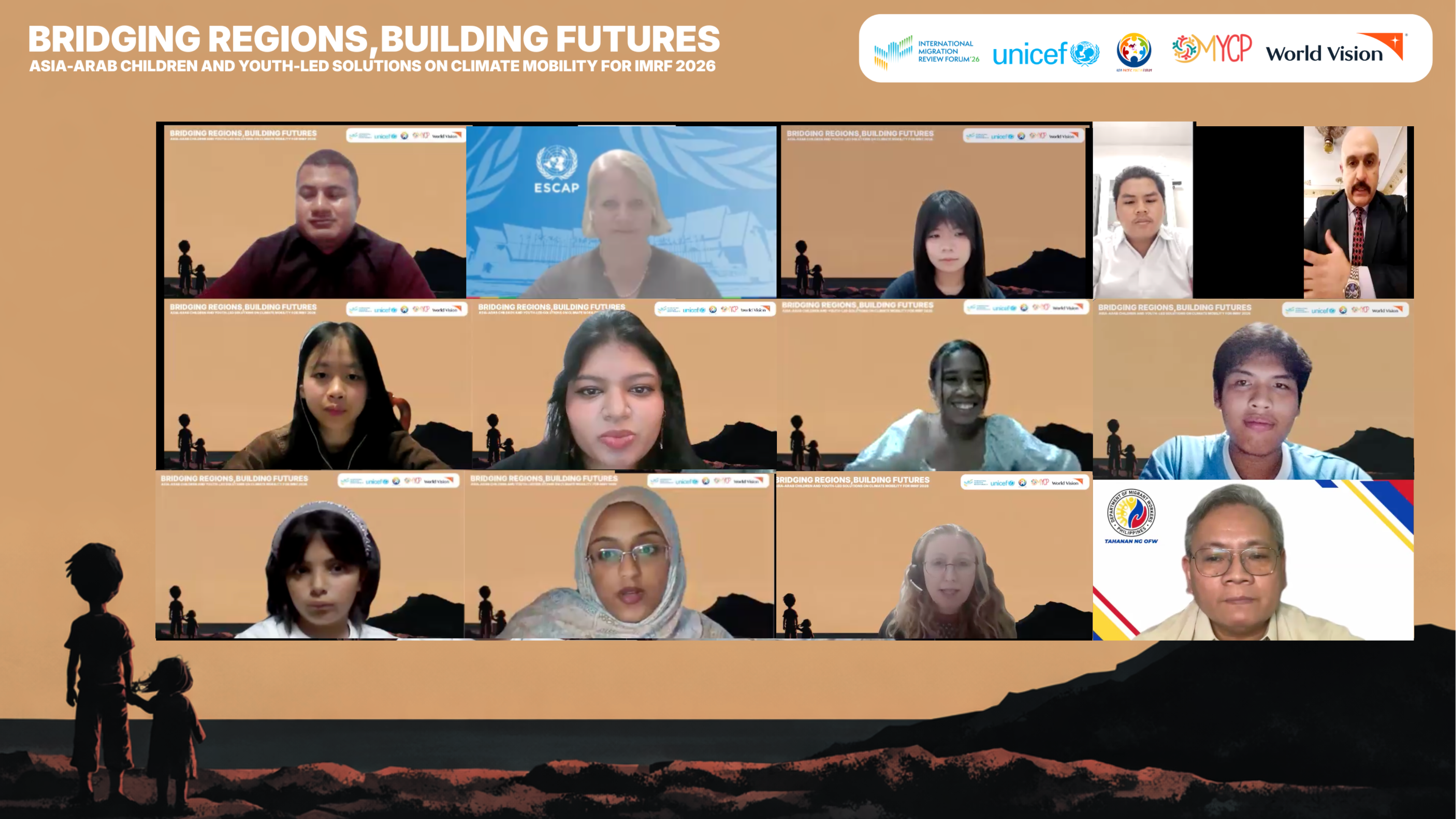
Co-organised by the UNICEF Centre of Excellence in Bangkok, World Vision, the Migration Youth and Children Platform (MYCP), and the Pacific Youth Forum, the event highlighted the lived realities of children on the move through child-led research, storytelling, art, and advocacy. From Southeast Asia to the Middle East, young leaders shared how climate disasters, conflict, and displacement are reshaping childhoods, while also demonstrating how children themselves are leading solutions in their communities.
“Climate shocks are rewriting the futures of an entire generation,” said Eleanor Monbiot, Regional Leader for World Vision Middle East and Eastern Europe. “We cannot continue speaking about young people without speaking with them. Their participation in decision-making is essential to building a future of dignity and safety.”
At the heart of the event were the voices of children from across the region. Nhien from Vietnam shared a painting created by her peer, Ming, a child living near the Thailand–Cambodia border. Titled “New Land,” the artwork portrayed the devastating impacts of climate change through floods and droughts that force families to leave their homes and seek dangerous work in unfamiliar cities. Through the virtual gallery, children also presented video animations, photographs, and personal testimonies revealing the emotional and social realities of migration in Southeast Asia.
Sengleap, a child leader from Cambodia, emphasised that children are not only sharing experiences but actively contributing to solutions. Presenting recommendations developed during the ASEAN Regional Consultation on Migration, she highlighted calls to action directed at peers, parents, teachers, governments, and policymakers. The gallery also featured a child-friendly comic version of the ASEAN Declaration on Migration to help children better understand their rights.
Sengleap also shared examples of child-led action already taking place in communities. In Cambodia, young leaders Zany and Jing led a Safe Migration Campaign alongside schools, local authorities, and community leaders to raise awareness on migration risks and help children stay safe and remain in school. “This shows what children can do when we are supported,” she said.
The event reinforced growing recognition that children and youth are not passive victims of migration and climate crises, but critical partners in shaping policies and solutions. Young leaders called for safer migration pathways, stronger protection systems, access to education, and meaningful child participation in all migration-related policies and decisions.
According to UNICEF, nearly one billion children globally are at extremely high risk from climate impacts, while more than 43 million children were displaced by weather-related disasters over a recent six-year period. Against this backdrop, the IMRF side event connected regional child-led perspectives to global migration discussions through dialogue with representatives from UN ESCAP, the Iraqi Ministry of Environment, and the Philippines Department of Migrant Workers.
“Children’s voices are not optional in migration discussions, they are essential,” said Sabine Henning, Chief of the Sustainable Demographic Transition Section at UN ESCAP. “Protecting migrant children requires child-centred systems that guarantee safety, dignity, and access to services for every child.”
From Reality to Action: Key Youth Demands
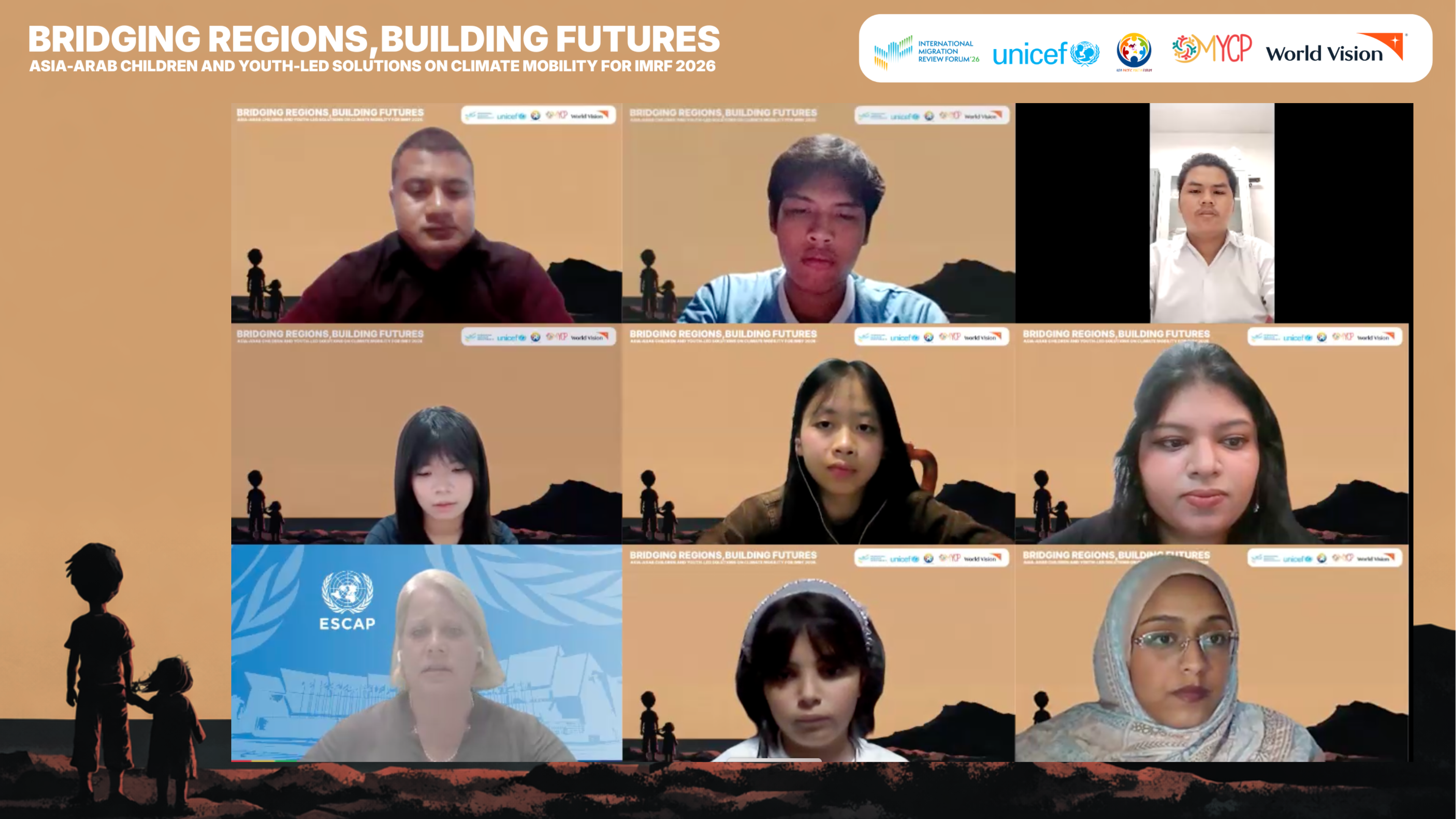
Through the premiere of the video, Beyond Borders: A Video Narrative of Children and Youth on Migration, and an accompanying virtual art gallery, presented by children from Vietnam (Naomi and Hien), Cambodia (Sengleap), Fiji (Joseph), and Iraq (Yar), participants were presented with a powerful synthesis of data and lived experience. By sharing their climate mobility challenges and calls for peace, these young agents of change are asserting their right to be at the centre of policy discussions, calling for the following urgent actions:
Safe and Informed Migration: Governments must ensure safe, legal, and informed pathways for communities and children forced to move due to conflict and climate shocks and not become victims of smugglers and traffickers, said Abrar, a young leader from Iraq.
Stronger Support and Protection: There must be guaranteed access to education and safeguarding for children and youth, whether they are left behind or on the move, said Thawdar, a young leader from Myanmar.
Meaningful Consultation: Instituting children and youth’s voices in decision-making is not optional; it is essential. Sustainable solutions require the meaningful inclusion of children in all policies that affect their futures, said Ador, a young leader from the Philippines
As the world confronts the growing realities of climate mobility, the young leaders participating in IMRF 2026 delivered a clear message: solutions must be built with children, not just for them.
ENDS
For media inquiries, please contact:
Yuventa | yuventa@wvi.org
Regional Public Engagement & Communications Senior Advisor, World Vision East Asia