
Connecting Oceans, Sustaining Lives: Blue Corridor Project Launch in Vietnam

Da Nang, Viet Nam – April 16, 2026 – As marine ecosystems face accelerating decline and coastal livelihoods come under growing pressure, World Vision International in Viet Nam (WVIV), in partnership with World Vision Ireland, World Wide Fund for Nature (WWF), officially launched the “Blue Corridor for Biodiversity and Fisheries Protection in Central Viet Nam (Blue Corridor)” project, a groundbreaking initiative to restore marine biodiversity while strengthening community resilience. Funded by the Blue Action Fund (BAF), this €4.3 million project marks the first marine conservation initiative implemented by World Vision International in Viet Nam, signaling a major step into ocean-focused programming.
A Crisis Beneath the Surface
Viet Nam’s seas are rich but increasingly at risk. Home to more than 20 marine ecosystems and over 11,000 species4 , the country is facing rapid biodiversity loss driven by overfishing, habitat destruction, pollution, and climate change. Illegal, Unreported and Unregulated (IUU) fishing continues to deplete nearshore resources, while coastal development and tourism expansion further strain the fragile ecosystem.
Despite national commitments, Marine Protected Areas currently cover just 0.175% of Viet Nam’s marine territory5 , far below global and national targets. At the same time, climate change is intensifying these challenges. Viet Nam ranks among the top 13 countries most affected by climate change globally6 , with coastal communities increasingly exposed to storms, flooding, erosion, and sea-level rise. These pressures are not only environmental but also socio-economic. Coastal communities, whose livelihoods depend heavily on marine resources, are becoming more vulnerable, particularly women and marginalised groups who face limited access to resources and decision-making opportunities. For communities that depend on the sea, the impacts are immediate and personal. “The sea is very important to us fishermen. A few years ago, I was very satisfied with the amount of seafood we caught, but over time, the catch has been steadily decreasing. I’m worried, but I don’t know what to do,” shared Mr The, a fisherman in Quang Tri Province.
From Isolated Effort to Connected Solutions
The Blue Corridor project introduces a system-based approach, connecting Marine Protected Areas (MPAs) and community-led conservation zones into a unified ecological network. Over the next five years, the project will be implemented across Quang Tri and Da Nang, covering six key conservation areas, including both MPAs and Other Effective Area-based Conservation Measures (OECM) sites.
Key interventions include:
- Strengthening marine ecosystem conservation and management.
- Supporting climate-resilient and sustainable livelihoods.
- Enhancing inclusive participation, particularly for women and vulnerable groups.
- Enhancing coordination between government agencies, communities and conservation partners The project places strong emphasis on strengthening women’s economic participation through financial literacy, savings groups, and sustainable livelihood models, contributing to more equitable access to economic opportunities. These efforts will contribute to restoring marine habitats, safeguarding fisheries resources, reducing pressure on ecosystems, and strengthening long-term resilience for coastal communities.
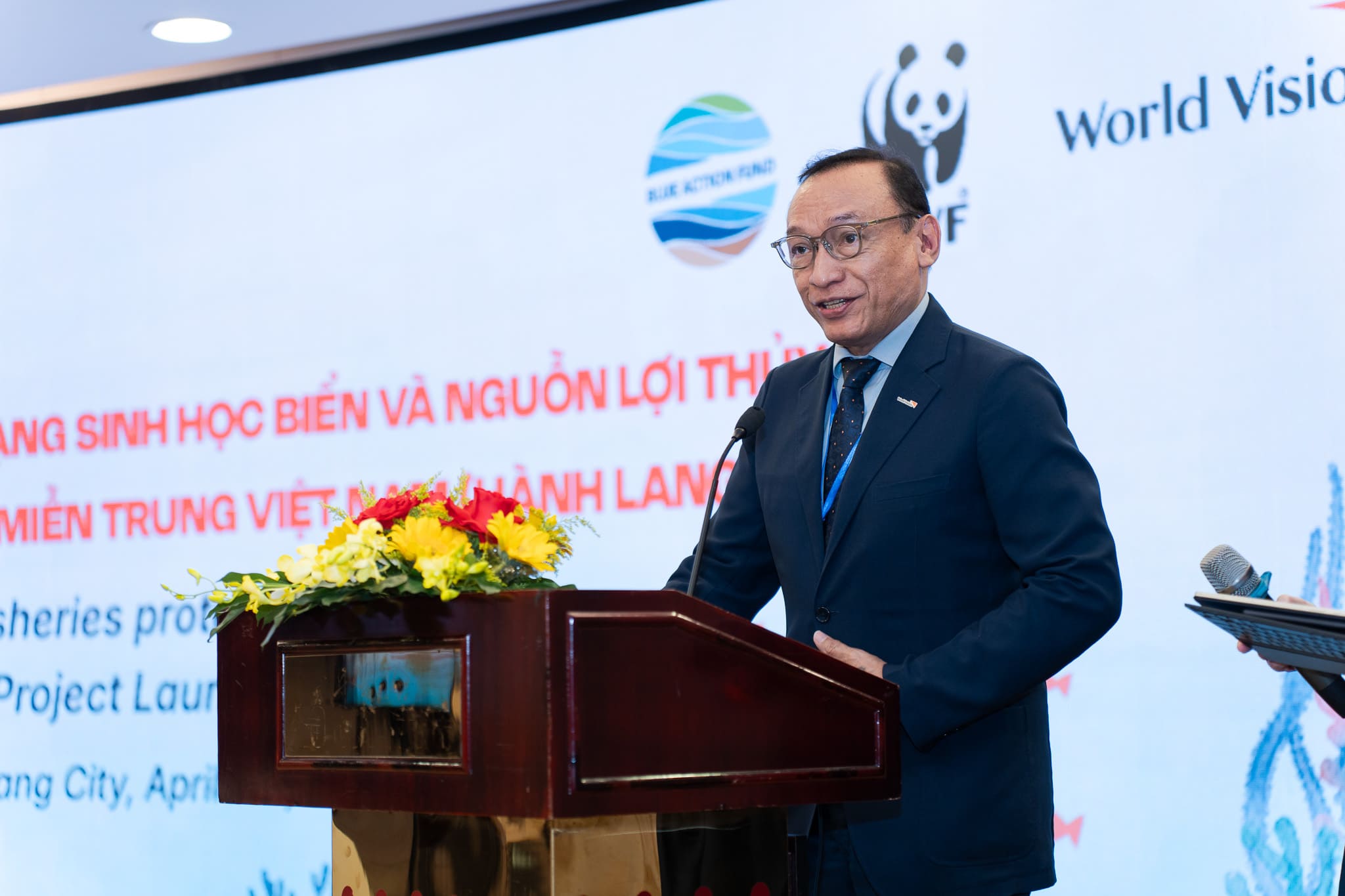
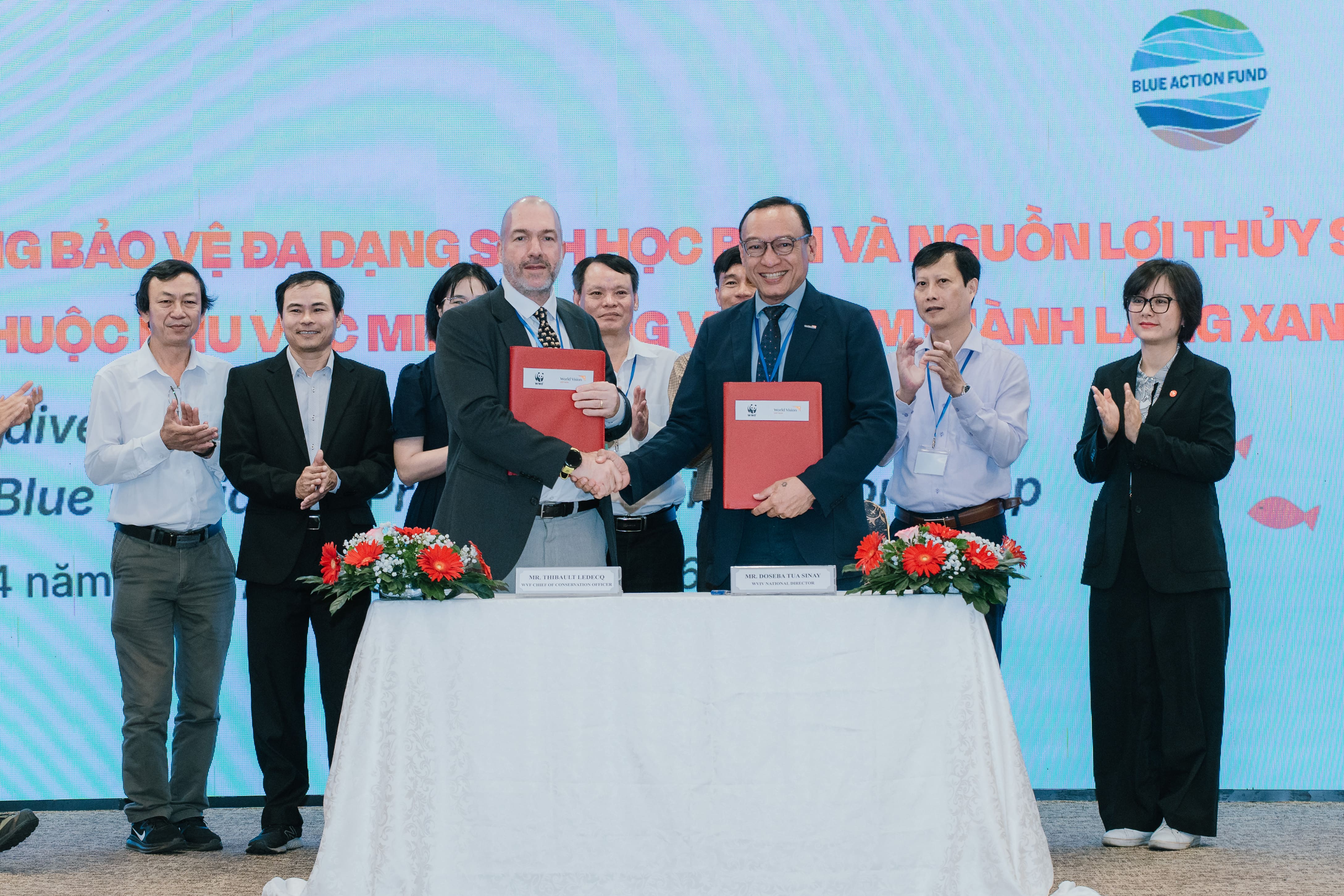 “For World Vision International in Viet Nam, this milestone is not only the result of collaboration, but also a reflection of our shared purpose, trust, and care,For World Vision International in Viet Nam, this is not just a marine conservation project; it is a refreshing journey,” remarked Dr. Doseba Sinay, National Director of WVIV. “ Together with Blue Action Fund, WWF and our local partners, the Blue Corridor Project is love in action; it is about caring for communities, nurturing children, and protecting the marine environment for both their present and their future. It is about protecting the oceans that sustain life, while at the same time safeguarding the dignity, livelihoods, and future of people, especially children, who depend on them. Partnerships Driving Impact at Scale The Blue Corridor is built on close collaboration between World Vision International in Viet Nam, WWF, local authorities, and community stakeholders, ensuring solutions are locally-led, inclusive, and sustainable.
Mr Phan Van My - Deputy Director of the Da Nang City Department of Agriculture and Environment, emphasised “Conserving marine biodiversity now means protecting the living space, livelihoods, and future resilience of coastal communities. It also shows that this work can’t be done by each locality or sector on its own. Instead, it requires a coordinated, ecosystem-based approach, with active and responsible involvement from communities” By 2030, the Blue Corridor is expected to deliver measurable results:
- More than 600 km² of marine ecosystems are protected and better managed.
- 6 key conservation areas connected into one integrated system.
- 51,400 people directly impacted by project interventions.
2,344 livelihoods transitioning towards sustainable practice
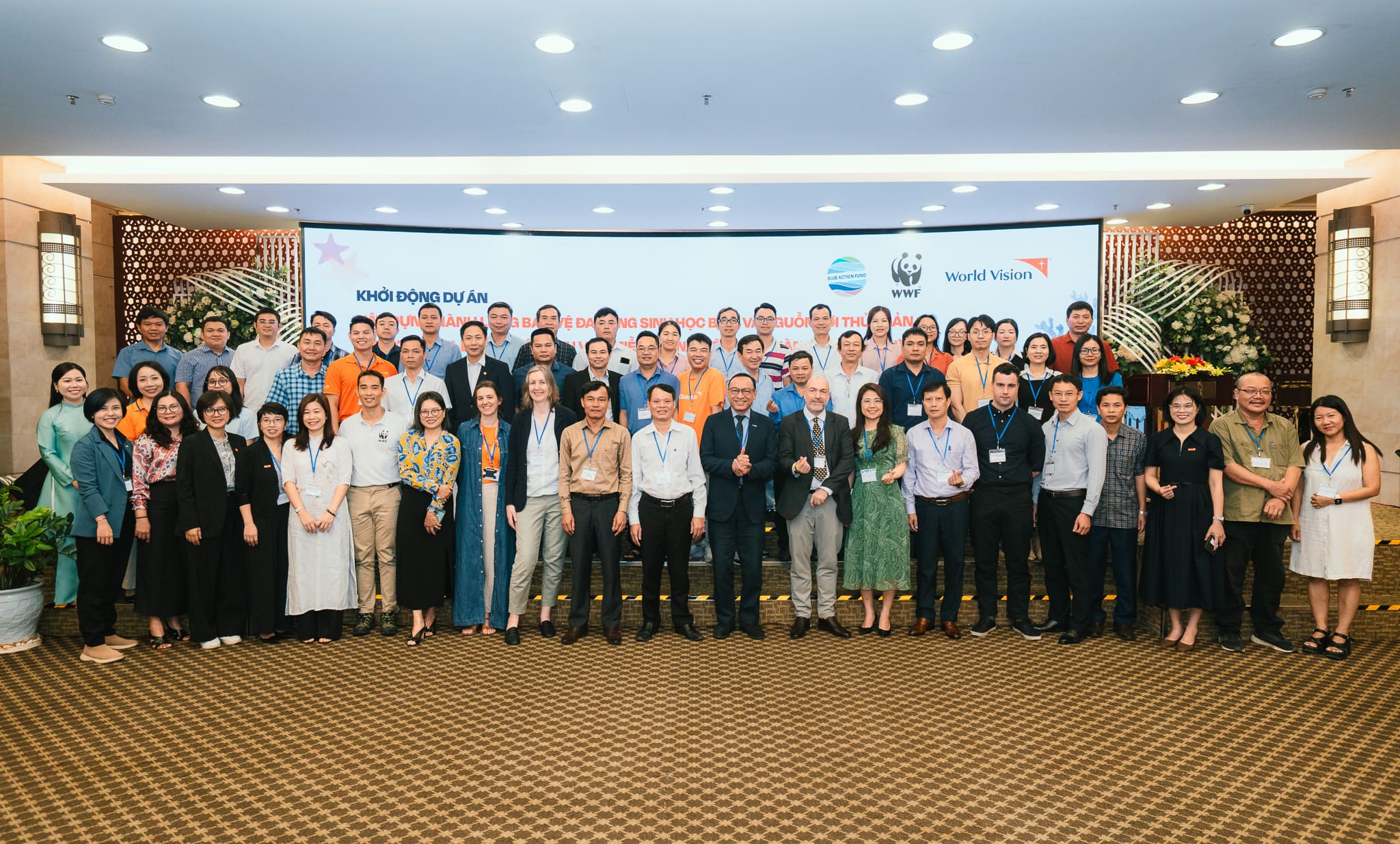
This also marks the Blue Action Fund's first investment in the country, opening new opportunities to scale up marine conservation efforts. Mr. Markus Knigge, Executive Director of Blue Action Fund shared: “Through its first-ever grant in Viet Nam, Blue Action Fund is pleased to support stronger sub-regional governance across multiple sites, advancing both marine conservation and sustainable coastal livelihoods. The Blue Corridor project has the potential to become a pioneering model in the region, demonstrating how effective and equitable marine conservation can deliver both ecological and economic benefits.” Towards a Climate-Resilient Future Healthy marine ecosystems are not just environmental assets; they are natural defences. Coral reefs, seagrass beds, and coastal habitats help buffer storms, reduce erosion, and protect communities from climate shocks. By restoring these systems, the Blue Corridor strengthens both ecosystem health and human resilience.
“WWF strongly believes that well-designed pilot models can deliver meaningful impact. When these models are grounded in community needs, guided by real-world evidence, and implemented through close collaboration, they can generate good practices that can be shared, adapted, and scaled up in the future.” – shared by Mr Thibault Ledecq, Chief Conservation Officer, WWF Viet Nam.
As climate risks intensify across the region, the project offers a replicable model for integrated ocean management, positioning Viet Nam as a leader in sustainable marine conservation.
END
Media Contact
(Ms) Yuventa | Public Engagement & Communications Senior Advisor, World Vision East Asia | yuventa@wvi.org
(Ms) Le Hoang Anh Ngoc | Communications & Public Engagement Manager | le_hoang_anh_ngoc@wvi.org