
World Water Day 2026: Where Water Flows, Equality Grows

On 22 March 2026, the world comes together to mark World Water Day under the theme “Where Water Flows, Equality Grows.” This year’s focus highlights the powerful connection between water access and gender equality, reminding us that safe water and sanitation are not privileges—they are fundamental human rights.
For millions of women and girls, the daily struggle to secure water is more than a burden; it is a barrier to education, health, and opportunity. In many communities, women spend hours each day walking long distances to collect water, time that could otherwise be invested in schooling, livelihoods, or leadership. Without safe sanitation, women and girls face heightened risks to their health and dignity, reinforcing cycles of inequality.
Lao PDR has made notable progress in water, sanitation, and hygiene (WASH), yet significant gaps remain to achieve national targets and SDG 6—especially in rural and climate-vulnerable areas. 86% of the population uses at least basic drinking water services (98% urban; 81% rural), but safely managed drinking water reaches only 17% of rural residents (44% urban), highlighting persistent inequities in quality and reliability of supply. Basic sanitation coverage is 84% nationally, but open defecation remains at about 13% overall and rises to ~48% among the poorest households, underscoring the depth of wealth-related disparities. Basic hygiene access stands at 63% nationally, with rural households lagging at 56%, meaning around 4 in 10 rural households still have only limited or no handwashing facility with soap and water at home. These service gaps impede health and well-being and are being exacerbated by climate shocks (more frequent floods and droughts) that damage infrastructure and threaten service sustainability, disproportionately affecting vulnerable and marginalized populations. [washdata.org]
In response to these challenges and to ensure sustainable, inclusive, and equitable WASH services reaching the most vulnerable population in remote communities, World Vision Laos, in collaboration with the National Centre for Environmental Health and Water Supply, Department of Hygiene and Health Promotion, and the Ministry of Public Health, has developed a new project that will be implemented from 2026 to 2030. The project aims to support the government of Laos to achieve national targets and SDG 6—especially in rural and climate-vulnerable areas — by improving access to safely-managed water, sanitation, and hygiene services, thereby improving health and nutrition outcomes, livelihoods, and overall wellbeing of the most vulnerable and poor populations living in climate-affected areas. The partnership will emphasize improving the quality of water, sustainable solutions, transparency, accountability, and alignment with national WASH priorities.
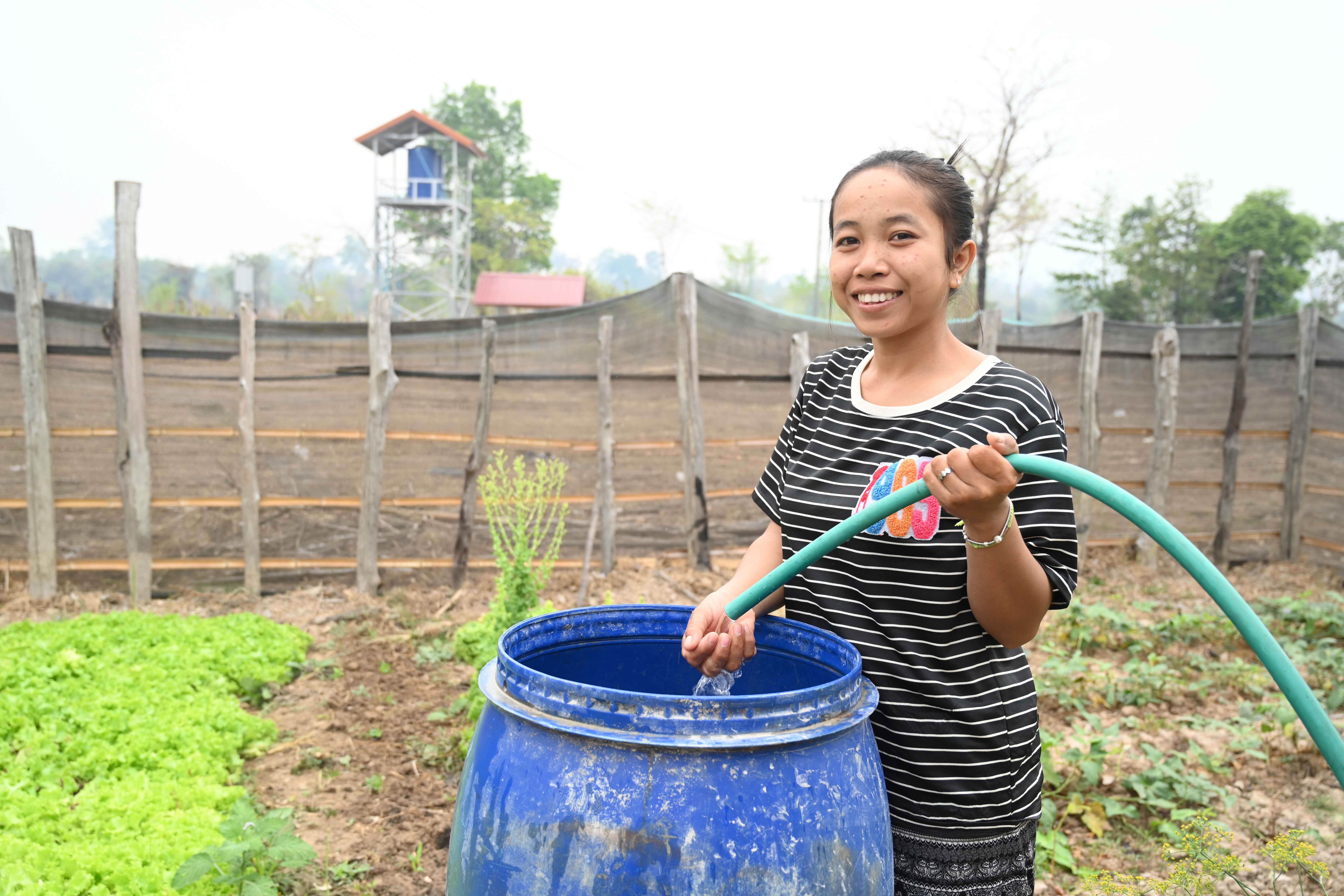
Chit, a 20-year-old mother of two children from Tabeng village, is among 483 villagers who now benefit from World Vision’s newly constructed water system in Toumlan District, Saravan Province. For years, families, especially women and children, walked nearly more than 500 meters to collect water from a hillside stream, which was unsafe during the rainy season and parched during the dry season. “It was very hard when I was pregnant and gave birth to my first child. Sometimes, we had to collect water from a small private borehole, but we had to wait for permission from the owner to open it and collect water” Chit recalled.
In partnership with Australia AID / ANCP through World Vision Australia, under the Sustainable Agriculture for Nutrition Project (SUAN) World Vision Lao built a new water system, installed 51 water points, and connected 71 households to safely managed water.
In 2025, through partnerships with World Vision Korea, Australia, Taiwan, United States, Canada, and the EDF Foundation, World Vision Laos built 12 new water systems, installed 459 water points, strengthened the village Water User Group, and improved hygiene practices such as safe water storage, handwashing with soap, and household cleanliness.
The impact has been immediate. “Life is easier now. When we got access to the water, we built our own toilet and planted a small garden. I have more time for my children and can keep them clean,” Chit shared. “Now I can get clean water anytime at home—it is safe.”
The new water system is helping families live healthier, safer lives and reducing the daily burden on women and children in the rural community.
This also helps reduce the workload for women and children in the target villages and lowers the occurrence of diseases (waterborne and hygiene-related illnesses connected to malnutrition),” says Vone, 21 years old, who is a beneficiary of the water system. She added, "Before there was a piped water system in the community, women and children had to fetch water from an open source (unimproved source), which was 2 kms away from the community. And each round took about 30 minutes or more.”
Through World Vision Laos’ strong partnership with Central Namsaat and the Provincial Health Department, the WASH program has been able to overcome challenges and constraints to run effectively. Within the program’s target areas, communities now benefit from universal WASH service coverage, strengthened technical capacity, and enhanced digital monitoring via mWater—supporting both WVL staff and Government of Laos (Namsaat) staff. These efforts also help sustain and secure long-term water resource management,” says Sitthinet Thaochaleurn, Technical Specialist–WASH, World Vision International Lao PDR.
By leveraging this strong partnership with additional resources, World Vision will continue to enhance program effectiveness over five years. The partnership with the Lao government will strengthen stakeholder capacity and improve WASH services in rural areas, shifting focus from basic infrastructure to safe solutions. The FY26-30 business plan, aligned with government efforts, will address water quality, resource security, district capacity, and service delivery to ensure local ownership and quality. The vision is "Improved Equitable and Reliable WASH Services for Rural Communities." The program's profound impact will be felt at the community level. Increased access to safe water and sanitation will reduce waterborne illnesses and enhance health outcomes. Empowered communities will manage WASH systems sustainably, unlock economic opportunities, boost school attendance, and foster community ownership. This contributes to greater well-being and a brighter future for all Lao children.
World Vision Laos invites stakeholders, donors, and media partners to join this transformative journey. Together, we can unlock the potential of every child through safe water and sanitation.
As we reflect on World Water Day, let us recognize that the path to gender equality runs through rivers, wells, and taps. By ensuring safe water and sanitation for all, we unlock opportunities for women and girls, strengthen communities, and move closer to achieving the Sustainable Development Goals.
-END-