

Are we missing the key ingredient in school meals?
School meals are transforming children’s health and learning. But Kondwani and Yves with World Vision Rwanda say food alone is not enough. Explore why integrating Water, Sanitation, and Hygiene (WASH) into school feeding is the key to healthier students, stronger attendance, and a more equitable education system.
12 March 2026
For a moment, picture a primary school in a rural setting. Children line up holding plates waiting to be filled with a healthy mid-day meal. But one thing is missing: clean water to wash their hands before eating.
Across Rwanda, school feeding has become a powerful driver of children’s nutrition, learning, and long-term development. But experience from the field tells a clear story: food alone is not enough. Without clean water, safe sanitation, and dignified hygiene facilities, the impact of school meals is limited, and for some children, especially girls, learning remains disrupted.
Under the leadership of the Government of Rwanda and the World Food Programme, the Home-Grown School Feeding (HGSF) Programme demonstrates what is possible when locally sourced food supports both nutrition and local economies. According to the Rwanda Ministry of Education, “diverse meals are generally healthier meals.”
World Vision is supporting this effort by integrating Water, Sanitation, and Hygiene (WASH) interventions that strengthen the effectiveness of school meals. What we are learning is simple but profound. The greatest gains occur when meals are paired with water, sanitation, hygiene, and gender-responsive infrastructure.
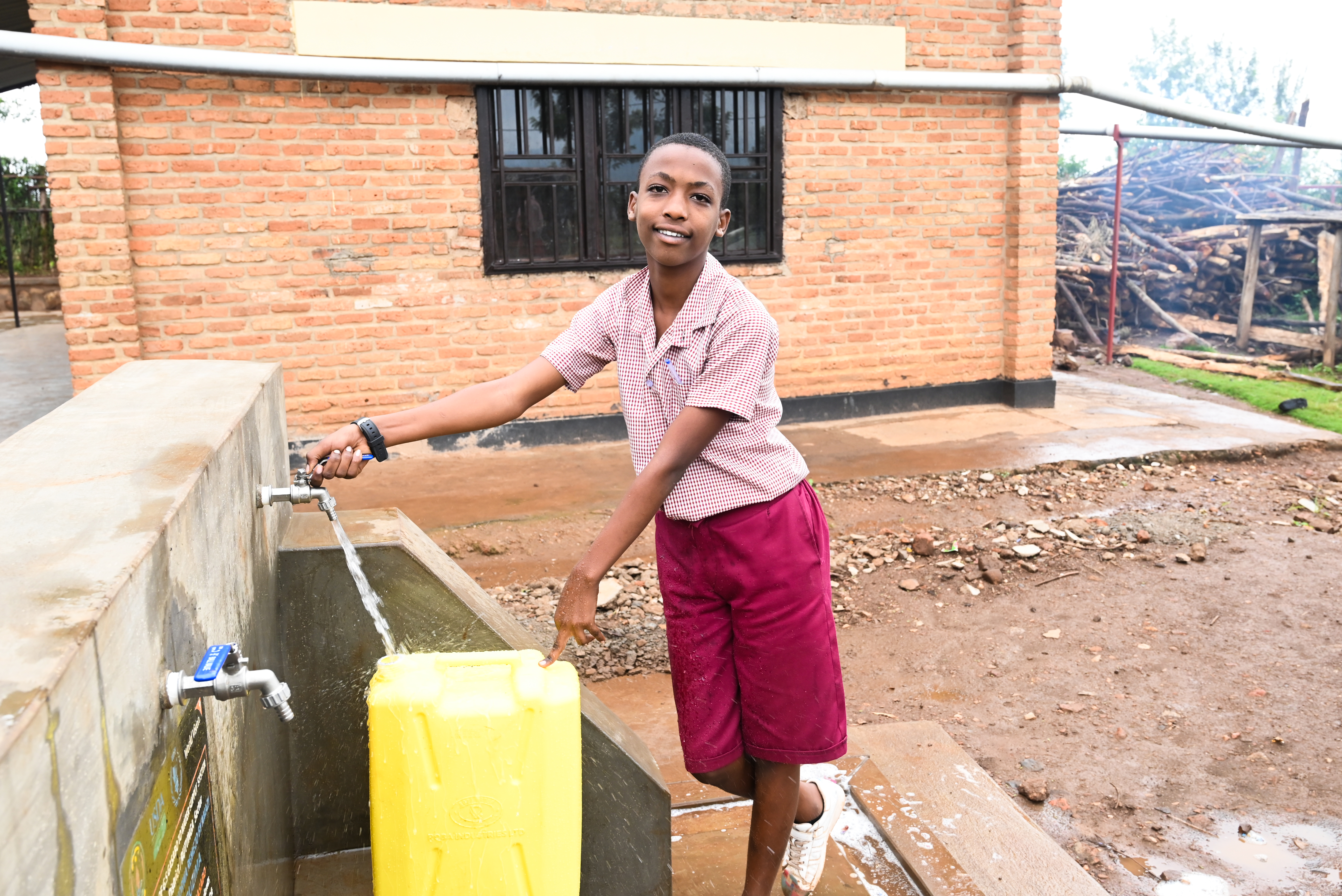
Why WASH is foundational to school feeding
WASH is often viewed as infrastructure: pipes, latrines, and handwashing stations. In reality, it is the foundation that allows school feeding to deliver results. These results look like:
- Clean water enabling safe meal preparation and hygienic kitchens.
- Handwashing facilities reducing illness and absenteeism.
- Safe sanitation protecting children’s health and learning time.
For adolescent girls, Menstrual Hygiene Management (MHM) facilities are particularly critical. Without private, safe spaces with water and disposal facilities, many girls miss school during menstruation. When these facilities are available, girls attend school more consistently, participate confidently, and learn with dignity.
In support of HGSF, World Vision Rwanda has connected 36 schools to water, constructed 104 latrines, 93 MHM rooms, and 24 handwashing stations. Schools that combine feeding programmes with WASH and MHM report improved attendance, stronger class participation, and increased confidence among learners. These outcomes directly support educational achievement.
Rwanda’s home-grown approach shows the way
Rwanda’s HGSF model is built on the understanding that learning does not happen in isolation. Children cannot learn well when they are hungry, sick, or unsafe. Integrating WASH into school feeding is especially vital in rural and peri-urban areas, where water access is limited and sanitation facilities are overstretched.
Without WASH, school kitchens face food safety risks, learners are more vulnerable to illness, and girls are more likely to miss school. With WASH, nutrition, education, and gender equity objectives reinforce one another. This integration safeguards the return on investment in school feeding and ensures no child is left behind.
What the field is teaching us
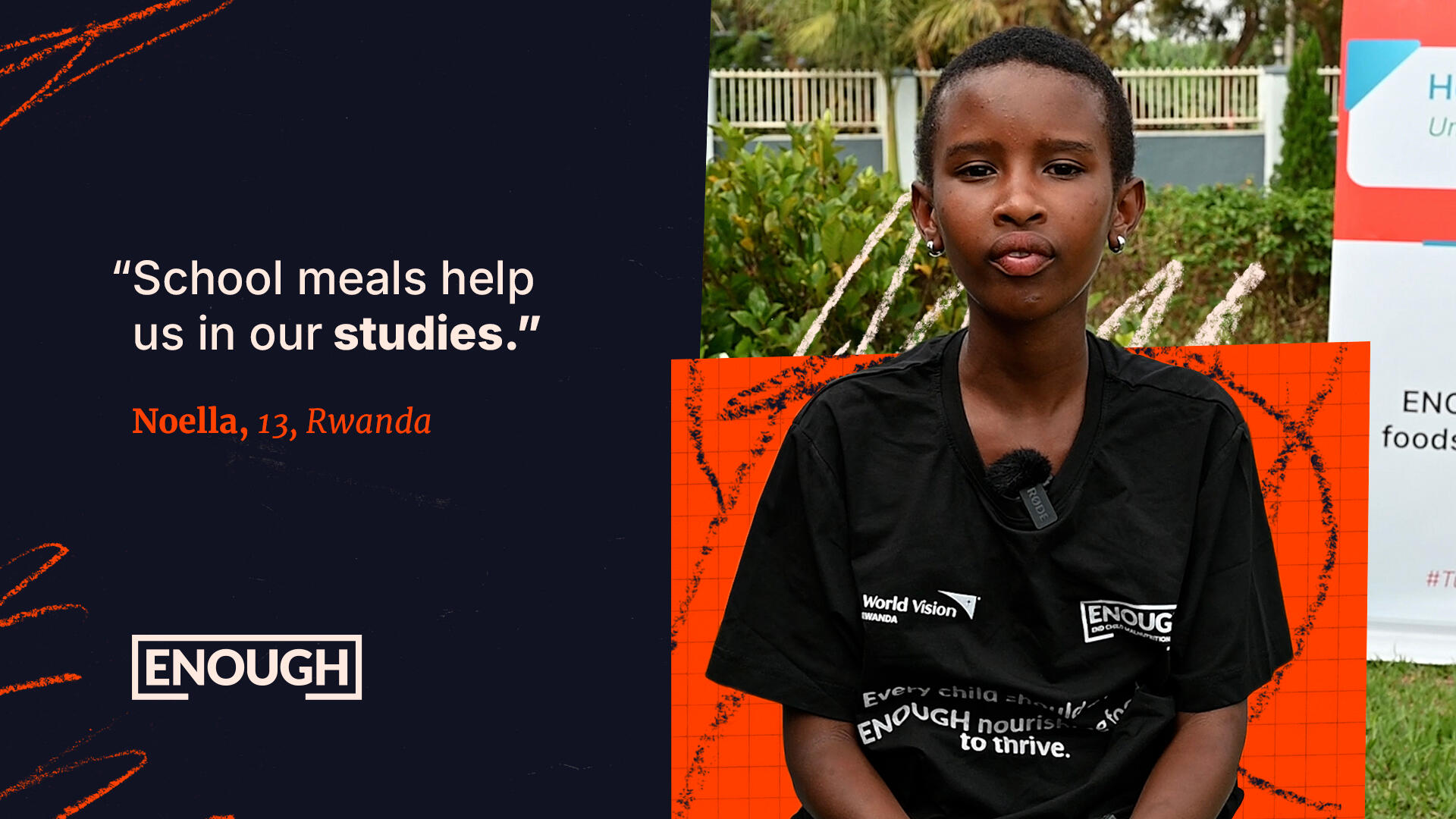
As a key WASH implementer supporting HGSF in Rwanda, World Vision has observed tangible changes in schools where feeding is paired with WASH. Learners describe safer mealtimes, cleaner environments, and reliable access to drinking water. Teachers report reduced operational strain and better hygiene practices.
"We want every student in Rwanda to have healthy, tasty, and filling meals at school. The places where we eat should always be clean, with enough water for everyone to wash their hands before and after eating." - Rwandan child researchers
One school leader shared that after MHM facilities were introduced, girls’ attendance and classroom participation improved noticeably, contributing to a more inclusive learning environment. The lesson is consistent. When WASH and MHM are integrated into school feeding, both learning and well-being improve.
A call to action
School feeding programmes are most effective when designed as complete systems of care. Food nourishes children, but clean water, sanitation, hygiene, and menstrual dignity protect their health, sustain their confidence, and keep them learning.
As Rwanda continues to strengthen its school feeding model, investments must go beyond food provision. Every meal served should be supported by clean water, safe sanitation, handwashing facilities, and safe spaces for girls that ensure no child is left behind.
Because a school meal should do more than fill a stomach. It should create the conditions for every child to learn, thrive, and succeed.
Learn more about World Vision's work with school meals.
________
Kondwani Precious Mwangala, PhD is an accomplished leader with over 20 years of experience in humanitarian work, both in development and emergency contexts across Africa. He has been working as Deputy Chief of Party on the USDA McGovern-Dole Food for Education (MGD FFE) programme in Rwanda since 2019.
Jean Yves Ntimugura is the ENOUGH Campaign Technical Advisor at World Vision Rwanda, specialised and experienced (10+ years) in integrated nutrition programming, child health advocacy, and community-based interventions to combat child malnutrition.
Subscribe to see more content like this
Related Resources

Why School Meals Accountability Must Define the Future of Education and Social Protection

A Glass Half Full and Rising: Why School Meals Must Be a Global Priority
