

We Know Who Protects the Amazon. Why Aren't We Funding Them?
Yukiko Yamada Morovic reflects on what the Ecuadorian Amazon reveals about the gap between global climate ambition and the investment choices needed to protect our ecosystems.
September 2, 2026.
Standing in the Ecuadorian Amazon, I found myself looking at two radically different futures.
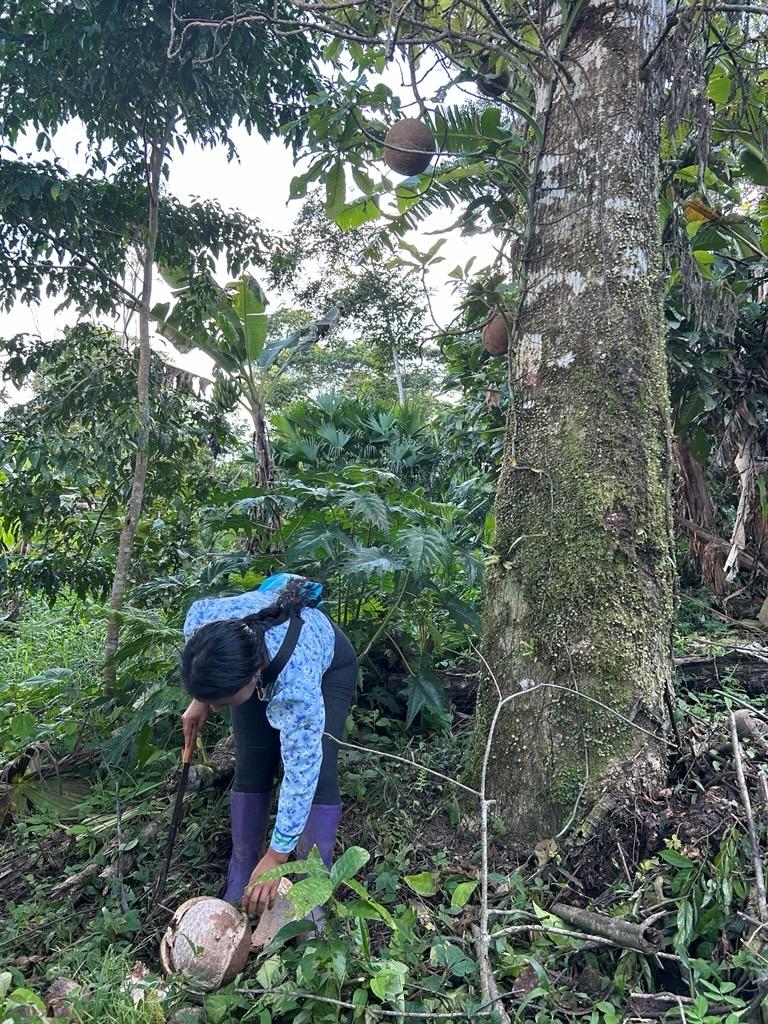
On one side were cacao trees, medicinal plants, fruits, and crops growing beneath the forest canopy. Children learn and play here. Families eat from here. Knowledge passes from grandmothers to daughters. The forest remains standing because the chakra, an Indigenous agroforestry system, depends on it.
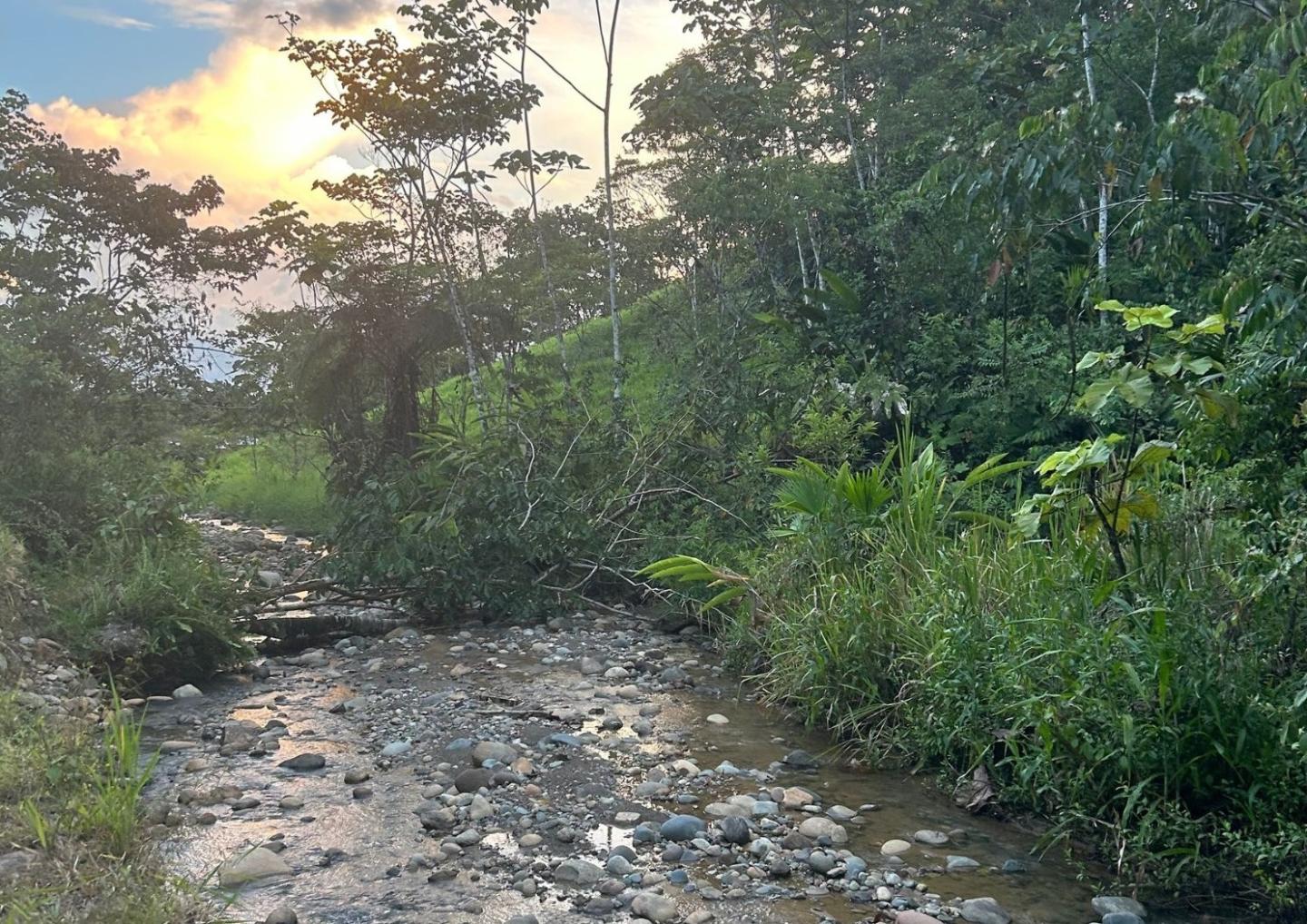
But there was another future too, one shaped by illegal gold mining: polluted waterways, degraded soils, and an economy built on the rapid extraction of nature. The two did not exist far apart. The distance between the futures they represent is immeasurable.
After decades working in international development, I have learned that some of the most important solutions are not waiting to be invented. They are already being practised by communities whose knowledge, traditions, and relationship with nature have shaped landscapes for generations.
The question is why our systems still struggle to recognise, value, and finance them.
Before entering the forest, I was invited to participate in a traditional Kichwa blessing ceremony, asking for safe passage and reminding us that we enter the Amazon not as owners, but as part of Creation. It was a humbling lesson in stewardship and respect.
My guide was Claudia*, a Kichwa forester. As we walked through the forest, she shared her knowledge of plants used to treat fevers, stomach illnesses, injuries and skin conditions. She knew the properties of more than 100 fruit and medicinal tree species, knowledge inherited, practised and protected across generations.
The forest is a food system, a pharmacy, a classroom, and a source of identity. Claudia could read this landscape with a level of insight that few scientists, policymakers, or investors ever will. Yet expertise like hers rarely carries the same weight in decisions about the future of people and planet.
The real issue is how we value nature
The expansion of illegal gold mining across parts of the Ecuadorian Amazon is rightly attracting concern. Deforestation, soil degradation and mercury contamination are damaging ecosystems, undermining livelihoods and threatening human health.
For Indigenous communities whose livelihoods depend on forests and rivers, these impacts are immediate and deeply personal. Children face particular risks. Environmental degradation, combined with climate change, contributes to conditions that increase vulnerability to diseases such as dengue. Contaminated water, reduced food security, and weakened community support systems can have lasting consequences for child wellbeing.
But focusing only on environmental damage misses a deeper truth. The real challenge is not simply a conflict between mining and conservation. It reflects two contrasting approaches to economic development: one built on the rapid extraction of natural resources, the other on generating value while maintaining healthy forests.
As long as stewardship remains underfunded and extraction remains profitable, conservation efforts will struggle against powerful economic incentives.
The wisdom already in the forest
Chakras like Claudia’s offer a different vision. Recognised by the Food and Agriculture Organization as a Globally Important Agricultural Heritage System (GIAHS), the chakra is an ancestral agroforestry system where cacao, fruit trees, medicinal plants, staple crops, and forest regeneration coexist.
This is more than agriculture. It is a living system that produces food, income, biodiversity, and resilience within the same landscape. It demonstrates that healthy forests and thriving livelihoods can go hand in hand.
Perhaps the most remarkable aspect of the chakra is who sustains it. Women are its primary knowledge holders, seed guardians, food producers, and stewards. Through their leadership, biodiversity is maintained, medicinal knowledge is preserved, and traditions are passed from one generation to the next.
Despite delivering outcomes that climate and development programmes aspire to achieve, their contributions remain largely invisible in economic systems and climate finance frameworks.
The best guardians of nature
If Indigenous communities are widely recognised as some of the most effective guardians of nature, why are they still among the least financed?
Less than 1% of global climate finance supports Indigenous peoples' and local communities' land and forest rights. COP29's Baku Workplan reinforced the importance of Indigenous participation and knowledge in climate action, but stopped short of addressing the financing gap required to turn recognition into lasting impact.
Governments, donors, and multilateral institutions should recognise Indigenous stewardship not as a peripheral issue, but as essential climate infrastructure and a core climate, development, and child wellbeing strategy. That means investing in Indigenous governance, sustainable livelihoods, and systems such as the chakra that already demonstrate how people and forests can thrive together.
As United Nations Secretary-General António Guterres observed:
“It is absolutely fundamental to invest in those who are the best guardians of nature. And the best guardians of nature are precisely the Indigenous communities.”
That conviction sits at the heart of World Vision's Amazon Basin Initiative, a US$500 million commitment to support children and communities across the Amazon. Through our Regreening Communities approach, World Vision works alongside Indigenous communities, strengthening and scaling what already works.
The future we choose
As preparations begin for COP31, the question is no longer whether Indigenous stewardship matters. The evidence is clear. The question is whether governments, donors and multilateral institutions are prepared to recognise it for what it truly is: essential climate infrastructure, and invest in it accordingly.
Women like Claudia are already demonstrating what a thriving Amazon can look like. The world does not need more proof that these solutions work. It needs the commitment to back them at scale.
The future of the Amazon will depend less on what we say about forests and more on whether Indigenous communities are given the resources, recognition, and support they need to continue keeping them alive.
*Note: To protect the privacy and safety of the Indigenous community member featured in this article, the name "Claudia" has been changed.
About the Author:
Yukiko Yamada Morovic is Technical Director for Environmental Sustainability and Climate Action at World Vision, where she leads the organisation’s global strategy to address environmental and climate challenges affecting children in vulnerable communities. With over 20 years’ experience in international development, she actively contributes to global climate and sustainability dialogue through platforms such as the World Economic Forum’s Global Future Council and UNEP’s Faith for Earth Women’s Council.
Subscribe to see more content like this
Related Resources

Beyond Adaptation Limits: Coping with Loss and Damage

Can Bees Save the Amazon’s Children? What I’ve Learned from the Smallest Wings of Hope
