


What the hunger stats for Sudan don’t tell you about food.
James East reflects on what is lost when hunger strips people not only of nourishment, but of identity, dignity and community.
May 12, 2026.
In Sudan, hunger does more than strip someone of their body weight, it also strips a person of their culture and their dignity. This is the hidden impact of what it means to have no food.
This is difficult to comprehend for so many of us who live in countries where culture is based around the needs of individuals and nuclear families and where clans, tribes and pastoral and nomadic communities are the sort of thing we only see on Game of Thrones.
Mealtimes in countries like mine - the UK - are often centred around a microwave meal, a TV dinner, or eaten with very close family members.
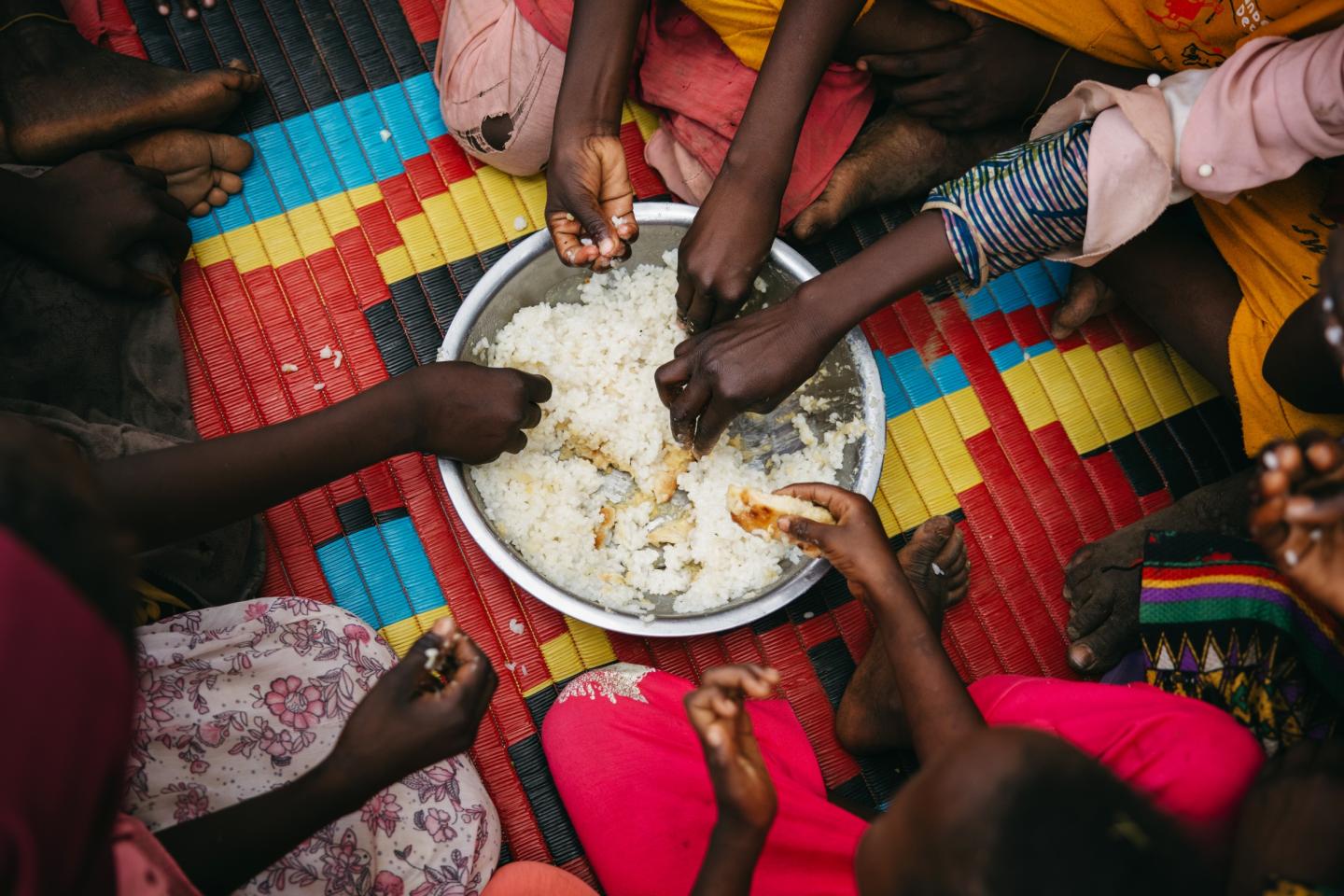
In Darfur, where I was recently, meals are rarely eaten alone. They are communal affairs that take place under the shade of a tree or seated on mats on the ground outside homes. Food is served on a seniyya, a communal tray, and eaten by hand from a common pot. A typical meal would be goat stew, eaten with millet porridge called asida and mopped up with flat bread.
Unlike so many of us in the West, eating is not just to fuel the body. In Sudan, mealtimes are places where extended families and communities come together to support each other, to share stories, to solve problems… and importantly to host guests. It is considered rude not to share a meal with a stranger. In fact, it is an honour. The culture of hosting, sharing, and feeding others is part of the very identity of Sudanese people.
Hunger is eroding more than health
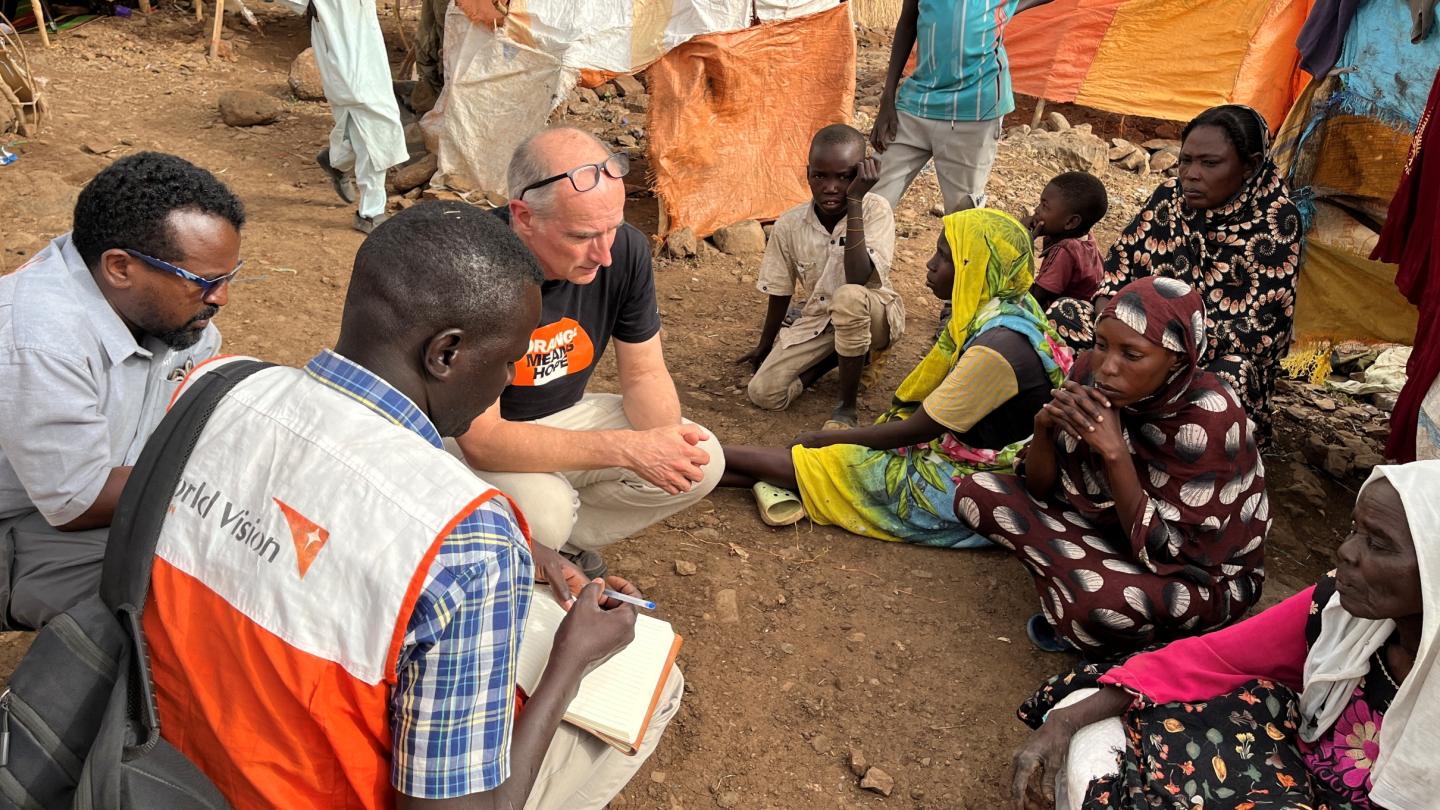
This is why when you walk into a place like Fiena camp in the Jabel Marra mountains in South Darfur, it’s not just the lack of food that is hard for Darfurians to bear, but it’s the inability to care for hungry neighbours; for elders to look after their communities; and for guests to be respected. These things bring a sense of shame and embarrassment because hospitality is woven into the fabric of society, much like English culture places great value on a sense of humour or fair play, or a pub lunch.
As a communicator with World Vision, my job was to visit Sudan to gather stories that could help raise attention and funding for a crisis that remains dangerously overlooked. Stories about hunger tend to resonate because everyone knows the essential role of food in life and no one likes to see children starving.
Communications is obviously a job that involves asking questions and listening and then distilling the problem into something that is easy to understand and that has emotional impact.
“How many meals have you had today? What did you feed your children? How much does a meal cost? How do you pay for your food? How do you cope when your children go to sleep hungry?’
These are necessary questions. Yet they can obscure a deeper truth: Food is much more than calories consumed or missed. Mealtimes aren’t just about whether you had two meals, as opposed to one. Meals are where mothers, fathers, children and elders talk to each other. It is where community connects. It is where the mother who has a little to spare shares it with the family that has not eaten that day. It is where traditions, morals and customs are passed on. It is where jokes are told. It is where the stranger, the traveller, the guest, is welcomed with open arms.
As I looked into cooking pots that held nothing; as displaced Sudanese mothers talked of selling off emergency rations of peanut paste so they could feed other children; and as village elders invited me to take tea with them, I only saw what was in front of me: hungry families with almost no food, children losing weight, tribal chiefs wondering where the humanitarian help was, and fears of the coming rainy season blocking the delivery of food by aid truck.
What the data cannot capture
Humanitarians talk a lot about ‘food security’ or more often these days, about “food insecurity”. The term, technical though it sounds, simply refers to people having reliable physical and economic access to enough safe and nutritious food to lead a healthy life.
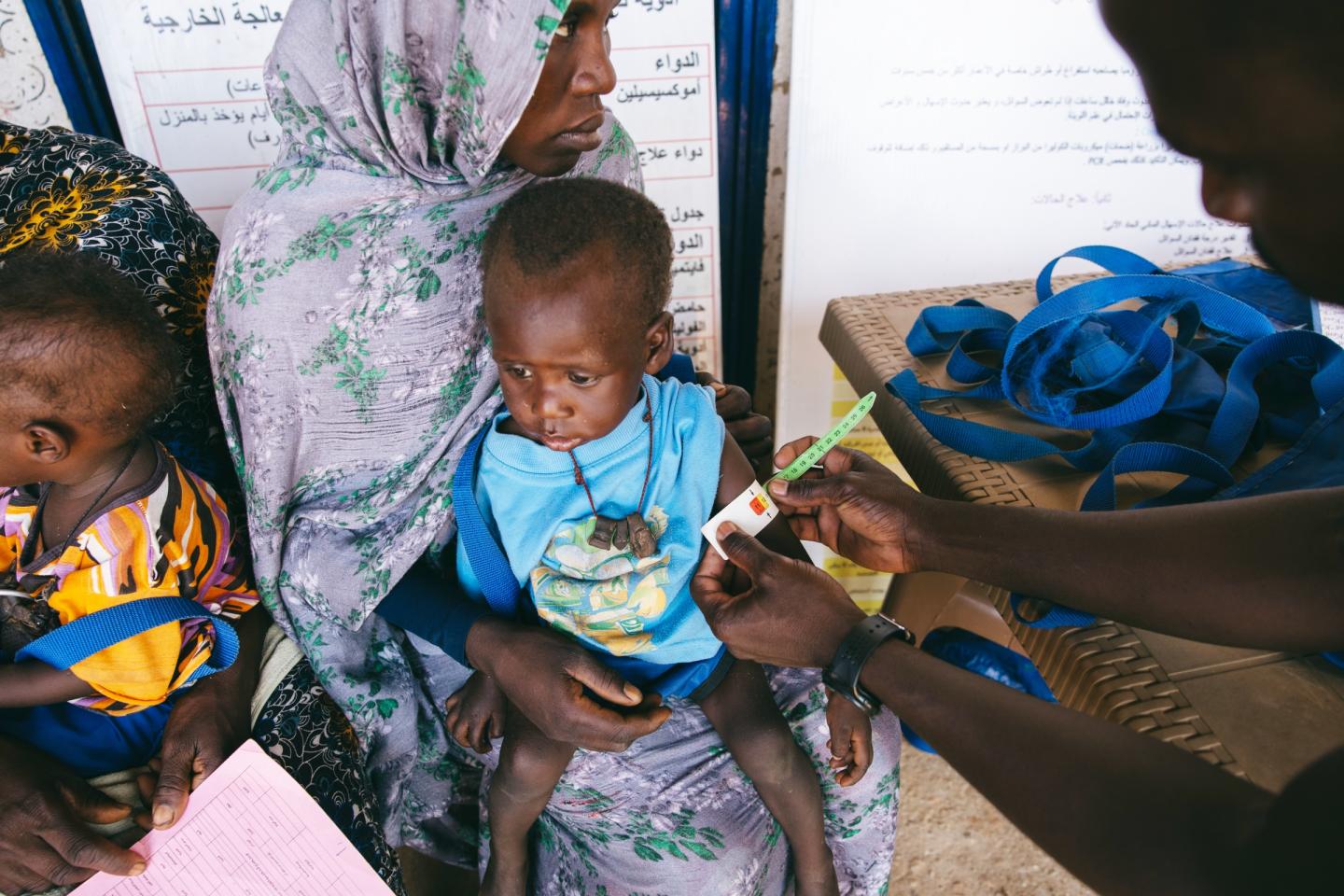
But to truly understand what that means for families, communities and children, the crisis first must be measured. Aid workers visit homes and clinics, screening children for malnutrition with colour-coded tapes wrapped around tiny arms. Families are asked what they have eaten. The malnutrition figures are collated and centralised. The data on deaths per day is recorded. The local markets are assessed. The experts gather and assess the district data. They declare famine, catastrophic or emergency levels of food insecurity.
And yes, if you want the numbers for Sudan, here they are in their terrifying scale: 4.2 million children are acutely malnourished and 800,000 more face severe acute malnutrition. Volker Türk, the UN High Commissioner for Human Rights, captures the gravity of what is happening, describing it for what it is:
“This is not just another crisis. It is a human rights catastrophe taking place in real time.”
My last night in El Daien
The wonderful Sudanese staff who work in East Darfur, came by the team house where I had stayed, to say goodbye. They came with food. We sat outside until late. We dipped our hands in the common pot. We shared stories. We laughed. And we hugged each other. This is what the hunger statistics and the technical language will never capture. Because when there is no food, the loss goes far beyond hunger itself… it takes away the dignity of being able to care for others, to share traditions and to hold on the moments of connection that make us human.
James East is the Emergency Communications Director at World Vision, bringing more than 30 years’ experience in journalism and humanitarian communications. He provides strategic leadership for global emergency communications during crises and strengthens organisational preparedness between responses, working with communicators across more than 100 countries.
Subscribe to see more content like this
Related Resources

What 2026 Could Mean for Children’s Future

Are We Eating Our Way Out of Hunger or Deeper Into It?
