

When political will becomes the missing piece in effective climate action
What do climate resilience, WASH financing, and the outcomes of COP30 mean for children and communities across the Asia–Pacific region? And how can leaders turn their commitments into real protection on the ground
3 February 2026.
Across parts of the Asia Pacific region, particularly in climate-vulnerable and lower-income countries, communities are standing at difficult crossroads. Floods, cyclones, droughts and rising seas are no longer episodic disruptions but compounding pressures on daily life. Climate-resilient Water, Sanitation and Hygiene (WASH) is therefore no longer a technical discussion about pipes and latrines. It has become a values-driven test of leadership: whether we are prepared to protect children's lives now and for the future, safeguarding their health, education and dignity. What happens next will depend less on how we design infrastructure and more on whether political will is strong enough to act.
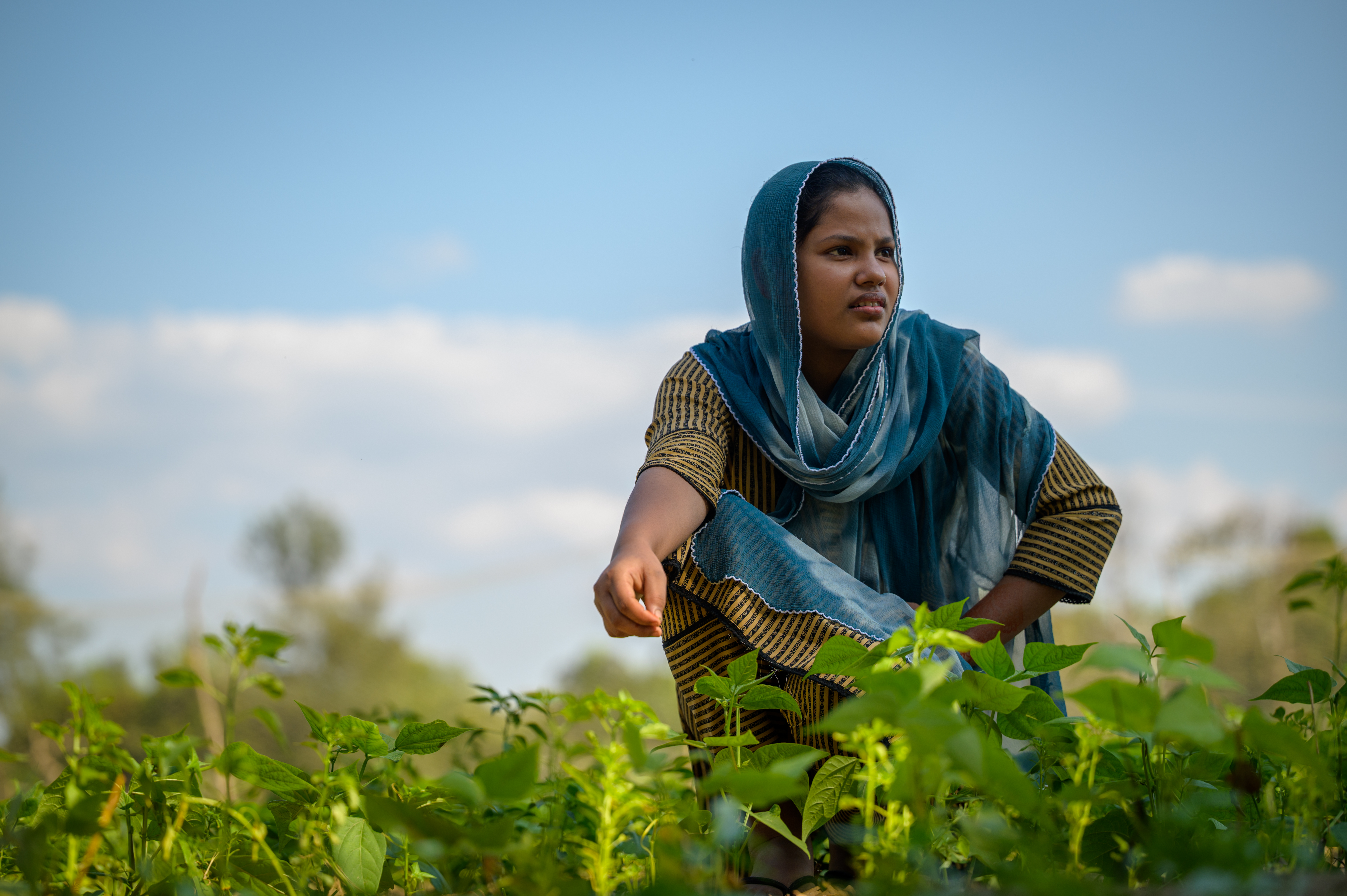
In countries such as Bangladesh, the Solomon Islands and Papua New Guinea, families are experiencing the convergence of climate extremes. Floods follow droughts. Heatwaves precede storms. Coastal communities face rising seas while inland areas grapple with salinisation of groundwater. The Asia Pacific region is already the most disaster-affected globally, and its geography and monsoon systems intensify these risks.
For WASH systems, the consequences are stark. Wells collapse or become saline. Latrines overflow. Water sources are contaminated. Children fall sick. Women walk further, wait longer and carry greater risk. These are not isolated incidents but systemic failures under climatic stress.
While regional data suggests progress in WASH access over recent decades, coverage figures mask vulnerability; 910 million people still do not have safe sanitation services and an estimated 116 million lack basic drinking water. Infrastructure built for a more stable climate is failing under today's extremes. In response, World Vision has strengthened its commitment to adoption of climate resilient water and sanitation infrastructure through its Culture of Quality approach over the past year.
The UN Climate Change Conference, COP30, concluded in November 2025 with renewed commitments on adaptation. Yet a familiar gap remains between promise and lived reality. Climate adaptation finance continues to move too slowly and too unevenly to match the urgency faced by vulnerable communities.
That disconnect was powerfully articulated at COP30 by Lynthia, a 12-year-old World Vision child delegate from the Solomon Islands. Speaking directly to global leaders, she said:
"I speak for the children on Solomon Islands in the Pacific who suffer from climate change. We need world leaders to start delivering brave climate actions that secure our future, giving us a safer world that we can grow up in. We deserve to grow up safe, and that can only happen if we all protect our islands, our dreams and our world."
Her words cut through procedural language. They reframed the debate away from technical targets towards political responsibility. This is not simply about resilience indicators or funding windows, but about whether systems and leadership are strong enough to protect childhood itself. Evidence matters, but without political courage, it rarely moves fast enough.
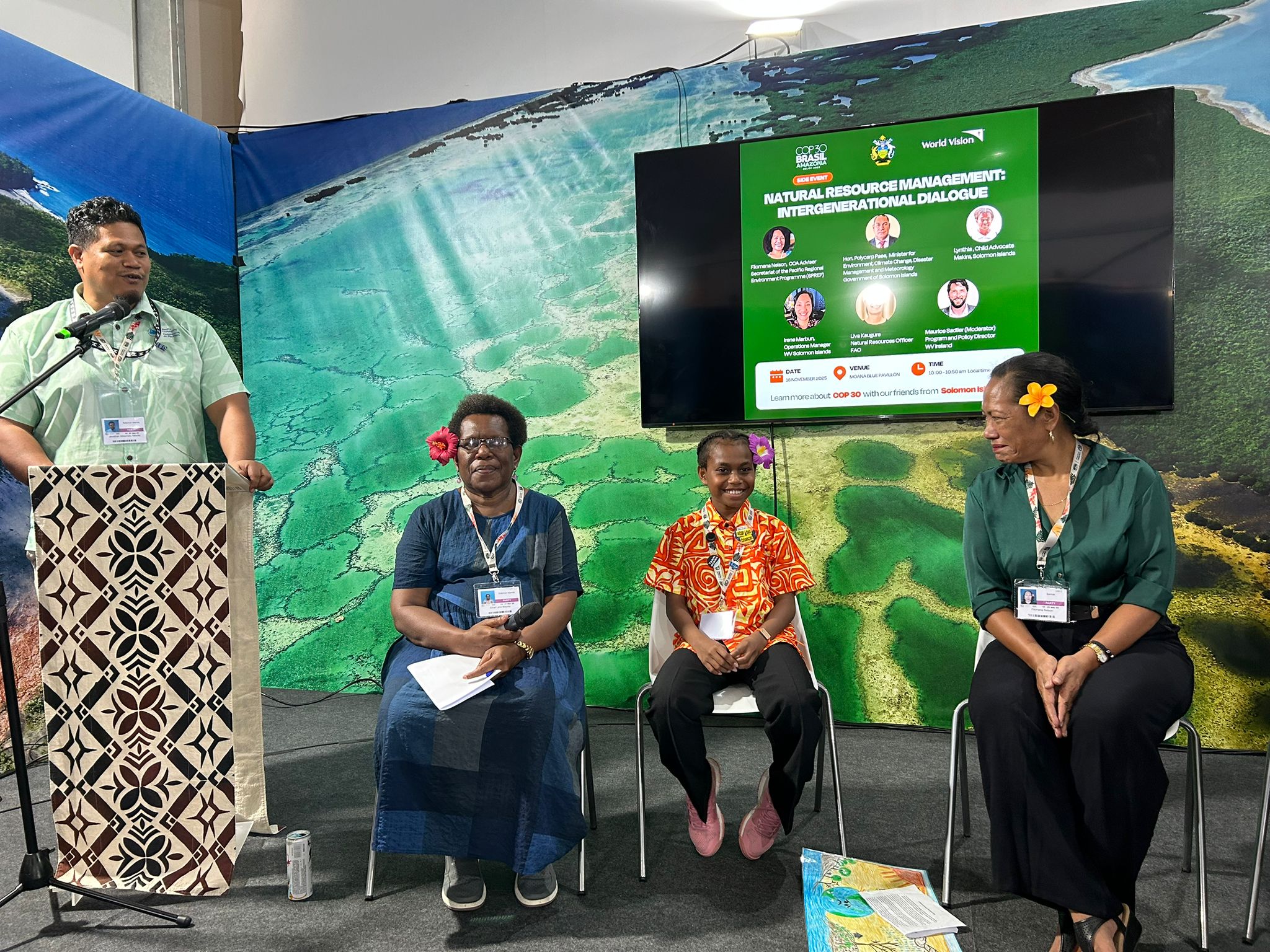
At COP30, parties agreed to triple adaptation finance by 2035 and adopted a Global Goal on Adaptation that includes water supply and sanitation as a priority sector, with ten specific indicators. World Vision welcomes this recognition. Yet questions remain about who pays, how quickly and on what terms.
Across World Vision's Asia Pacific programmes, climate-resilient WASH is already a core commitment, reflecting the region's disaster-prone geography. However, domestic resources alone cannot shoulder the full burden. Climate justice must remain central. Countries that have contributed least to climate change should not be left to absorb its costs alone. Grant-based, accessible and high-quality adaptation finance is essential, particularly for the most vulnerable communities.
Blended finance can play a role, but its relevance is measured in outcomes, not instruments. When sanitation fails after floods, disease spreads. When drainage collapses, livelihoods disappear. When urban systems are neglected, the poorest pay first and longest. Carefully regulated private-sector engagement, including in faecal sludge management, can help close gaps where public finance falls short. Inaction, however, is the most expensive option of all.
World Vision's WASH Business Plan aligns closely with COP30 priorities. It focuses on resilient entry points, nature-based solutions such as watershed protection, and rigorous monitoring through systems like mWater, including tracking climate-resilient WASH infrastructure. Quality WASH in schools, health facilities and communities is not an add-on. It is foundational to community-wide climate resilience.
As the world looks towards COP31, the test will be whether adaptation commitments translate into protection on the ground. Governments must prioritise WASH within national climate strategies and budgets. Development banks must accelerate and de-risk investment at scale. Climate finance must be accessible, equitable and focused on quality and resilience particularly for the most vulnerable communities. And leaders must continue to listen to children like Lynthia, not as a gesture, but as a call to action.
The rains will not wait. If communities across World Vision's Asia Pacific region are to offer their children a safer future, climate-resilient WASH must be prioritised and funded now. With urgency. With integrity. And without further delay.
By:
Jeremy Kohlitz, Research Director, University of Technology Sydney - Institute for Sustainable Futures (UTS-ISF)
Parvin Ngala, World Vision Global Director Water, Sanitation and Hygiene.
Alexander Pandian, World Vision Senior Advisor – WASH Programmes
Subscribe to see more content like this
Related Resources

Has COP30 Really Brought Us Any Closer to Protecting Children from Climate Breakdown?

Can Bees Save the Amazon’s Children? What I’ve Learned from the Smallest Wings of Hope
