
Community Education saves Shabnam from Child Marriage in Afghanistan

Shabnam, a 12-year-old girl, lives in Keleygerd village of Gozara district in Herat. Her life as little girl ended abruptly one day when her parents told her she was going to get married. At the time, schools in Afghanistan were closed due to the global pandemic and Shabnam was already feeling miserable. “I missed my classmates too much,” says Shabnam, who is in second grade. The family decided to marry their daughter to the 15-year-old son of her father’s friend. “I was shocked when I heard my family is planning to marry me with someone,” she says.
Shabnam’s mother, Nazoko, 24, had been married early. “I was married off when I was only 11 years old,” she says. Marrying off her 12-year-old daughter was not something that concerned her—and she had a reason: The family needed the money.
“My son is 14 years old. We engaged him with a girl from the village,” says Nazoko. “The family asked five hundred thousand Afghani (about US$6,500) as [a] bride price. We did not have that much big amount. Therefore, we planned to marry off Shabnam to get some money to secure my son’s engagement,” she says.
Breaking the cycle that leads to childhood marriages is a focus of World Vision’s work in Afghanistan, and the community-based social change sessions are working. Bahara, 24, is the facilitator of social change sessions in her village. Trained by World Vision, she calls women of the community to participate in the sessions to understand about child early and forced marriage (CEFM). The project, which started 18 months ago, is now in its second phase.
“So far,” she says, “we have conducted nine awareness sessions to the women of Keleygerd village. There was less number of participants in the first session, but now women come to these sessions enthusiastically, and with an active participation,” says Bahara.
Bahara’s persistence has been key to the success of the project. Bahara is from Keleygerd village and she knew the right women to reach out to—women who know that child early and forced marriage is a serious issue. The training Bahara received from World Vision prepared her to answer their questions about why child early and forced marriage happens and what they can do to stop it. Also critical to success: she has the support of the village head and the faith leader.
The participants circulate messages about child rights and the negative consequences of CEFM to other villagers, including their relatives in other villages. “Women are now proactive and share their lessons to other women ending child marriages and gender based violence,” says Bahara.
One of Bahara’s students told the group about an impending child marriage in her neighborhood. It was 12-year-old Shabnam. Maryam, 22, was trying to keep Shabnam from becoming a victim. “My neighbor has planned to marry off their underage child due to financial problems,” says Maryam. “I went to their house and shared the negative impacts of child marriage. I [was] able to convince them somehow, but shared the issue in the class [because I needed more help].”
Maryam and Bahara went to visit the family together and they were able to convince the family to stop the marriage. The family will now wait until they have enough money for their son’s marriage. And today, Shabnam continues her education to become a teacher in the future, “I am very much happy and I wish to grow up soon to become a teacher,” says Shabnam.
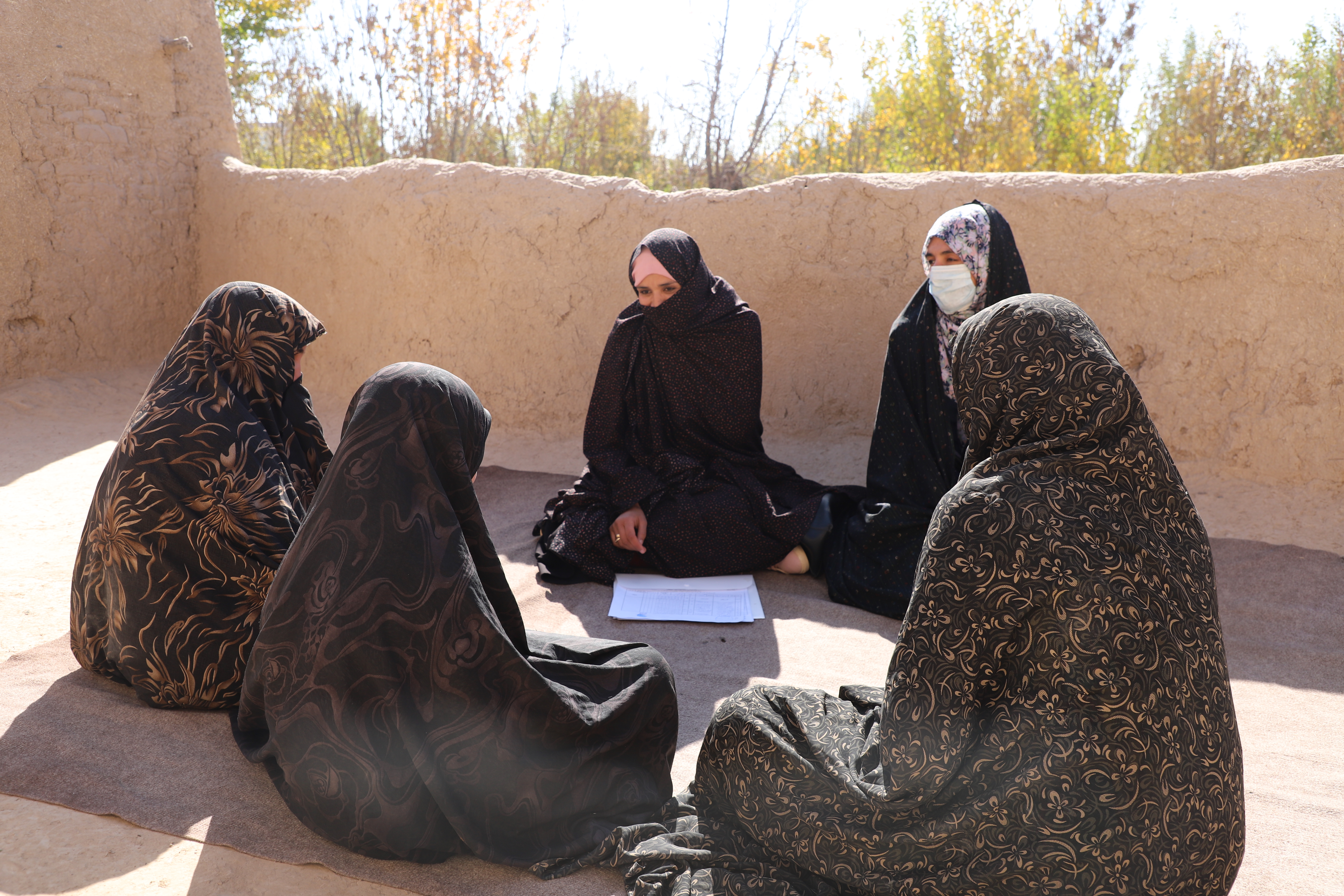
According to Somaya, a Community Development Mobiliser from World Vision’s project, Enhancing Hope for Afghan Girls in Herat Province, so far, participants from the social change programme have solved at least two to three cases of CEFM in their villages.
“About 276 women regularly participate to social change programmes,” says Somaya. “Their active role at the community level indicates decreasing of child early and forced marriages.” But there is still more to be done, she says.
Funded by World Vision New Zealand, the project aims to reduce incidents of child, early and forced marriage (CEFM) in Herat province in order to alleviate its negative impact on the survival and development of Afghan girls. Community facilitators work as volunteers to transform cultural norms, attitudes, and practices underlying CEFM.