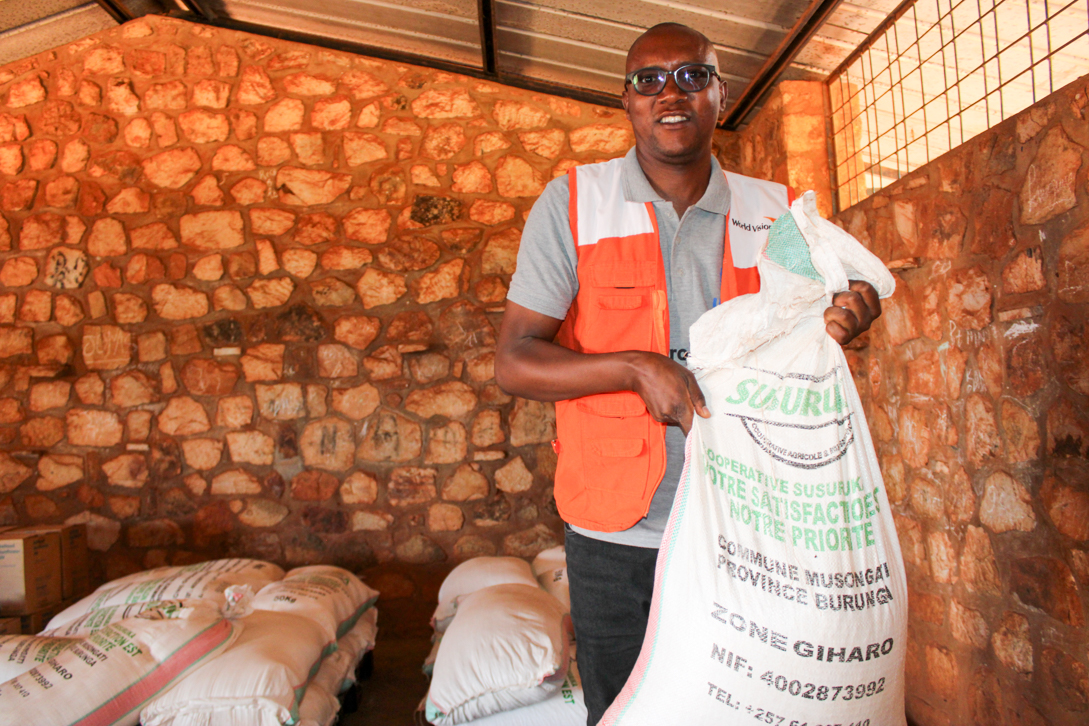
Hope amidst food ration cuts

When a child is hungry, it is difficult to expect them to thrive in school. Muhodari, 16, was on the verge of seeing his education disrupted as food rations in refugee camps were reduced due to global funding constraints. Like many families in Musenyi Refugee Site, where he lives, his family struggles to meet their basic needs while ensuring that their children remain in school.
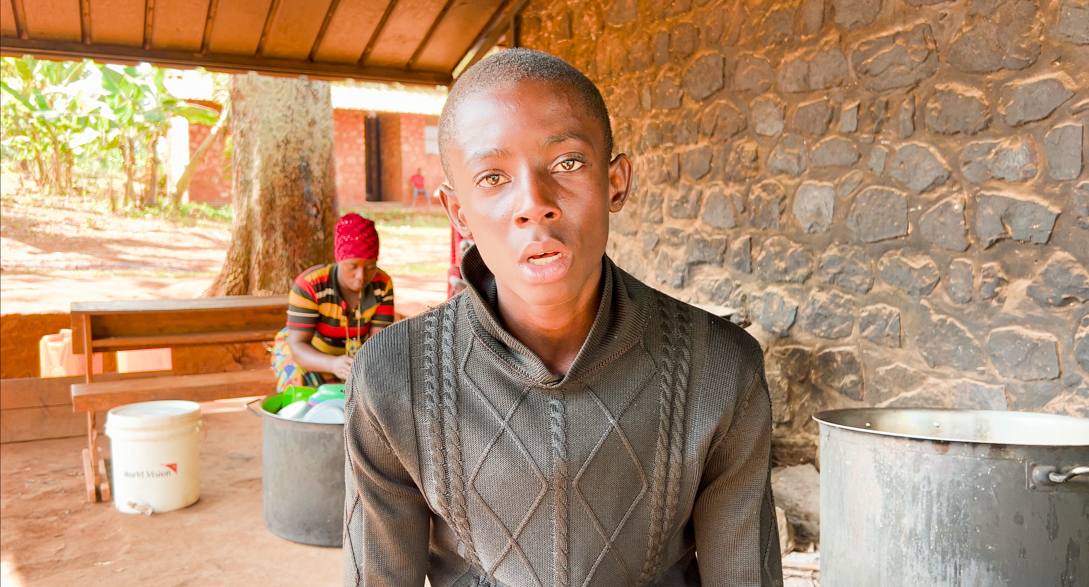
Life in the refugee camps is increasingly challenging. During a recent visit to Musenyi and Nyankanda refugee sites, families explained that each refugee receives approximately 37,000 Burundian francs (about USD 12) per month. For many, this support is insufficient to cover essential needs, forcing them to rely on small businesses and farming activities to supplement their income.
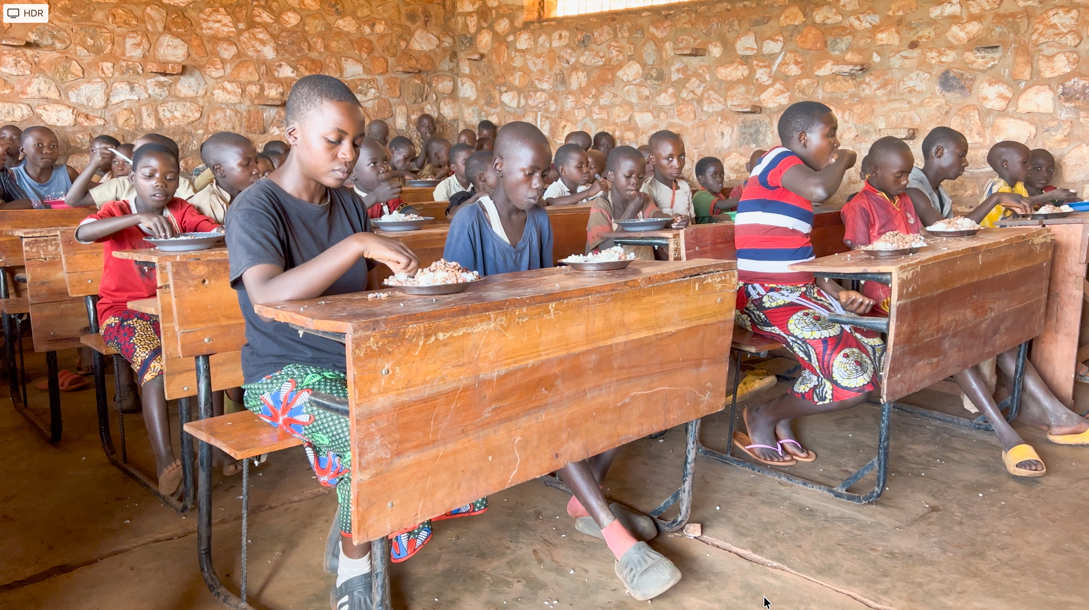
Despite these hardships, a beacon of hope shines through the school feeding programme at Muhodari’s school. Funded by the World Food Programme (WFP) and implemented by World Vision, the school canteen provides hot lunches to students every day. The programme has become a lifeline for many children, helping them stay in school and reducing the risk of dropout.
Muhodari is among those whose dreams remain alive because of this support. Determined and ambitious, he has set his sights on a brighter future.
“Once I complete my studies, I want to become a government official in my country so that I can contribute in caring for the most vulnerable,” says the young boy who fled two years ago from the Democratic Republic of Congo.
A refugee-led cooperative supplying food to school canteens
In Musenyi, two community-based farming cooperatives whose members are refugees and people from host communities have been contracted by WFP to supply food for the school canteens.
Safi, a refugee and leader of one of the two cooperatives, says that farming has strengthened the resilience of cooperative members and fostered positive relationships with host communities, who support them in accessing arable land for cultivation. Her cooperative is supplying food to two schools of 2,000 school children.
“We have secured a contract worth 85 million Burundian francs (approx. 28,300 US$). I am proud that, as a refugee, I am able to produce food that benefits both refugee children and the surrounding communities,” Safi shares with a smile.
Theodore, a World Vision staff member working on Livelihood and Economic Inclusion Project funded by UNHCR, highlights the transformative impact of these initiatives. He notes that as food assistance decreases, livelihood opportunities and school feeding programmes are helping families cope with the challenges.
“Providing meals to school children is essential because it has contributed significantly to reducing school dropout rates,” he explains.
Muhodari is fortunate that his education continues uninterrupted. For many children who are not enrolled in school, the situation remains far more difficult. Yet, for families like Safi’s, who are actively engaged in farming and income-generating activities, there is renewed hope.