
From Palm Oil Waste to Eco-Charcoal: A Story of Youth Empowerment in Nyanza

A group of driven young people in Nyanza — a commune in southern Burundi known for its oil palm — is rewriting challenges into opportunities. Trained by World Vision in business planning, organizational management, and mindset change, sixteen youths came together to form the Multiproduction Cooperative. Their mission: to transform residues left after palm oil processing into eco-friendly charcoal.
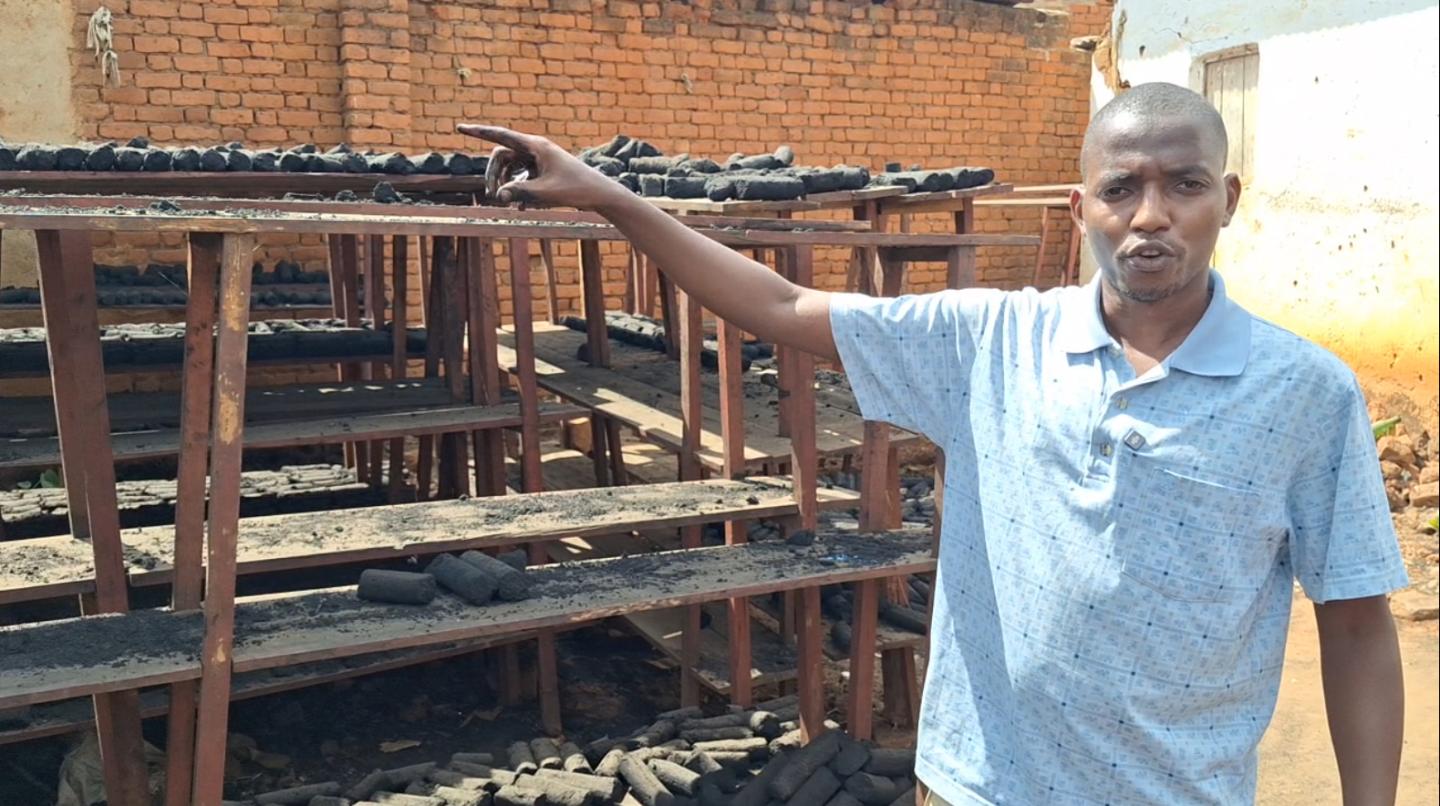
A bet won; the innovation has become more than just fuel — it is a lifeline. Affordable, profitable, and sustainable, the charcoal provides income for the cooperative while protecting the environment.
“We transform the remains from palm oil production into combustible charcoal,” explains Désiré NDUWAYEZU, the cooperative’s accountant. For him, the project has been life-changing. “At first, it was difficult even to buy laundry soap for myself. But today, I am married, a father of two, and able to support my family without difficulty.”
The cooperative has also become a place of belonging. Fiston IGIRANEZA, a recent returnee from Tanzania, recalls: “After five years in exile, it was not easy to reintegrate. But thanks to the cooperative’s warm welcome, I felt at home.”
His membership has brought tangible benefits: “I bought a sheep for 100,000 Burundian francs, and I no longer depend on my parents for clothes.”
Each member saves 60,000 Fbu monthly, deposited directly into a cooperative account. These savings can only be accessed when members present a project proposal, ensuring that income fuels further development.
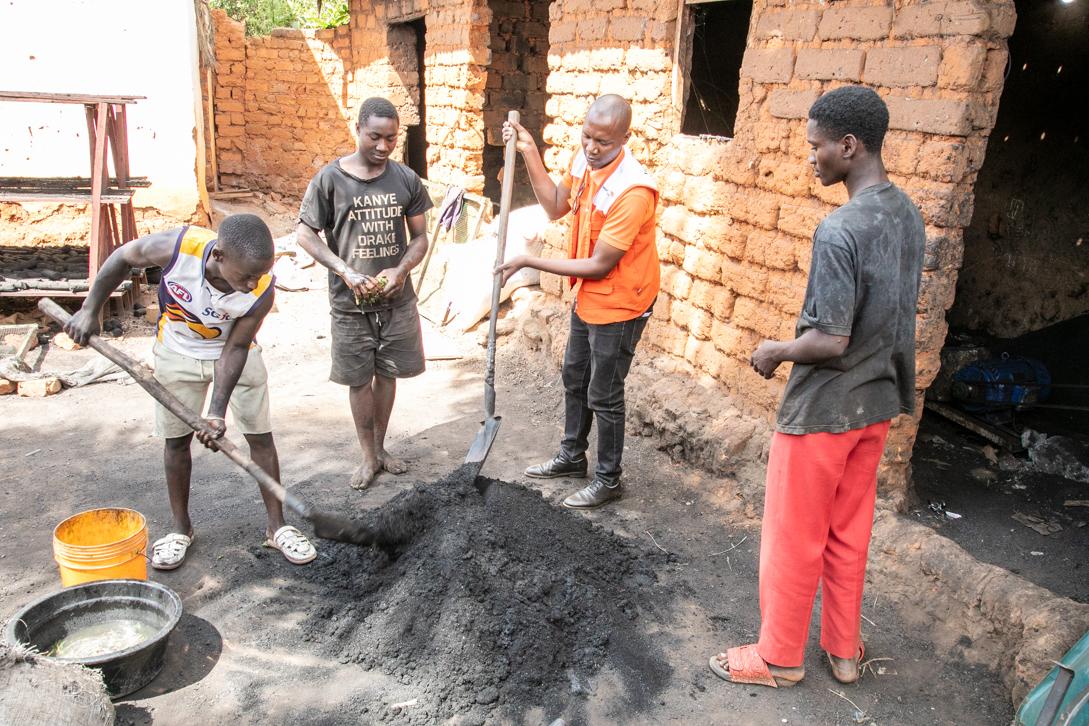
Eco-Friendly and Economical
Beyond financial gains, the charcoal is revolutionary for its ecological impact. “It burns well, lasts long, and requires fewer pieces. I buy only 10 kilos for the whole week,” says Rebecca NSHIMIRIMANA, one of the 16 registered members.
Local businesses are also reaping the benefits. Fiacre NIYONGABO, manager of a hotel in Nyanza, reports that the catering service now spends 600 kilos per week at 7,000 Fbu per kilo — a fraction of the previous 700,000 Fbu weekly expense.
The health of kitchen staff has improved too: “The new charcoal produces almost no smoke, unlike the old one which often caused lung diseases among cooks,” Fiacre explains.
Story by Didier Bukuru, Communications Coordinator