
World Vision at HNPW 2026: Strengthening Hope, Protection and Lasting Impact for Children in Crisis

At the Humanitarian Networks and Partnerships Week (HNPW) 2026, World Vision demonstrated how child-centred, evidence-driven approaches can deliver greater impact, efficiency, and resilience at a moment when humanitarian needs are rising and resources are under intense strain. Across seven high impact sessions, in-partnership with institutional donors like Luxembourg Aid & Development, UN agencies (including WFP, FAO, UNDP, UNICEF), clusters and networks like School Meals Coalition, Food Security Cluster and the Cash Learning and Partnership (CALP) Network, research institutes like International Food Policy Research Institute (IFPRI), and the private sector, World Vision representatives helped shape global conversations by bringing practical field experience, strengthening partnerships, and calling for more focus on outcomes for children and communities.
Our engagement reflected our core commitment to helping children survive, thrive, and reach their full potential, even in the hardest places. From food security and education to digital innovation, complementarity and system reform, World Vision positioned children not as passive beneficiaries of aid, but as rights‑holders whose well-being is a measure of whether the humanitarian system is truly working.
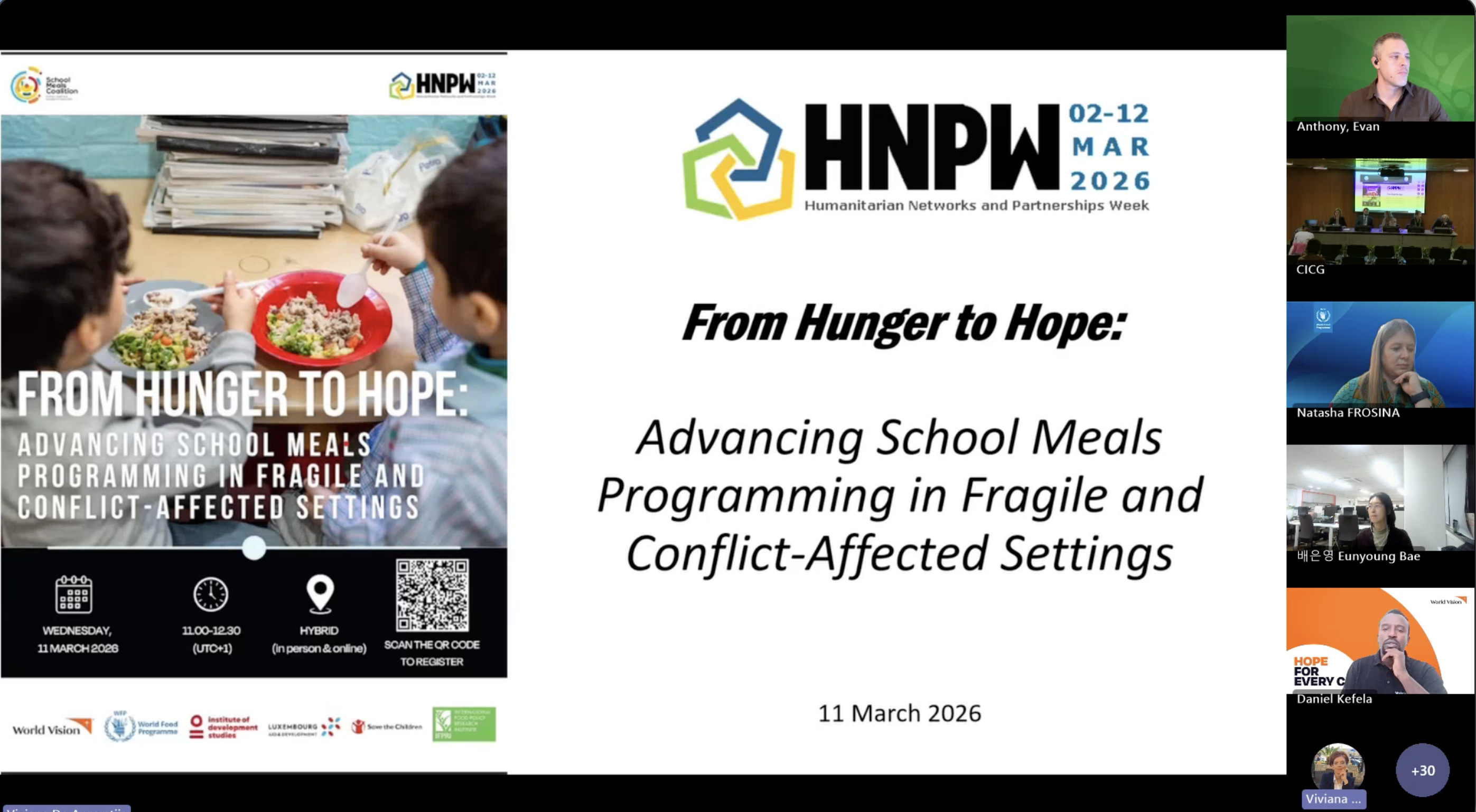
A key outcome of World Vision’s participation was the elevation of school meals as a powerful, child-centred-approach in fragile and conflict-affected settings. Evidence shared at the HNPW showed that when school meals are delivered reliably and with community ownership, they do far more than address hunger. They help children stay in school, reduce exposure to harmful coping strategies, support psychosocial wellbeing, and create safe, shared spaces that strengthen social cohesion. For children living through conflict and displacement, these programmes restore routine, dignity, and hope. Discussions also underscored that protecting these gains requires sustained investment, secure learning environments, and conflict‑-sensitive delivery‑areas where donor partnership is decisive.
We also reinforced the case for cash and voucher assistance (CVA) as a cornerstone of effective humanitarian response. Drawing on operational experience from the Middle East, Bangladesh, and other contexts, the CVA session demonstrated how cash delivers impact more efficiently and flexibly, by meeting the urgent needs of children and their families, while preserving their dignity and choice. There was a shared recognition that locally led CVA delivery strengthens accountability, improves reach, and builds the foundations for longer-term resilience, directly aligning with donor priorities on localisation, cost-effectiveness, and long-term resilience.
Across multiple food security-focused sessions, World Vision advanced a strong agenda on anticipatory action and emergency agriculture that puts children’s futures at the centre of crisis response. With food crises becoming increasingly predictable, discussions highlighted the value of acting early, before children and families reach a breaking point, through forecast-based triggers, pre-agreed financing, and locally led delivery. Evidence shared at HNPW showed that anticipatory action can reduce humanitarian needs, protect livelihoods, and lower overall response costs. Emergency agriculture emerged as a high-return investment that protects nutrition, supports self-reliance, and helps families remain rooted in their communities, reducing long-term dependency while preserving dignity.
We also played a convening role in advancing system reform that works for children. Through discussions on complementarity and coordination, World Vision helped shape the vision that complementarity is essential to enhance responsiveness, efficiency, and equity in humanitarian action. This approach requires collaboration, a sense of shared purpose, trust, and partnership between all members of the humanitarian ecosystem to achieve better collective outcomes, and have the greatest impact on children’s lives.
Finally, we elevated an urgent, child-centred agenda on digital transformation and AI. As digital tools increasingly shape how assistance reaches families, World Vision called for safety-by-design, meaningful human oversight, and investment in digital literacy, so innovation protects children rather than exposing them to new risks. The outcome was a shared call to ensure that technological progress translates into greater protection, inclusion, and accountability for children in crisis especially in fragile contexts.
Overall, our engagement at HNPW 2026 demonstrated how strategic donor investment and equitable partnerships can support solutions that are scalable, cost-effective, locally-led, and child-focused, helping reshape the humanitarian system, ensuring that even in an era of compounding crises, children are not left behind, and hope remains possible.