
World Vision Eswatini Launches National Strategy 2026–2030 — Eswatini That Cares. Children Who Thrive.

On 19 March 2026, World Vision Eswatini officially launched its National Strategy 2026–2030 — Eswatini That Cares. Children Who Thrive — in the presence of the Prime Minister of the Kingdom of Eswatini, the United Nations Resident Coordinator, senior government officials, development partners, donors, and the communities this strategy was built to serve.
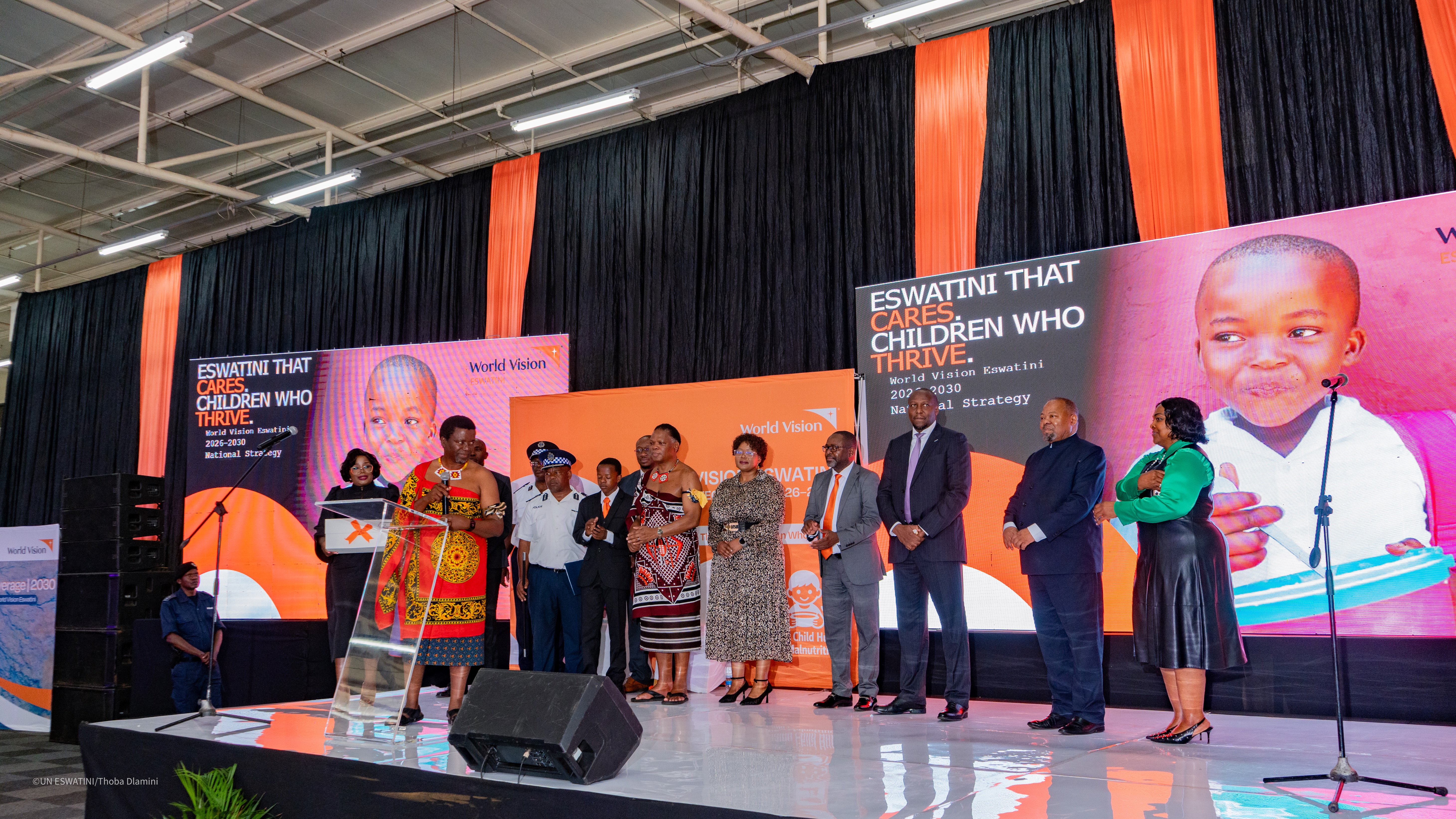
The event, held in Mbabane, brought together voices from across the development landscape — from national government to the international community, from civil society to the private sector. But the voice that defined the day, the one that silenced a room full of ministers and directors and senior officials, belonged to a child.
A strategy five years in the making
World Vision Eswatini has been operating in the Kingdom since 1992. In the previous strategy period alone, the organisation reached more than 357,000 children across 29 constituencies, with a total investment exceeding US$96 million. The National Strategy 2026–2030 builds on that foundation — and goes further.
With a total investment of US$68 million over five years, the strategy commits to reaching 395,000 of Eswatini's most vulnerable children through two integrated priorities: ending violence against children through the GUARD framework, and strengthening food security and nutrition through the HEART framework. Water, Sanitation and Hygiene — WASH — sits at the catalytic centre of both, connecting health, education, protection and economic resilience into a unified programme approach.
The strategy is directly aligned with Eswatini's National Development Plan 2023–2028 and contributes to the United Nations Sustainable Development Goals.
"The era of strategies gathering dust must be left behind"
The Honourable Russell Mmiso Dlamini, Prime Minister of the Kingdom of Eswatini, opened the proceedings with a message that left no room for ambiguity. Speaking under the theme From Policy to Impact, he made clear that the occasion demanded more than celebration — it demanded commitment.
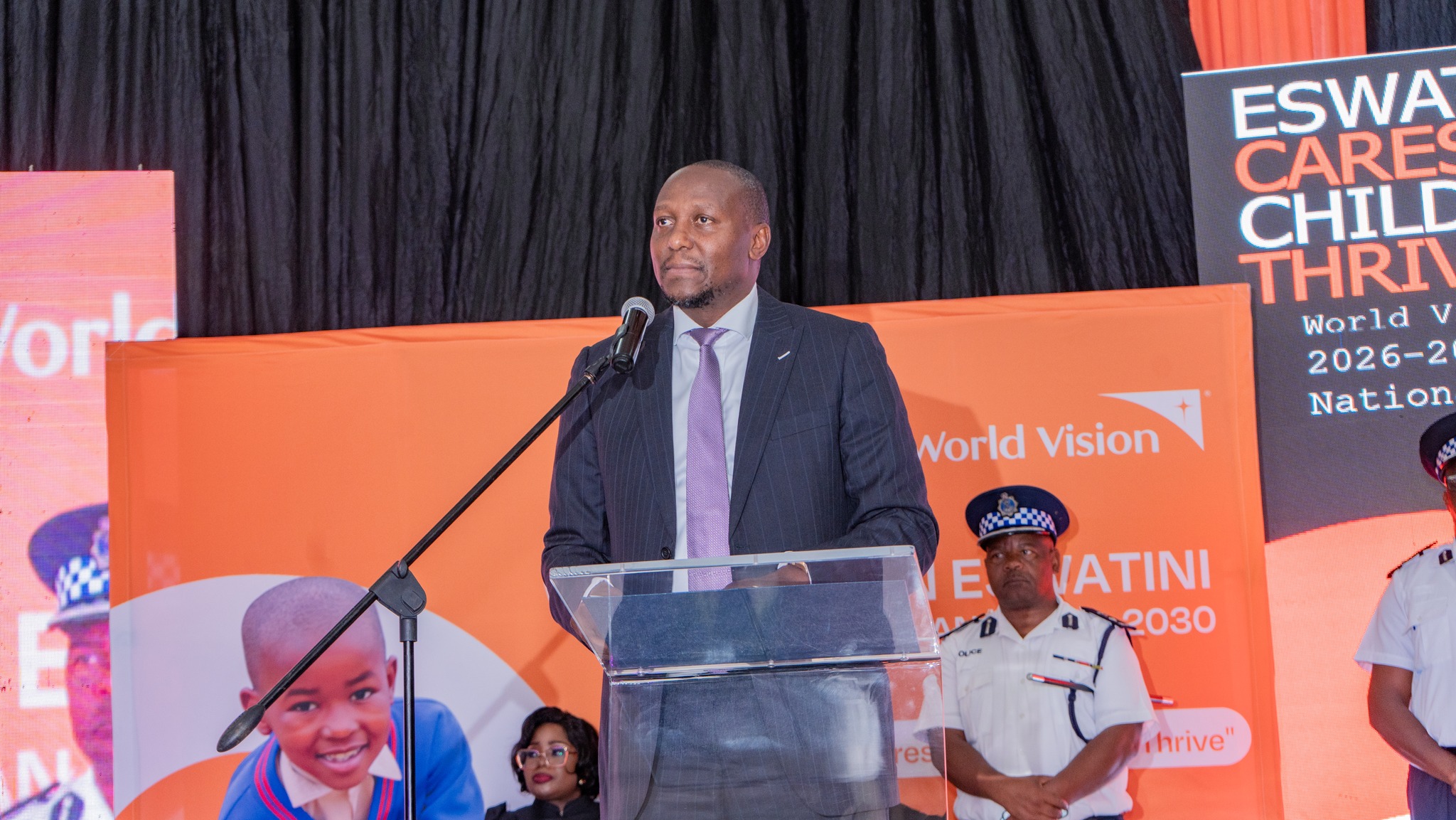
"The era of strategies gathering dust must be left behind," he said. "The time demands practical, coordinated, and impactful action."
The Prime Minister reflected on Eswatini's significant development opportunities — in agriculture, industrialisation and ICT — while stressing that inclusive growth requires placing women, children and vulnerable groups at the centre of every national programme. He spoke pointedly about the country's youth unemployment rate of 58.2%, framing it not as a crisis but as an opportunity waiting to be unlocked through investment in skills, vocational training and entrepreneurship.
"Our youth are not a challenge, but our greatest resource and economic driving force," he said.
He closed with a call to collective action that resonated through the room. "Let us advance together — government, civil society, and the private sector — in solidarity to build an Eswatini where every child thrives and no one is excluded."
"A strategic choice that will shape the country's future"
Mr George Wachira, United Nations Resident Coordinator for Eswatini, brought the perspective of the international community and reframed the act of investing in children in terms that every development partner and private sector leader in the room could understand.
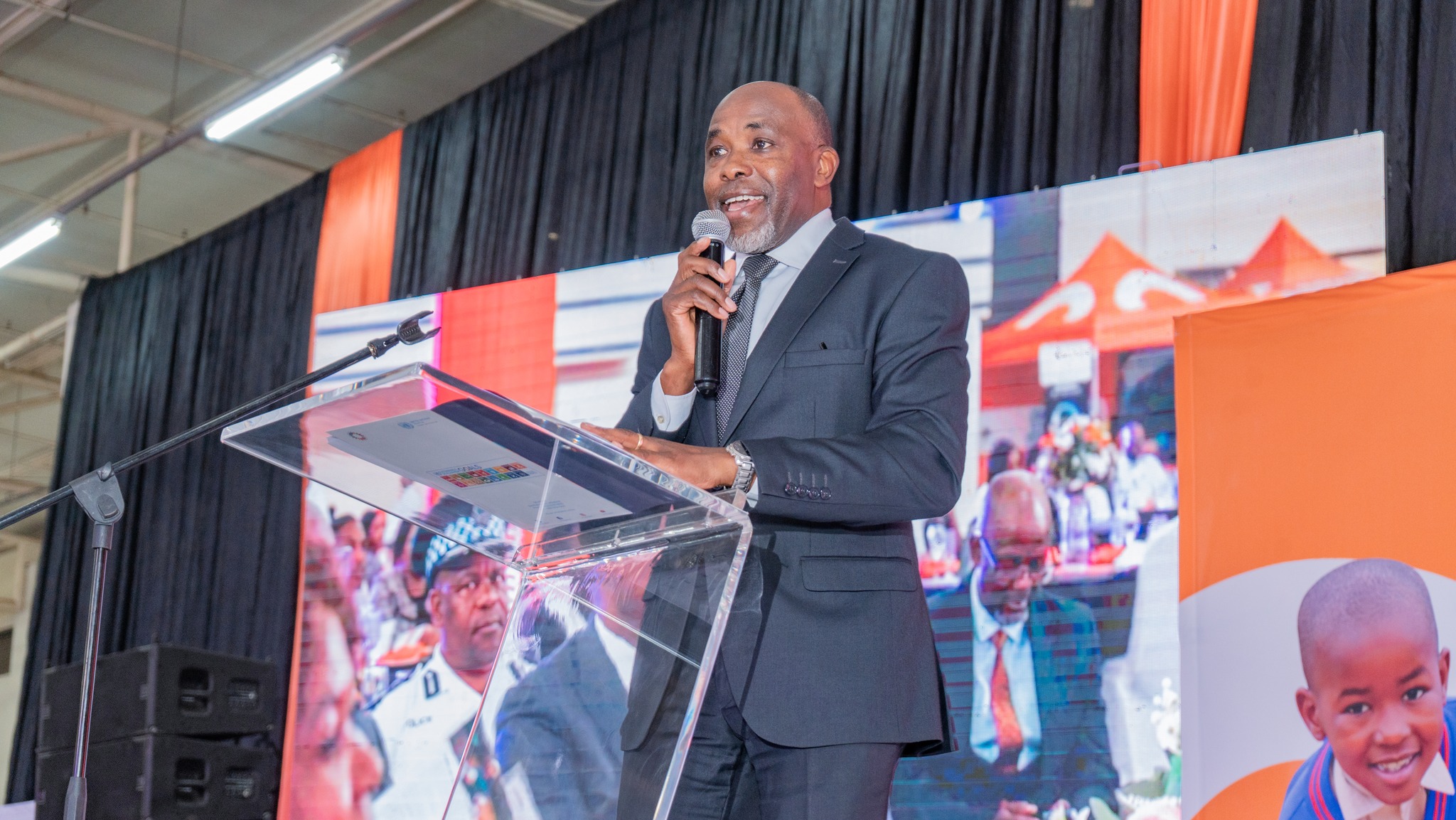
"Investing in children and empowering women is not just a moral obligation," he said. "It is a strategic choice that will shape the country's future."
Mr Wachira acknowledged the significant challenges that Eswatini's children continue to face — poverty, limited access to early childhood development, inadequate nutrition, and exposure to violence and unsafe environments. He called for integrated, whole-of-society responses — across government, communities, civil society and the private sector — as the only path to lasting results.
"Together," he said, "we can build a future where every child in Eswatini is safe, healthy, educated, and empowered to contribute to national development."
"Eswatini is becoming a flagship"
Amos Zaindi, National Director of World Vision Eswatini, spoke to what makes this moment — and this country — distinctive within the broader Southern Africa region.
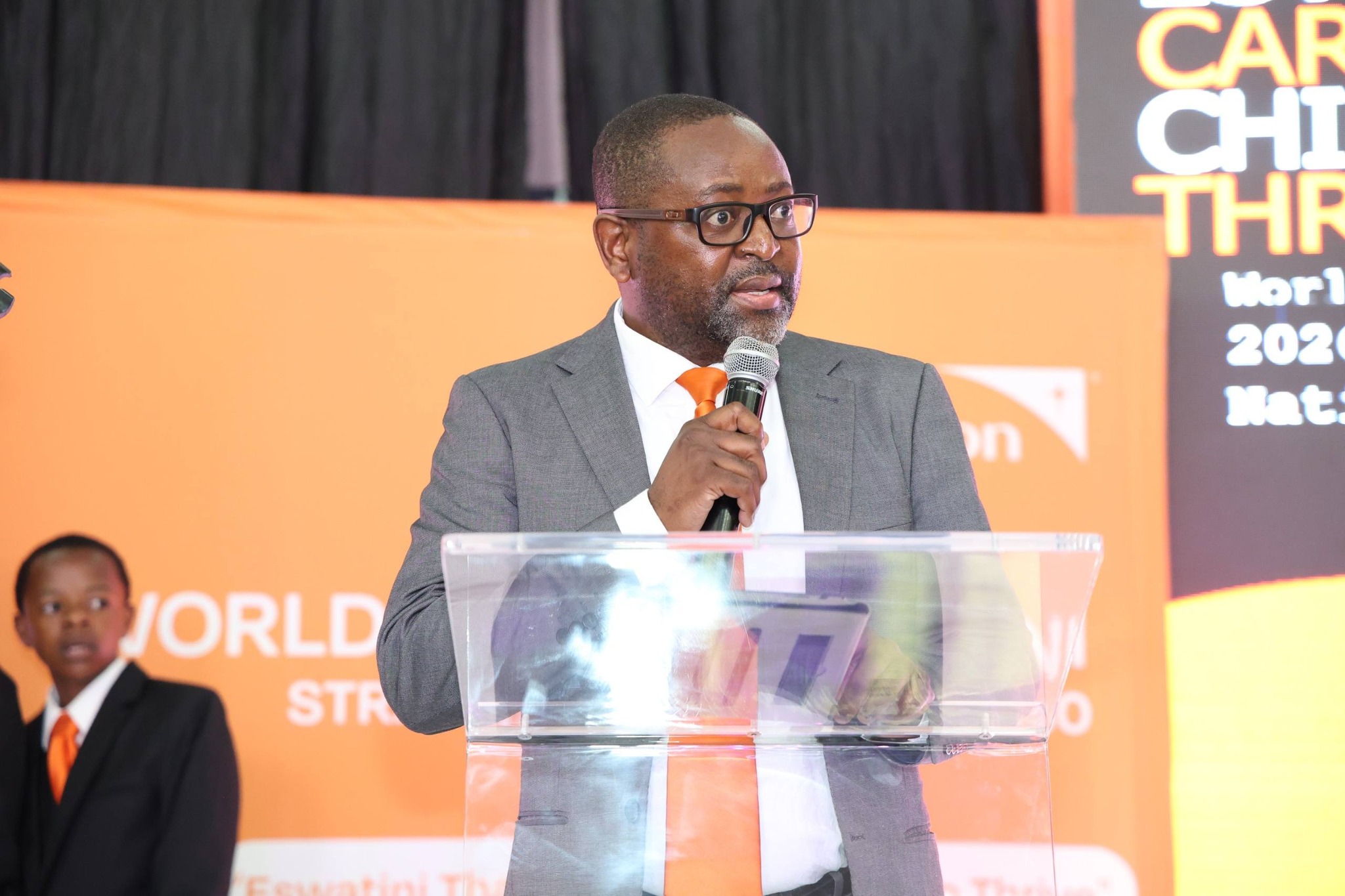
"What we are building in Eswatini is not just a strategy — it is a model," he said. "A model that shows what becomes possible when government and civil society stop working in parallel and start working as one. From WASH to child protection to food security, the Government of Eswatini has been a genuine partner at every step. That is rare. That is powerful. And it is why Eswatini is becoming a flagship for what development partnership can look like across Southern Africa."
The partnership he described is already producing measurable results. The Universal Water Service Coverage project — a SZL 250 million initiative co-financed equally by the Government of Eswatini and World Vision — is actively delivering water infrastructure across 18 constituencies, targeting 329,000 Emaswati by 2030. Seven schemes have been completed. Eight are currently under construction. The model is working.
Zaindi committed World Vision Eswatini to delivering on every line of the National Strategy — for each of the 395,000 vulnerable children the plan is designed to reach.
The voice that stopped the room
There is a particular kind of clarity that comes from someone who has no interest in sounding important — only in being heard.
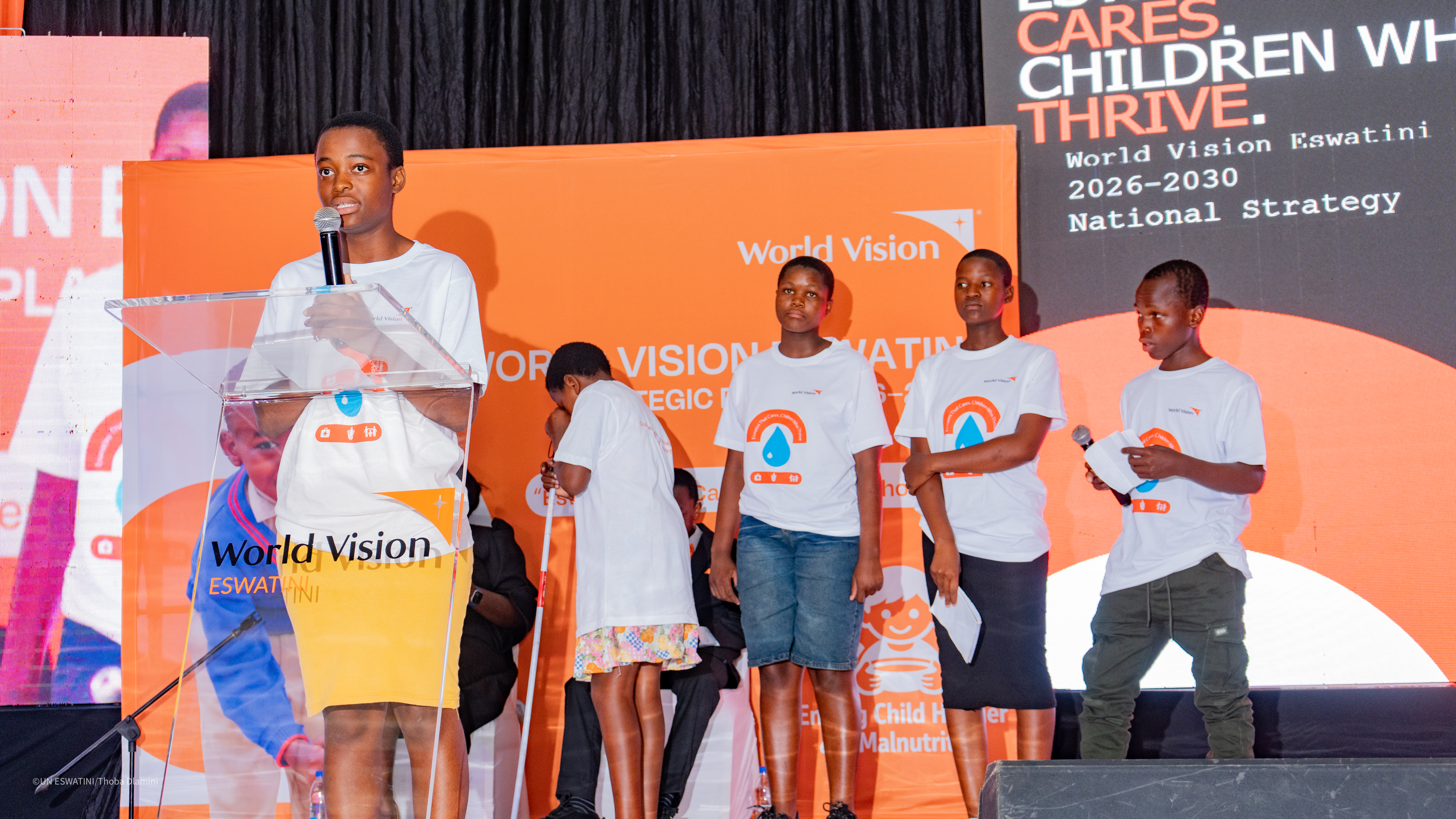
Hlelo Lwenkosi, a World Vision Child Ambassador who co-facilitated the event following the launch, walked to the microphone and delivered the speech of the day. He spoke about his community, about the challenges children face, about what it means to finally see a plan that takes those challenges seriously. And then he looked directly into the camera and addressed every donor, partner and observer watching from anywhere in the world.
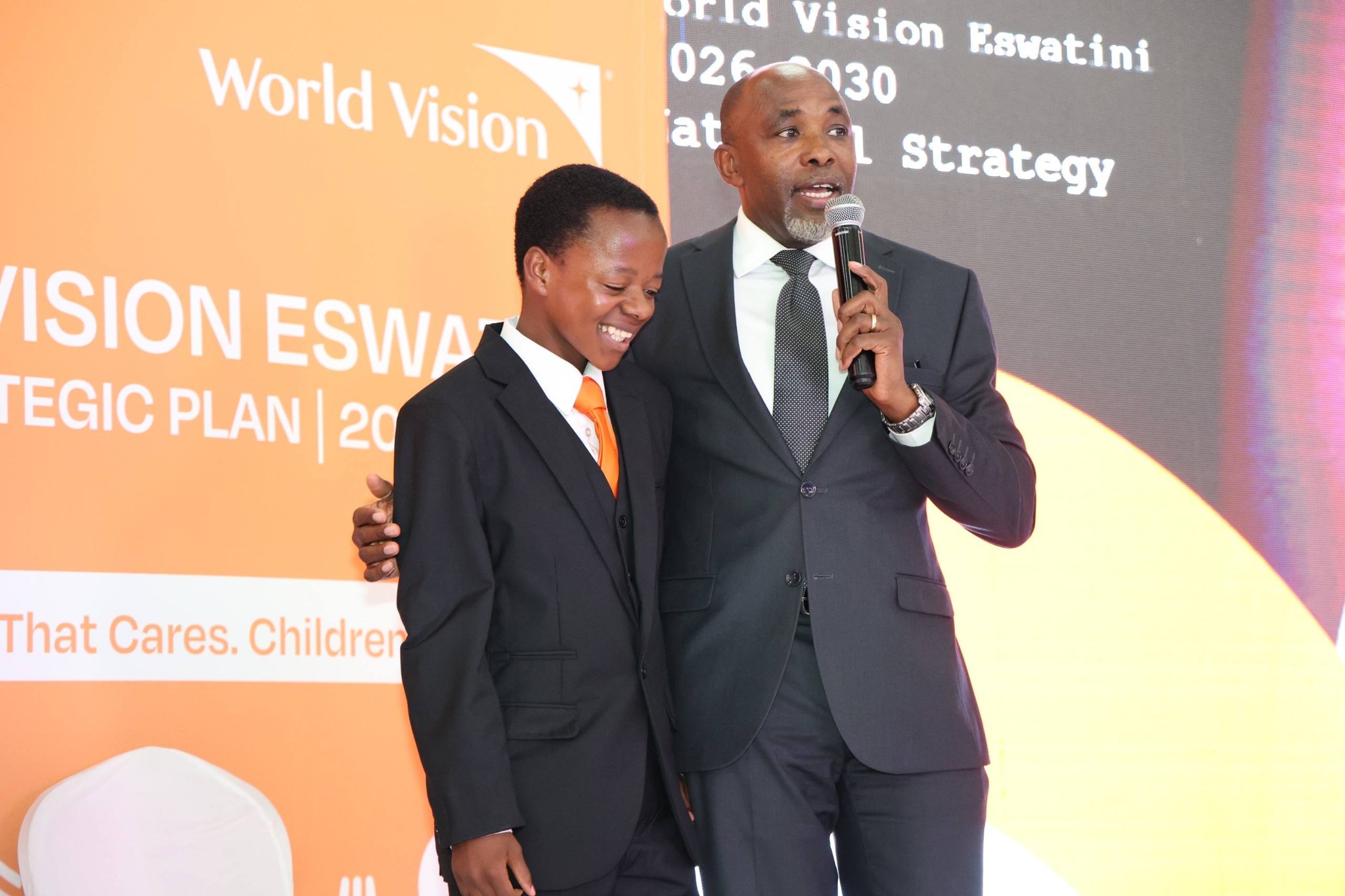
"The strategic plan is nothing but papers in the eyes of a blind one," he said. "But in the eyes of one who sees the future — this is the future. This is our future generation."
He invited the world to be part of what happens next — not with grand rhetoric, but with a simplicity that carried more weight than any statistic.
"It doesn't matter how much money it is. What matters is that you are showing that you care about shaping other young people's futures."
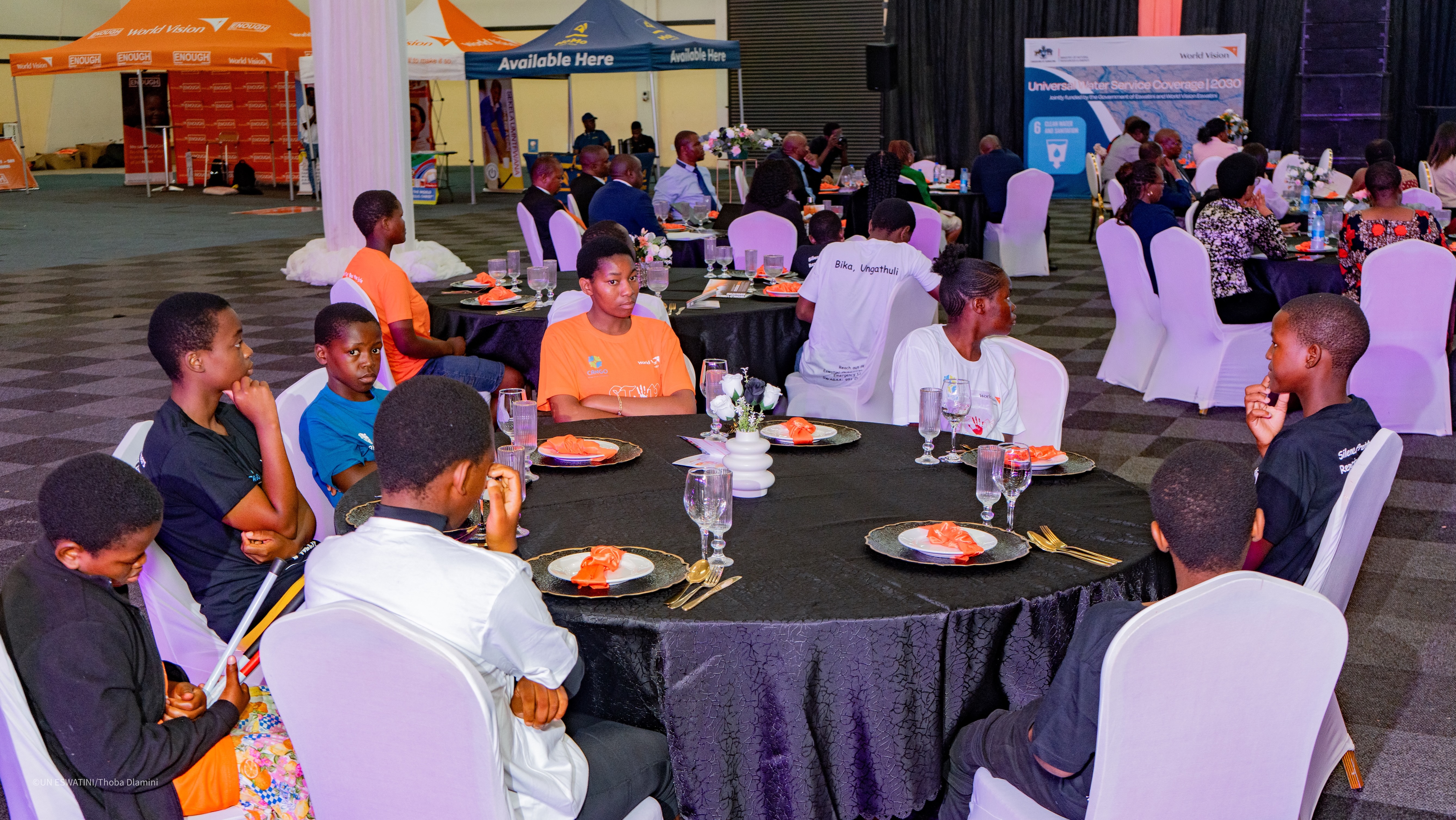
Hlelo was not alone. Throughout the event, children took the floor — sharing stories of their homes, their dreams, and the ways World Vision's programmes have changed the trajectories of their lives. Together, they were the most compelling argument for why the strategy matters, and the most unambiguous reminder of who it is for.
What comes next
The launch of the National Strategy 2026–2030 is not an ending. It is the beginning of five years of accountability — to the Prime Minister's call for action, to the UN's call for inclusion, to Amos Zaindi's promise of partnership, and above all to Hlelo's reminder that the children of Eswatini are watching.
US$68 million. 395,000 vulnerable children. Five years of purposeful, faith-driven work.
The promise is made. The work begins now.
To download the World Vision Eswatini National Strategy 2026–2030, or visit wvi.org/eswatini. To partner with World Vision Eswatini or learn more about our programmes, contact us at wvi.org/eswatini