
How Deceptive Job Promises Led Nkoka into Exploitation—and How a Car Wash Restored His Dignity

By Reentseng Phephetho, Communications & Digital Officer
At 39 years old, Nkoka(not his real name) had spent years searching for employment to support his wife and two children. Like many men in Lesotho, the pressure to provide weighed heavily on him, and opportunities at home were scarce. When a close friend who was working in Bloemfontein, South Africa, offered to help him find construction work, Nkoka felt hopeful.
“I just wanted to work honestly and take care of my family,” Nkoka shared. “When my friend said there was work in South Africa, I believed this was my chance.” In 2021, Nkoka left Lesotho with two friends to work in Bloemfontein. They were promised a salary of at least R3,000 per month, enough to send money home and rebuild their lives. But the reality they encountered was very different.
Instead of receiving the promised salary, their pay fluctuated unpredictably—sometimes R600, sometimes R500, and often nothing at all.
“We were confused but kept telling ourselves that maybe things would improve,” Nkoka said. After three months, they were informed that they were being transferred to Limpopo to continue the same construction work. It was there that the situation worsened. For three consecutive months, Nkoka and his colleagues received no salary at all.
“There were days we slept hungry,” Nkoka recalled. “As a father, that pain stays with you. I felt like I had failed my family.”
As conditions became unbearable, Nkoka began looking for a way out. With no documents and no money, escaping was risky—but staying was worse. He searched for piece jobs, working small, informal tasks just to raise enough money to return home.
“I knew I had to leave or I would never make it back alive,” he said.
In 2022, Nkoka finally managed to return to Lesotho. Emotionally drained and traumatized by the experience, he sought help from the Migrant Workers Association of Lesotho, where he received psychosocial support. Through this support, Nkoka was linked to World Vision Lesotho under the Promotion and Protection of Human Rights (PPHR) project, funded by the European Union.
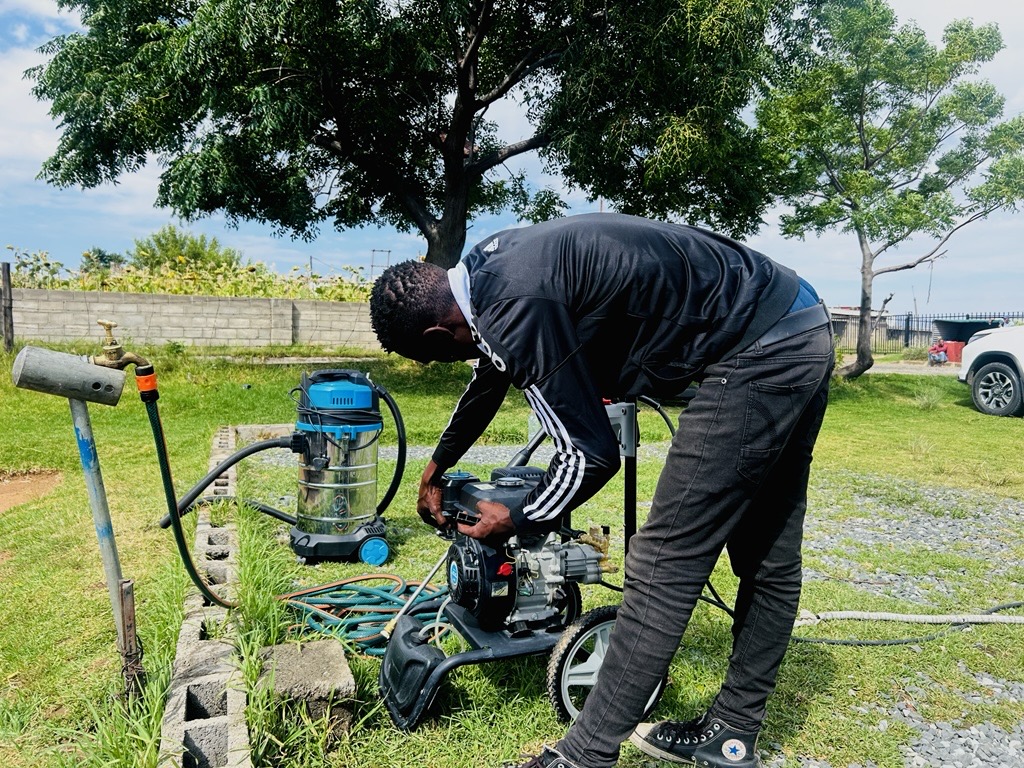
Through the project, Nkoka received car wash equipment—a simple but life-changing intervention. “When they asked me what I could do to earn a living, I knew I needed something practical,” Nkoka said. “The car wash gave me back my dignity.”
Today, Nkoka operates a car wash business in his community. On average, he earns at least M150.00 per day, providing a steady income that allows him to meet his family’s basic needs.
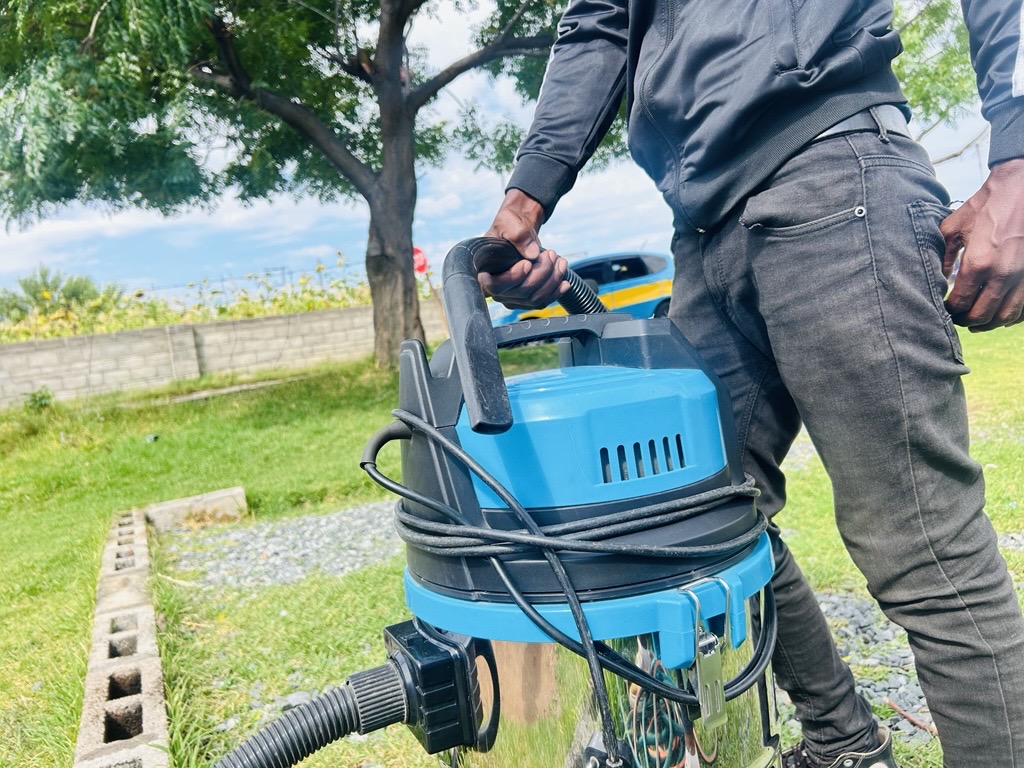
“Now I wake up knowing I can put food on the table,” he said with pride. “My children see me working, and that means everything to me.”
The car wash business has not only restored Nkoka’s livelihood but also his confidence and sense of purpose. Where once he was exploited and stripped of his rights, he is now self-reliant, hopeful, and empowered. Nkoka’s story highlights how deceptive job promises and lack of employment opportunities can expose men to labour exploitation, and how timely support and livelihood opportunities can rebuild lives.
“I don’t want anyone to go through what I went through,” Nkoka reflected. “If we are supported here at home, we won’t have to risk our lives looking for work elsewhere.”