
How World Vision’s GEWE Project helped Leronti Farmers Cooperative thrive

By Reentseng Phephetho, Communications and Digital Officer
High in the deep mountains of Lesotho, in Mantsonyane village of Thaba-Tseka district, 22 households once stood at the edge of despair. In 2020, at the height of the COVID-19 pandemic, livelihoods were lost, food was scarce, and families struggled to meet even their most basic needs. Parents watched helplessly as their children went hungry and dropped out of school because school fees could not be paid.
Faced with growing hunger and uncertainty, these households made a bold decision: instead of suffering alone, they would come together. They pooled their land, their small savings, and their determination — and from this shared struggle, Leronti Farmers Cooperative was born. Made up of 44 members and guided by an eight-member committee, the cooperative began crop production with one clear goal: to earn income and provide for their families.
Starting with cabbage and maize, and later adding potatoes, the group relied solely on indigenous knowledge. But the results were discouraging. Yields were poor, crops were stolen, and what little they harvested often rotted due to lack of markets.
“Our biggest challenge was not knowing where to sell,” recalls Ramahetlane, the Deputy Chairperson.
“Even the little we harvested would end up going bad because we had no buyers.”
Without record-keeping skills, the cooperative lost track of income and expenses. The dream of securing a better future for their families seemed to drift further away. Children continued to suffer. “It was painful to see your child expelled from school simply because you could not afford school fees,” shares Mamosala, one of the cooperative members.
Cultural norms further limited progress. Women were largely excluded from leadership and decision-making, as farming was viewed as men’s work — a belief that held the group back.
A Turning Point Through GEWE
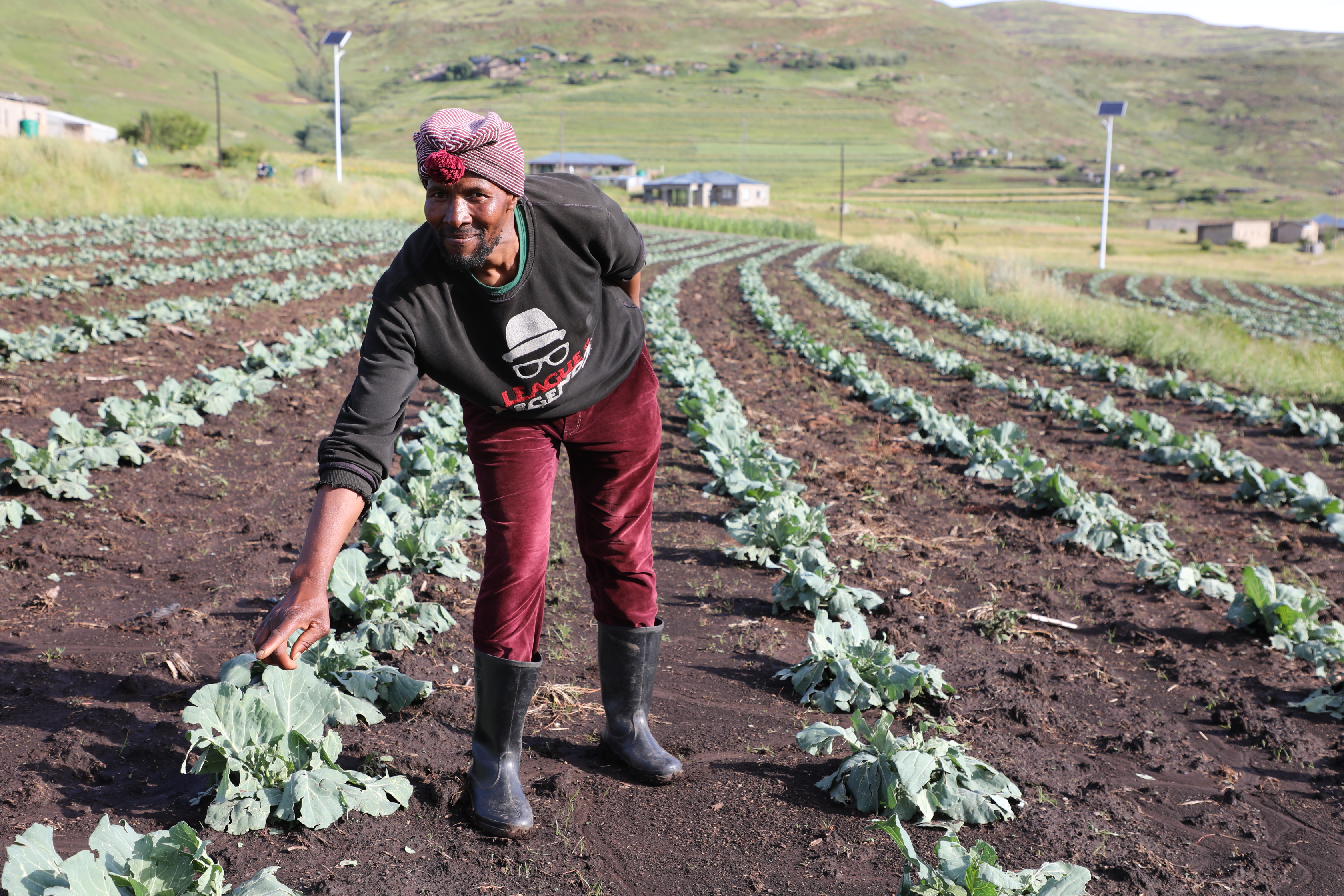
In the fields of Mantsonyane, Thabiso showcases cabbage grown by Leronti Farmers Cooperative — nourishing families and building hope.
In 2024, the story of Leronti Farmers Cooperative took a decisive turn. Through the SADP II-funded Gender Equality and Women Empowerment (GEWE) Project, implemented by World Vision, the cooperative received targeted training and mentorship that reshaped both their farming practices and their mindset.
They were introduced to the Smallholder Horticulture Empowerment and Promotion (SHEP) model — a powerful approach built on one simple but transformative principle: Market before Production.
Members learned how to conduct market surveys, identify buyers, and plan production based on demand. The results were immediate and visible.Today, the cooperative supplies produce weekly to three fast-food outlets, street vendors, local businesses, and community members across Thaba-Tseka.
“Our lives — and those of our families — have truly changed,” says Ramahetlane.
“We now plant knowing exactly who we are producing for, and we are earning from our work.”
Crop losses have reduced significantly, and confidence has grown.
Savings, Skills, and Stability
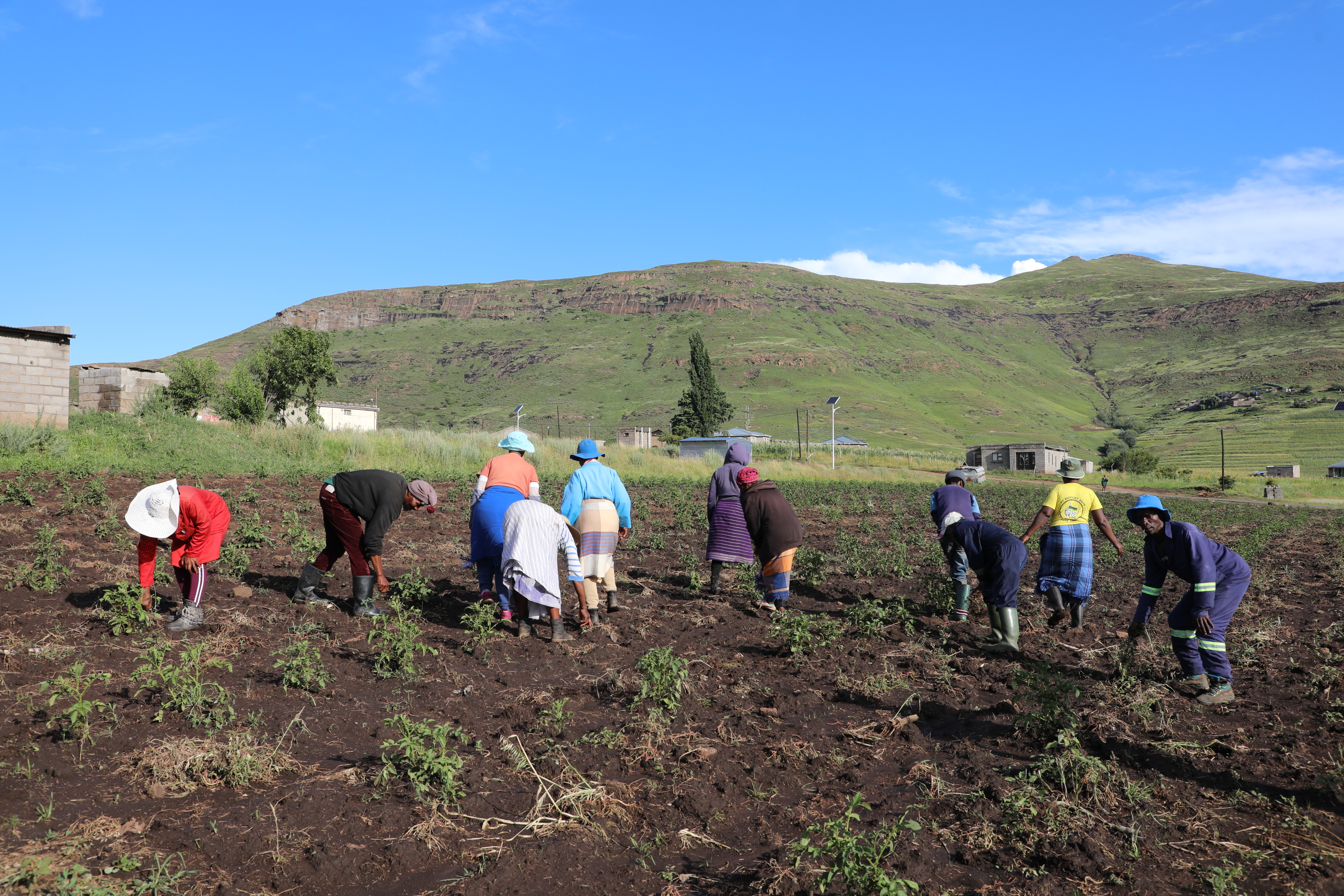
A day in the lives of Leronti Farmers Cooperative members as they tend to their potato fields with care and commitment.
Another major breakthrough came through training in the Savings for Transformation (S4T) model. By saving and lending to one another, cooperative members gained access to affordable capital and financial discipline. Using savings from their group, they purchased 26 trays of cabbage seedlings, each containing 200 plants. They also invested in stationery and now maintain proper financial records — a practice once unimaginable.
Beyond the cooperative, S4T has transformed households.
“There was a time when I had to choose between buying food and paying funeral policies,” Tsekolo reflects. “Now, through S4T, I can meet all my family’s needs.”
Parents can now afford food, clothing, and school requirements — restoring dignity and stability in their homes.
Redefining Gender Roles, Strengthening Families
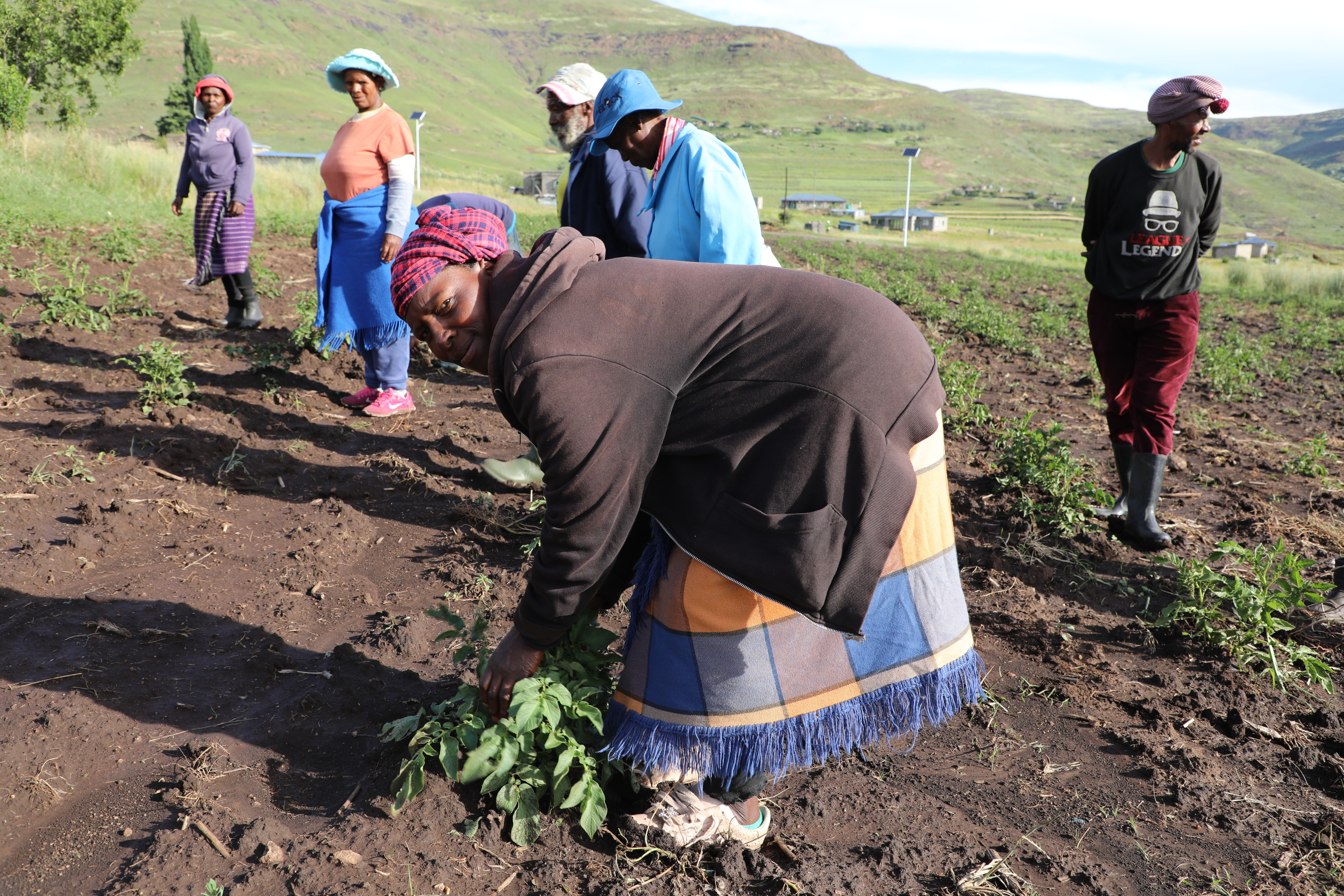
Mampeche tending to potatoes, empowered to participate and lead as part of the decision-making team in Leronti Farmers Cooperative.
Training on Gender Equality challenged long-held cultural norms and unlocked new potential within the cooperative. Women now actively participate in decision-making and leadership, and men recognize farming and household responsibilities as shared duties. This shift has not only strengthened the cooperative but also improved relationships within families. Women wake up each day motivated and confident, knowing their voices matter.
“I am inspired to start my own business,” shares Mampeche. “I now have the skills and confidence to do it.”
Training in business planning has given the group a clear sense of direction — helping them choose the right crops for each season and set achievable goals. Exchange visits to established producer groups in Maseru further fuelled their ambition and determination.
Looking Ahead: A Future Without Hunger
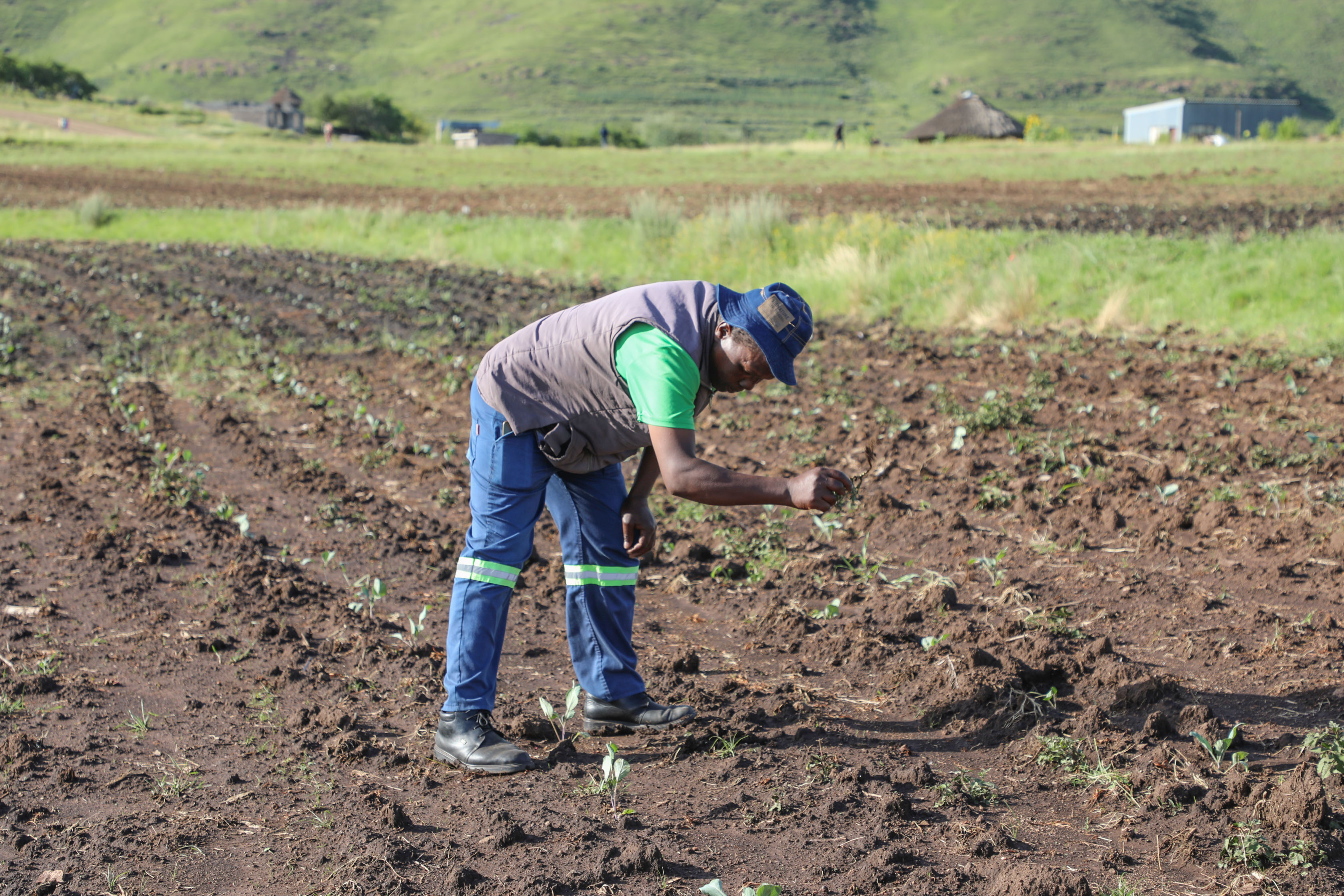
Ramahetlane, the determined Deputy Chairperson, tends to newly planted cabbage in the cooperative fields.
Today, Leronti Farmers Cooperative dreams bigger than ever. They aspire to build a storage facility, purchase a delivery truck, and expand production from 29 fields to at least 50. Their vision goes beyond profit — they want to ensure that no child in Leronti village, especially vulnerable and disabled children, goes to bed hungry.
Already, the cooperative has begun giving back, donating cabbage to elderly community members.
“We are grateful to World Vision and the SADP II Project,” says Thabiso, a cooperative member.
“Our lives have transformed. What once felt like a dream is now our reality.”
From hunger to hope, from exclusion to equality, and from survival to sustainability — the story of Leronti Farmers Cooperative is living proof that when communities are empowered with the right skills, resources, and opportunities, transformation is not only possible — it is inevitable.