
When water comes home: Partnering to supply hope in Mauritania

By Mohamed Sidaty - DMEAL Programme Coordinator, World Vision Mauritania
In the peri‑urban neighborhoods of Riyad and Dar El Beida in Mauritania, access to safe drinking water has long been unreliable. Rapid urban growth, weak infrastructure, and poor water quality forced many families to rely on public taps or water vendors - often at high cost and with significant physical strain, especially for women and children.
To respond to this challenge, World Vision worked with local communities and private‑sector service providers to bring potable water directly into homes. Through a collective investment of approximately 250,000 MRU (around USD 6,200), contributions from World Vision's top ten service providers in Mauritania made it possible to install household water connections in these two communities, linking families directly to the national water network.
World Vision laid secure polyethylene piping, installed individual water meters, carried out pressure and leak tests, and worked with families on basic maintenance to ensure safe and reliable use over time. In total, 21 households now have direct access to potable water at home.
For Mariem, one of the mothers in the benefiting communities, the change is best described in her own words:
“Before we had water at home, my daughter Halima, who is nine years old, had to help me every morning to fetch water in the neighborhood. She had to carry 20‑litre containers, sometimes twice, before going to school. She was often tired, arrived late, and couldn’t concentrate in class. Because of this, her school results were average. Sometimes she came home with her clothes wet and dirty because the containers spilled. It was a real suffering for her and for me, but we had no choice.”
Since Maiem's household was connected to the water network, that daily burden has disappeared. “Since we got water at home, our life has completely changed. Halima no longer needs to wake up very early or carry heavy containers. She can now have breakfast calmly, wash properly, and go to school clean and rested”, she adds. "I also feel relieved. I can cook, clean the house, and wash clothes much more easily.”
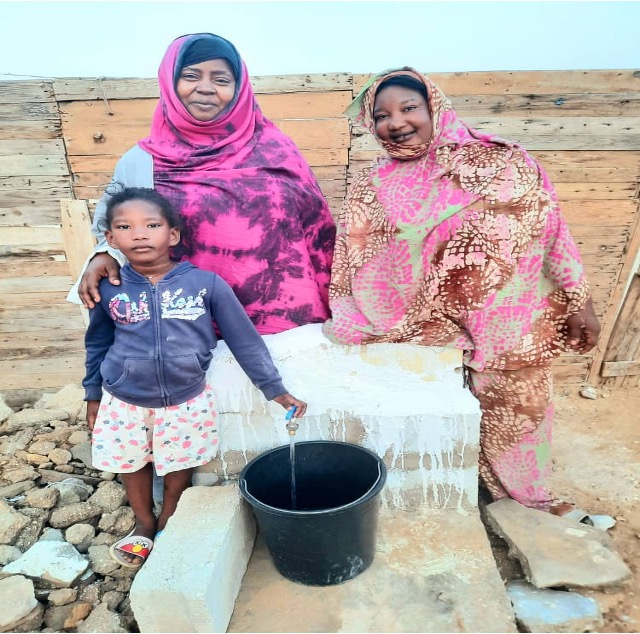
For Mariem, the meaning of the project goes beyond infrastructure and the impact is visible beyond the home. She shares: "Halima's teachers have told me that she has become more attentive in class. "Her grades have improved and she participates more. She is also happier, because she now has time to play with her brothers and sisters after school, instead of going out again to fetch water,”
Across the 21 connected households, similar changes are being felt by entire families. In total, 348 people (including children and persons with disabilities) now have direct, safe, and reliable access to water at home, reducing physical strain, improving hygiene, and supporting better health and education outcomes.
“Having water at home is not just comfort; it is an improvement in the health, education, and well‑being of the whole family. I thank God, and all those who made this connection possible. It is a dream that has come true.” - Mariem, a mother.
Service Providers
This initiative was made possible through the support of the following service providers, working in partnership with World Vision and local communities in Mauritania: Agrion, IPC Sarl, TOP Service, Ehle Edine, Delta Services, MCC TP Sarl, IGES, Restaurant Nazaha, Ets TEWVIGH, and GAMA Assurance.