
More Than Aid: Restoring Hope, One Child at a Time

The sound of children's laughter is something Nannapat Sanuanram will never take for granted.
As a Project Manager of the Sa Kaeo Provincial Development Project and a member of World Vision's emergency response team, she has witnessed both the fragility and resilience of human lives. From responding to emergencies affecting vulnerable communities to supporting families displaced by the recent situation along the Thai–Cambodian border, she has learned that humanitarian work is about far more than delivering aid, it is about restoring hope when people need it most.
For Nannapat, some of the most meaningful moments in humanitarian work are often the quietest ones.
They are found in the words of a parent who simply says, "Thank you for reminding us that we are not alone." They are found in the smile of a child returning after days of fear. And they are found in the small moments when hope begins to replace uncertainty.
"One experience from my humanitarian work that remains in my heart to this day is the moment when we deliver assistance to families affected by an emergency," she reflects.
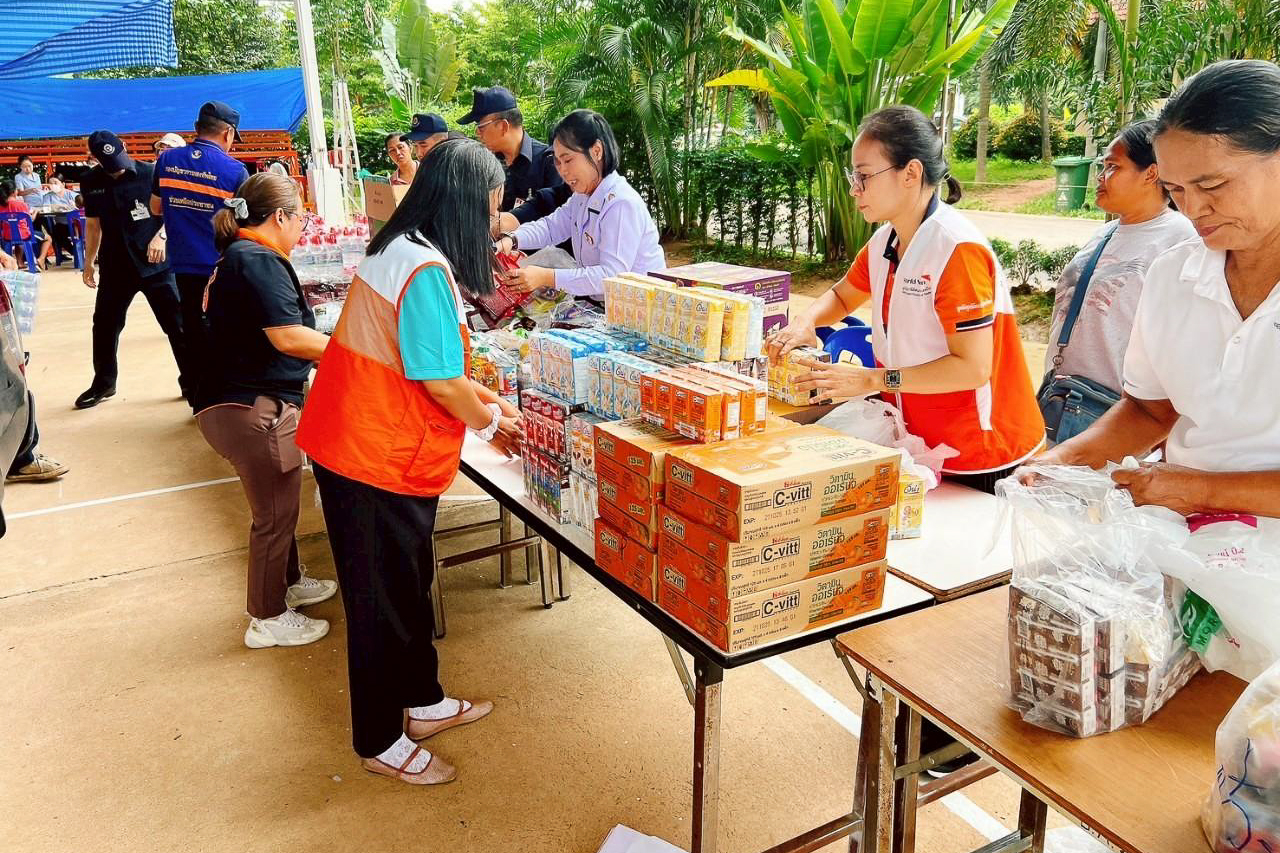
She still remembers meeting one father whose family had been deeply affected by an emergency. After receiving support, he shared something that has stayed with her ever since, that the assistance made his family feel cared for and reminded them that they were not facing their struggles alone.
For Nannapat, those words changed the way she sees humanitarian assistance.
"It reminded me that humanitarian work is not only about providing essential supplies," she says. "It is also about giving encouragement and hope to people during their most vulnerable moments."
In times of crisis, it is easy to count what has been lost; homes, livelihoods, safety, and stability. Yet humanitarian work offers something that cannot always be measured: the reassurance that someone cares enough to stand alongside those who are suffering.
That reassurance can become the first step toward healing.
During the response along the Thai–Cambodian border, Nannapat witnessed the profound impact conflict can have on children. What many people do not see are the invisible wounds children carry, the fear that lingers long after the sound of artillery fire fades.
She remembers watching children arrive at World Vision's Child-Friendly Space. Their eyes reflected the uncertainty and anxiety they had experienced. For many, childhood had been interrupted by circumstances beyond their control.
"At first, their eyes were filled with sadness, anxiety, and fear caused by the sound of artillery fire," she recalls.
But something beautiful began to happen.
As humanitarian workers gently invited them to draw pictures, colour with crayons, sing songs, and simply play, the atmosphere slowly changed. The hesitant expressions on their faces gave way to smiles. Their laughter began filling the space once more.
In those moments, Nannapat was reminded that humanitarian assistance is not only about helping children survive a crisis, it is about helping them remain children despite it.
"Their smiles and laughter gradually returned," she says.
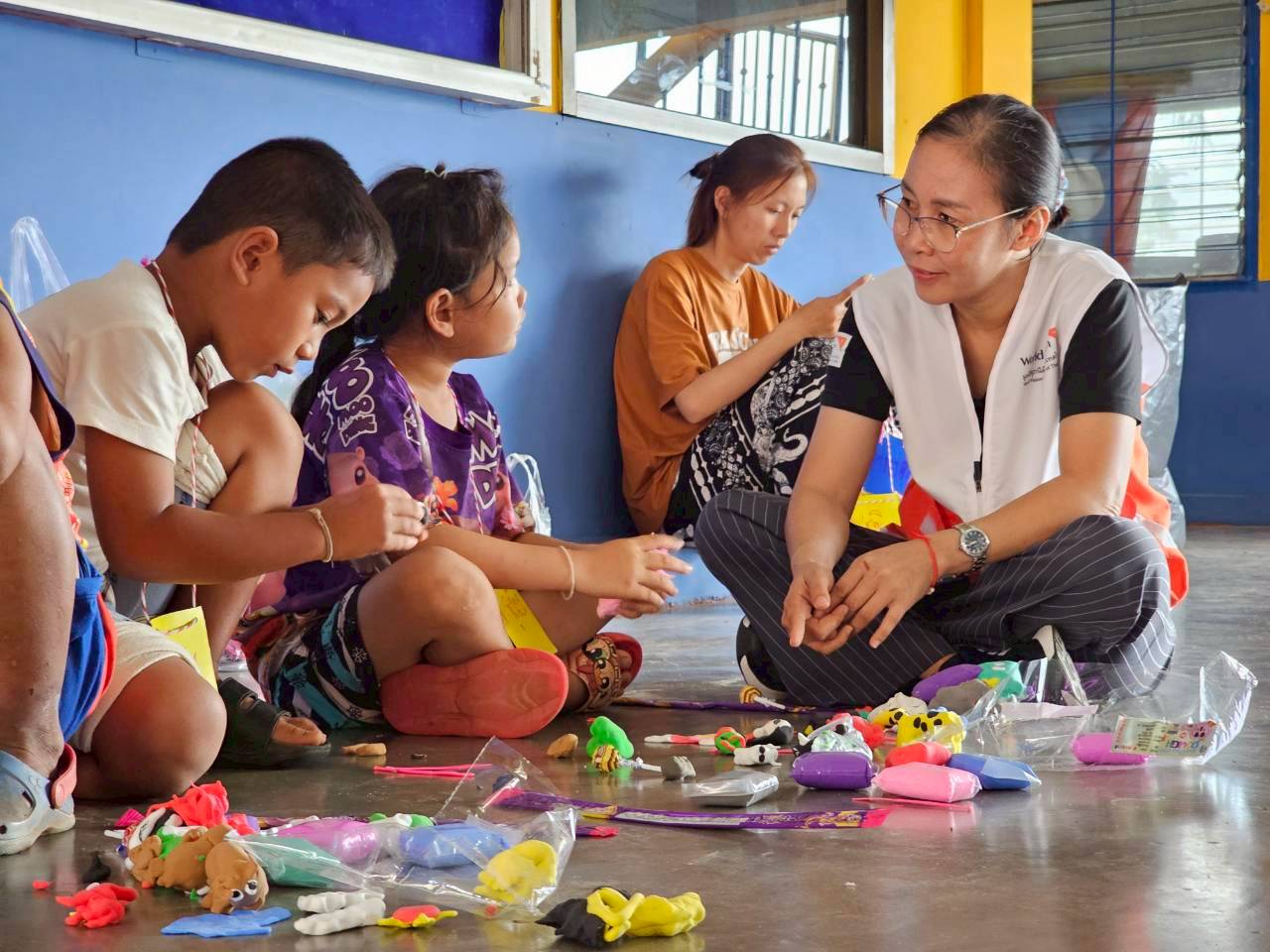
For her, this is one of the greatest privileges of humanitarian work, not simply responding to emergencies, but witnessing resilience emerge even in the darkest circumstances.
Children may not remember every toy they received or every activity they participated in, but they will remember how they felt when they were safe, cared for, and protected.
That is why humanitarian work matters.
This World Humanitarian Day, Nannapat hopes people will look beyond the visible aspects of emergency response. Behind every relief package delivered is a family finding strength to begin again. Behind every Child-Friendly Space is a child slowly rediscovering joy. Behind every humanitarian worker is a simple belief, that every person deserves dignity, compassion, and hope.
"The greatest victory is not ending the conflict," she reflects. "It is giving children back a safe and secure childhood."
For Nannapat, humanitarian work has never been about changing the whole world overnight.
It is about changing one moment for one child.
One smile returned. One family encouraged. One day of safety restored.
And sometimes, that is where hope begins.
Written by Nannapat Sanuanram, Project Manager of the Sa Kaeo Provincial Development Project