
Menstruation Should Not Cost a Future: Ending Hidden Violence Against Women and Girls in Emergencies

Rassula, a 30-year-old woman, carries an invisible burden, that of being a woman in a context where her own body sets the limits. Since the onset of puberty, her life has been marked by cycles that repeat every 28 days, bringing pain, discomfort and constraints that have followed her for 18 years, except during the times she was pregnant with her two children.
“I traded the pain of menstruation for the pain of pregnancy. It was my only refuge… at least it gave me relief for nine months,” she reveals in a low voice, as if sharing a secret that few dare to speak aloud.
For nine months, the pain subsides, but the relief brings another burden: that of unplanned motherhood. For Rassula, as for many women, the lack of means to manage menstrual hygiene turns choices into inevitabilities.
Since her very first period, the impact was immediate. School, once a place of dreams, became a place of shame.
“As a teenager, I wouldn’t go to school when I was on my period. I felt ashamed. I couldn’t take care of myself. I felt unclean,” she recalls.
Without affordable alternatives, many women in her community resort to improvised solutions to manage menstruation.
“Some use baby nappies because they are cheaper. They cut them in half and use each piece for hours,” Rassula explains, revealing a quiet reality where cost dictates dignity.
Being unable to attend school brought her fear and made clear the disadvantage girls face compared to boys. In addition, in her community, menarche is seen as a green light for marriage; as a result, many girls are pushed into early unions, shaped by their own biological reality.
“I had to leave school very early, and there was no option but to get married before I turned 18,” Rassula shares, a voice that echoes the reality of many women.
But pregnancy should not have to serve as a means of escape from the cost of menstrual hygiene. Nor should a woman’s biology define the limits of her dreams.
In humanitarian crisis settings, few consider the challenges women face in managing their menstrual hygiene. Following the floods that struck Gaza Province in Mozambique, many communities were left without access to safe water, both for drinking and for menstrual hygiene. This crisis further worsened the already fragile conditions in which women cope with this challenge.
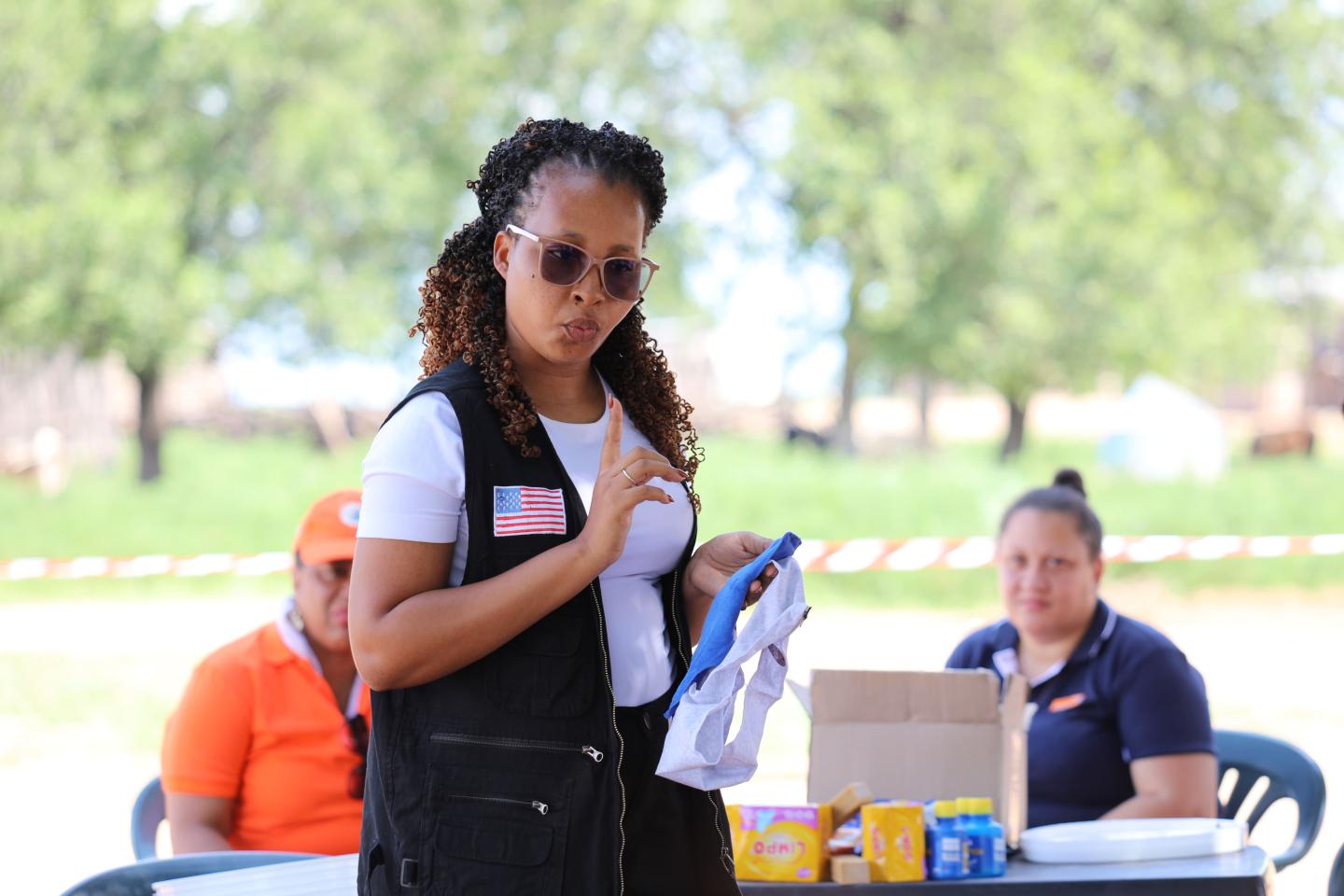
To respond to this reality, World Vision Mozambique is distributing “dignity kits”, a set of essential items including reusable sanitary pads, underwear, washing powder, soap, buckets and water purification tablets.
This intervention is helping to reduce the suffering faced by women like Rassula.
“I’m even afraid to use this pad… even though it is reusable, I don’t want to use it up,” she says, holding it carefully, still unsure whether it truly belongs to her.
These stories deserve to be told, but no one deserves to live them. Menstrual hygiene is not a luxury; it is a right. No woman or girl should see her dreams interrupted by something so basic.
Thanks to funding from the Government of the United States of America, around 300 households have already been supported in this first phase in Mabalane District, an effort that will continue to reach more women and girls.
Because, for Rassula, dignity should not come in cycles, it should be constant.