
School Gardens: Children Are Learning Hands-on Skills To Grow Their Own Food

In central and northern Mozambique, children and their families are planting more than crops. They are planting the seeds of sustainable school meals and long-term food security.
Across schools in Zambézia and Nampula provinces, students are gaining hands-on agricultural skills through newly established school gardens. These gardens are not only learning spaces, but also vital sources of nutritious food that will contribute directly to daily school meals.
With the onset of the rainy season, children, supported by their parents-many of whom are members of local farmers’ associations-began cultivating orange-fleshed sweet potato vines. This nutrient-rich crop, high in Vitamin A and energy, plays a critical role in improving children’s diets and supporting their growth and development.
In one school, students carefully planted the vines 20 centimeters apart, learning practical techniques while contributing to a shared goal. Each vine represents a step toward greater food security and self-reliance for their school community.
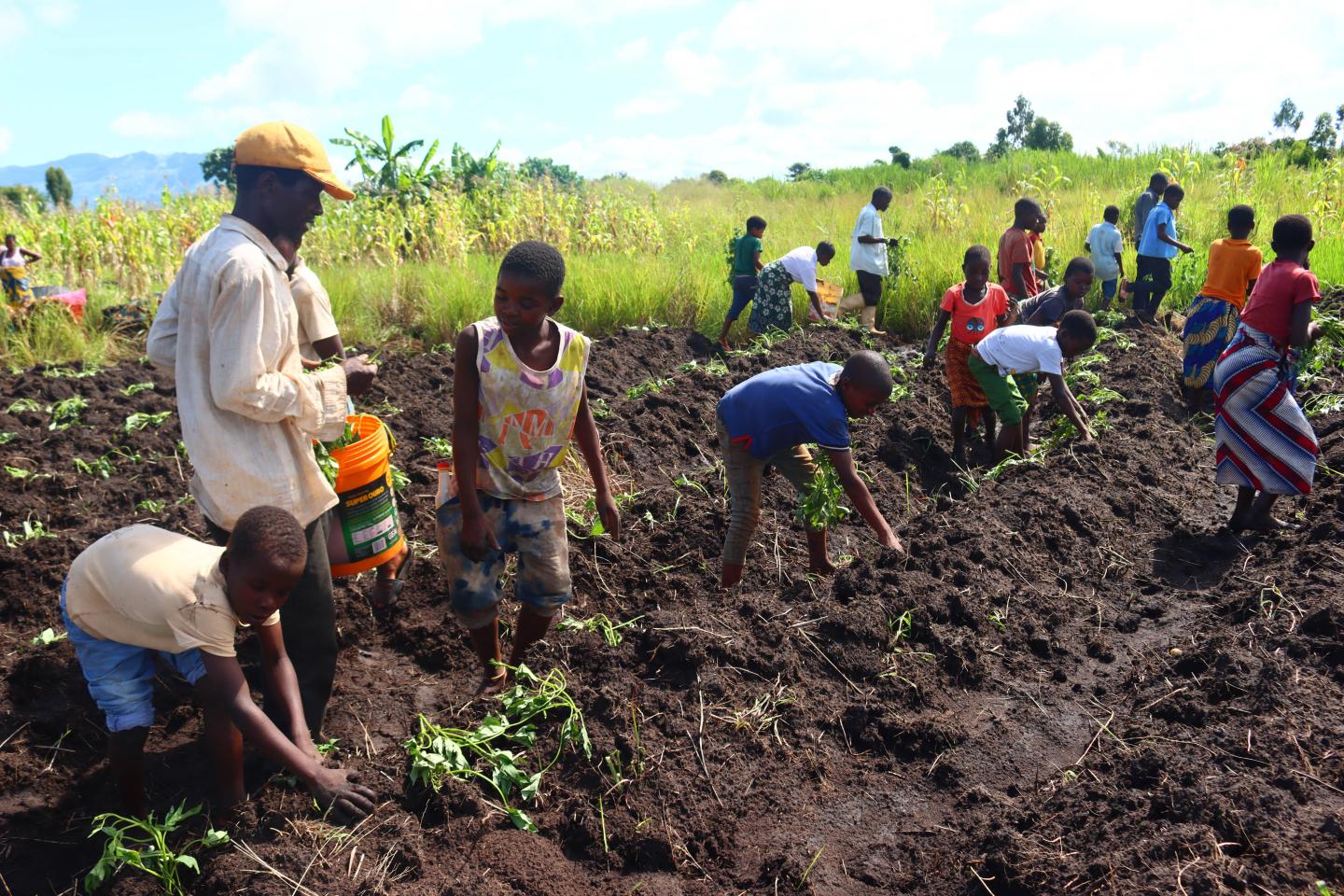
For Junique, a 6th-grade student, the experience has been both familiar and inspiring.
“I am used to working on my parents’ farm during school holidays, so planting sweet potatoes was very easy and fun,” he shared. “I feel proud to be part of the school garden, and I hope one day we can eat sweet potatoes mixed with other food.”
Orange-fleshed sweet potatoes are a key component of the school meals menu approved by the Government of Mozambique’s National School Feeding Program (PRONAE). This menu guides the daily meals served to students in 157 primary schools supported through the Partnering for Sustainable Education Outcomes (PARES) program, implemented by World Vision Mozambique in partnership with PRONAE.
With support from McGovern-Dole International Food for Education and Child Nutrition Program of the U.S. Department of Agriculture‘s Foreign Agricultural Service (USDA-FAS), which provides essential commodities from American farmers and producers such as rice, lentils, and fortified vegetable oil, the program is strengthening school feeding systems. At the same time, school gardens are enhancing sustainability by supplying locally-grown, nutrient-rich foods - including sweet potatoes and vegetables - to complement these contributions.
The school gardens are expected to benefit 10,862 people across 20 schools in Nampula and Zambézia.
To further ensure long-term impact, 20 primary schools have established gardens with support from World Vision Hong Kong. These gardens are designed to help sustain school meal programs beyond the lifecycle of external funding, empowering communities to take ownership of their children’s nutrition and well-being.
Through these efforts, school gardens are becoming hubs of learning, nutrition, and resilience, equipping children with the knowledge and resources to nourish themselves and their communities for years to come.