
Six Months After Severe Floods: Children Still Walking Through Water to Reach School

Six months after devastating floods swept through southern Mozambique, their impact remains impossible to ignore. In some places, the floodwaters have left only visible scars. In others, the wounds remain open, shaping the everyday lives of entire communities.
One such place is a remote community in Guijá District, Gaza Province, where roads have disappeared beneath vast stretches of stagnant water that seem to extend beyond the horizon. At the height of the flooding, the community was completely cut off. Even after the floodwaters receded, access remained severely disrupted, restricting the movement of people, goods and essential services, and delaying humanitarian assistance to the most vulnerable families for weeks.
Presently, as life slowly begins to regain a sense of normalcy, World Vision's emergency response team arrives in the community to deliver humanitarian assistance. It is here that another crisis, quieter but no less devastating, comes into focus.
Every morning, dozens of children wade through murky water reaching up to their knees just to get to school. With no alternative route, they undertake the same dangerous journey every day, crossing stagnant pools that have remained long after the floods subsided.
Some children walk nearly a kilometre to reach the classroom. Part of that journey takes them through contaminated water, where reptiles and other animals thrive, exposing them daily to waterborne diseases and other health risks. Yet, despite the dangers, childhood innocence persists. Fear and laughter coexist as the children transform this hazardous journey into an unavoidable part of their daily routine.
"There is no other way. I have to go to school. We missed so much learning because of the floods, and we've only just returned to class," says one of the girls, whose identity has been withheld for her protection.
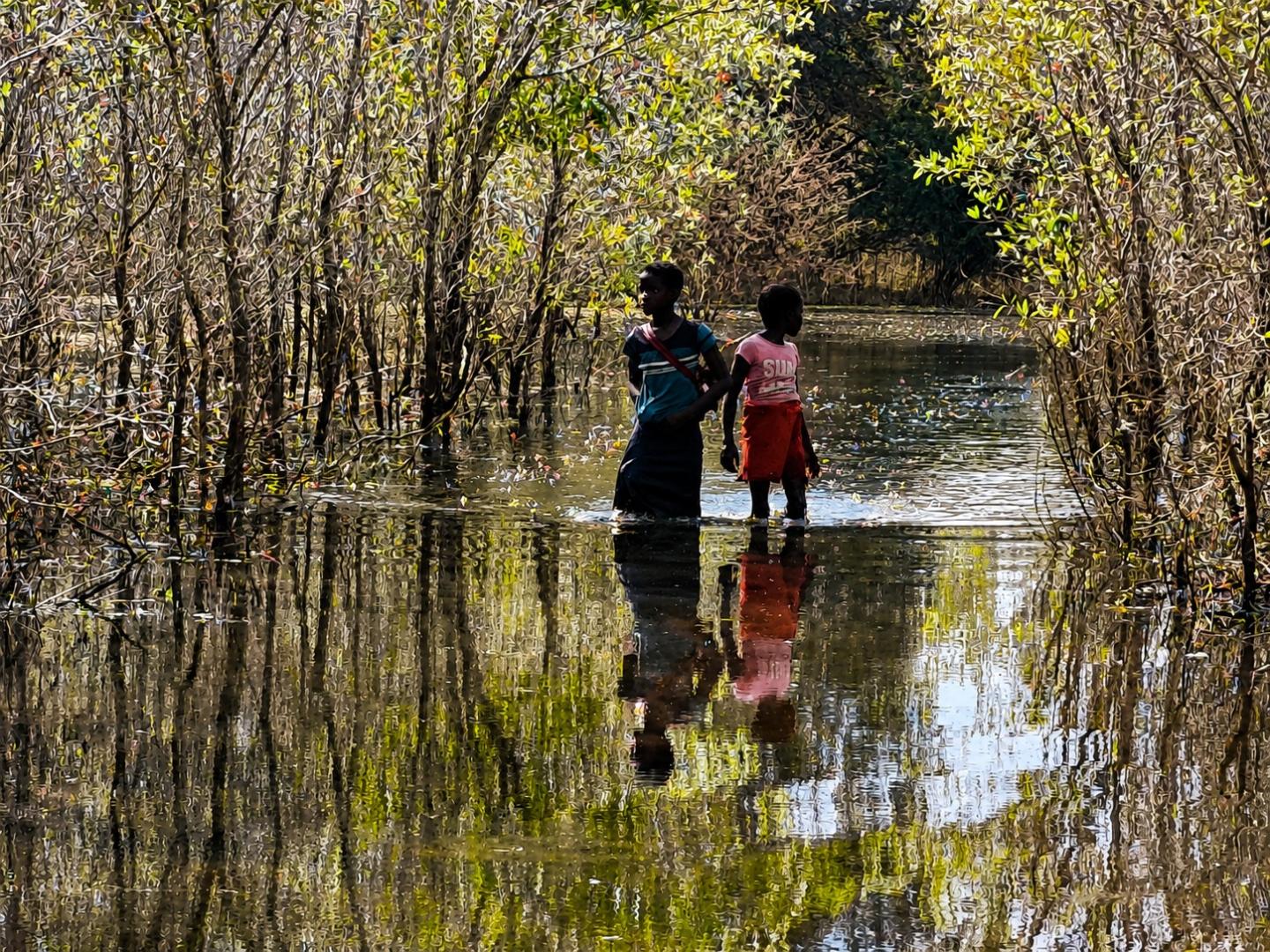
For these children, getting to school has never been more difficult. While some previously walked barefoot because they could not afford shoes, doing so has now become almost inevitable. Those who own shoes often remove them before entering the flooded sections of the route, hoping to keep them dry for the rest of the day. But walking barefoot through stagnant water leaves painful consequences that are not always immediately visible.
Many of the pupils say they have suffered recurring foot infections ever since the floods transformed their journey to school.
"Sometimes it feels as though my toes are rotting," one schoolgirl says quietly, her calm voice standing in stark contrast to the seriousness of her words.
In rural Mozambique, teachers often live in the same communities where they teach. This close connection allows them to witness first-hand the daily hardships faced by their pupils and their families, challenges that extend far beyond the classroom.
Each winter morning, they watch children walk long distances through grass soaked with dew before crossing pools of muddy floodwater. Many arrive without coats or warm clothing to protect themselves from the cold. By the time they reach school, some are shivering so intensely that they struggle to hold a pencil.
Recovering the learning lost during the floods remains a priority. Yet faced with the condition in which many children arrive at school, teachers have been forced to make an unusual decision: delaying the start of lessons for a few minutes so pupils can warm themselves in the morning sun before they begin learning.
"The children arrive trembling. Some can't even write. We realised that before they could learn, they first needed to warm up. So we let them sit in the morning sunshine for a while," explains one of the teachers.
At this school, where classrooms are built from locally available materials, the community has always dreamed of replacing them with permanent, safer buildings. Yet no one ever imagined that the most important classroom of the day would not be one with walls and a roof, but a small patch of open ground where the first rays of sunlight provide enough warmth for children to regain the strength to learn.
In response to the floods, World Vision Mozambique, with the support of its partners and in close collaboration with local authorities and communities, delivered life-saving assistance during the most critical phase of the emergency. This included the provision of food, safe water, sanitation facilities, shelter, and child protection services to support affected families and safeguard children's well-being. As communities transition from relief to recovery, World Vision continues to invest in livelihood restoration initiatives, helping families rebuild their lives, recover their economic stability, and strengthen their resilience against future shocks.