
Emergency Response – Livelihoods identified as a Long‑Lasting Solution after floods impact

World Vision Mozambique had the opportunity to sit down with a mother of five in one of the largest accommodation centers opened in Guija district, southern Gaza province one of the most impacted from the severe flooding, the worst in the last two decades.
Displaced from her home for more than 20 days, Filomena thinks of nothing else but a sustainable income-generating activity that will allow her to afford a house in an area different from the current location that is safe from flooding and future disruption caused by similar chocks.
“Me and family walked here, we carried what was possible and my children specially the older ones helped carry what was possible and to built this barrack with are staying” said Filomena.
World Vision visited Filomena and was invited to sit in front of her barrack that hosts seven people, which includes two twin 10-month-old, her youngest children. One of the twin babies is sleeping in a grass mat, and the other twin sleeps at his mother’s lap, there is no visible door in the barrack, suggesting that a piece of cloth is used as a door when the family goes to sleep.
We started by asking her how the move process started, and she recalls “Our local leader told us that we should abandon the house because large quantities of water were coming, we took that information with pain because it was raining, where would we go while it rained. Still, we removed our belongings out only to get them wet,” she said.
Life in the accommodation center
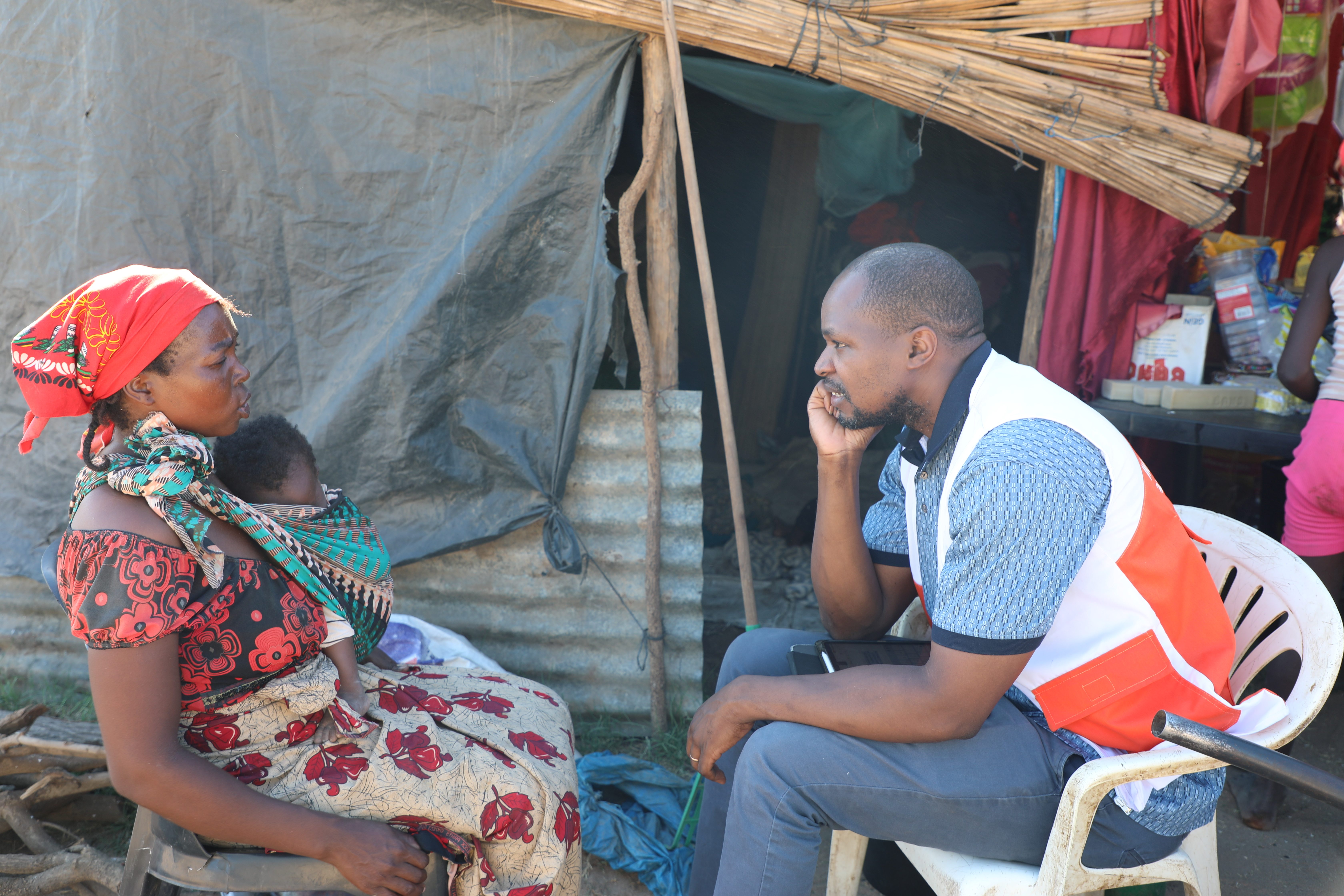
Filomena’s barrack (shelter) is built from zinc sheets, old tents, and grass mats, similar to several other families accommodated in the center, the tents were not sufficient to the 5000 people so they had to find own solutions.
“We borrowed zinc sheets and some other material to built this barrack, and since we are here life has been difficult specially in accessing food. The community kitchen prepares meals, but the number of people is large, making it difficult to assist them all” she said.
“We have very little options here to find food alternatives but when possible, we find food for the children,” she added.
Before the floods, Filomena farmed the land to guarantee food for the house, while her husband is an artisan, he produces different products, mainly grass broom to sell. “It is not a lot, but we managed to buy soap and put food on the table” she said.
Life is difficult at the center because the family lost almost everything to the floods and they ae forced to borrow everything, including pots for cooking.
Protecting children at the emergency context
Filomena attended a lecture facilitated by World Vision for women and men staying at the center about the risks children, women, and girls are exposed to at emergency contexts, and she was among the main active participants.
“I learned about the risks and prevention measures I as a parent, need to make sure they are in place to guarantee that my children are protected. The session went beyond the emergency context but also the need to reject child marriages for my children” she said.
Filomena attended the session alone, her husband was away, but she said child protection prevention measures are matters that her husband strongly defends, including the prevention and combat against early marriage. “Soon after the lecture was finished, I told my husband, and he couldn’t agree more,” she said.
Livelihoods as long lasting solution
Filomena is looking forward to an income-generating activity that will allow her to rebuild the destroyed house somewhere safe from future flooding, as well as to use the earnings to guarantee food in the house.
“If I could own a business, I would guarantee food in the house, school material, and clothes for my children,” she said.
The partnership between World Vision, UNICEf and other partners is gradually building the capacity of survivors like Filomena towards that direction. Despite the challenges the water buckets are helping with storing and drinking clean water.
World Vision response plan includes a livelihood component expected to help Filomena fulfil her wish to rebuild her house and support her husband, guaranteeing food, house needs, including her children's education.