
World Vision Responds to Cholera Outbreak in Northern Mozambique

World Vision Mozambique is responding to the cholera outbreak that has killed 76 people from over 6,000 positive cases nationwide, according to the health authorities. The response is targeting the district of Monapo, in northern Mozambique, with the distribution of hygiene and disinfection supplies, bringing visible relief to health facilities and to the teams working daily on the ground.
This week, World Vision strengthened its support to provincial response in the north of the country, at a time when Nampula remains the epicenter of the outbreak, with 2,998 infections and 36 deaths since 3 September 2025, according to the Health Sector.
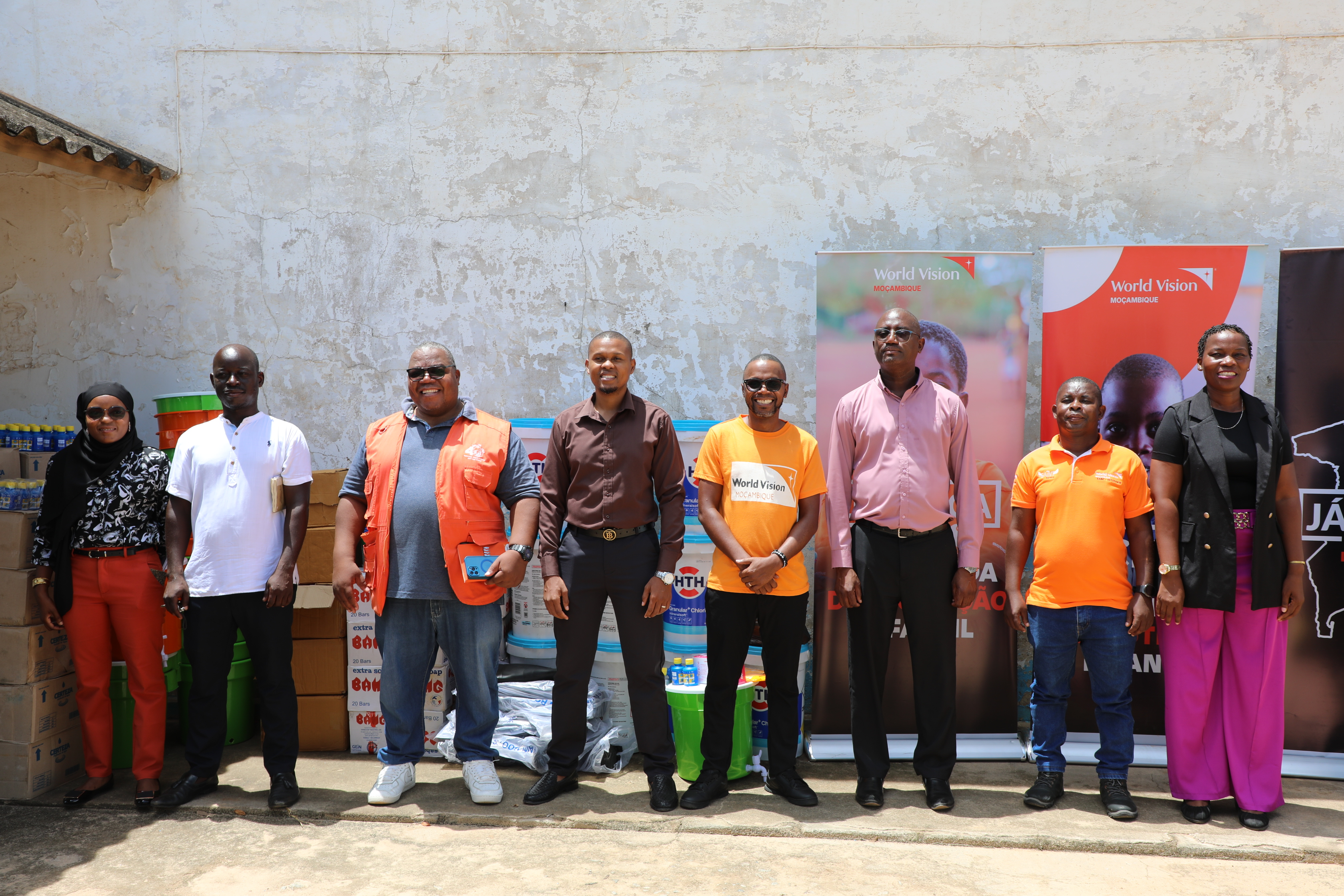
Monapo is currently one of the worst‑affected districts. With a fatality rate of 2.7%, the challenge is twofold: the distributed kits will help halt transmission and ensure that health services can cope with the increasing influx of patients.
Among the items provided by World Vision are buckets with lids and taps, wash basins, soap, disposable and reusable gloves, granular chlorine and gumboots. These are simple but vital tools in a context where hygiene is the frontline defense against the disease.
“Our priority is to break the chain of transmission within communities and strengthen the response and control of the outbreak to accelerate the return to normality,” says Danilo Macuacua, the organisation’s District Programmes Manager.
In addition to hygiene materials, the organisation also supplied petrol and diesel to ensure that epidemiological surveillance teams can continue reaching the most affected communities. Each day, technicians travel long distances, monitor localised flare-ups, carry out disinfection work and identify suspected cases.
The Director of the District Health Service, Januário Sitora, describes the support as a “major boost” in the fight against the disease. He notes that the materials will be used alongside sensitisation campaigns focused on hygiene, water treatment and safe waste management.
With infections rising in several parts of the province, authorities and partners are renewing their urgent appeal to the public to reinforce hygiene practices, including washing hands frequently, using chlorine correctly, and treat and store water safely.
These simple measures remain the most effective barrier against the spread of the disease.
While the numbers continue to climb, a sense of collective resilience is also growing in Monapo. Health teams, community leaders and organisations such as World Vision are moving forward together to contain an outbreak that represents far more than statistics. It represents lives at risk and families affected across the region.