
How Community Partnerships Are Restoring the Land and Securing the Future for Timor-Leste’s Children

By Jared Berends, World Vision Timor-Leste National Director
As we reflect on our work and observe Earth Day, I am struck by a profound truth I witness daily while visiting our Area Programmes: the health of our planet and the well-being of our children are inextricably linked.
In Timor-Leste, where the rhythms of life are increasingly dictated by unpredictable rainy and dry seasons, environmental stewardship is no longer a choice but a necessity for survival. For the children growing up in these communities, climate change is not a distant threat; it shapes their access to food, water, and opportunity every day.
At World Vision Timor-Leste (WVTL), our mission to foster healthy children and empower youth is built on the foundation of climate-resilient communities. Our 2025 IMPACT Report reveals a remarkable transformation. We reached more than 38,000 people through 19 projects, with over 23,000 specifically engaged in building climate resilience. What I find most inspiring is that this change is not led from the outside. Once introduced to Timorese communities, they are quick to understand that nurturing and investing in nature means safeguarding the future generations.
The Power of Local Stewardship
One of the most heartening findings from our first-ever Annual Impact Measurement (AIM) is the high level of environmental stewardship: 81% of households in our target areas now practice a form of Farmer Managed Natural Regeneration (FMNR). By partnering with nature to restore degraded land, these families are doing more than planting trees. They are reclaiming their future. They are ensuring that their children inherit land that can sustain them.
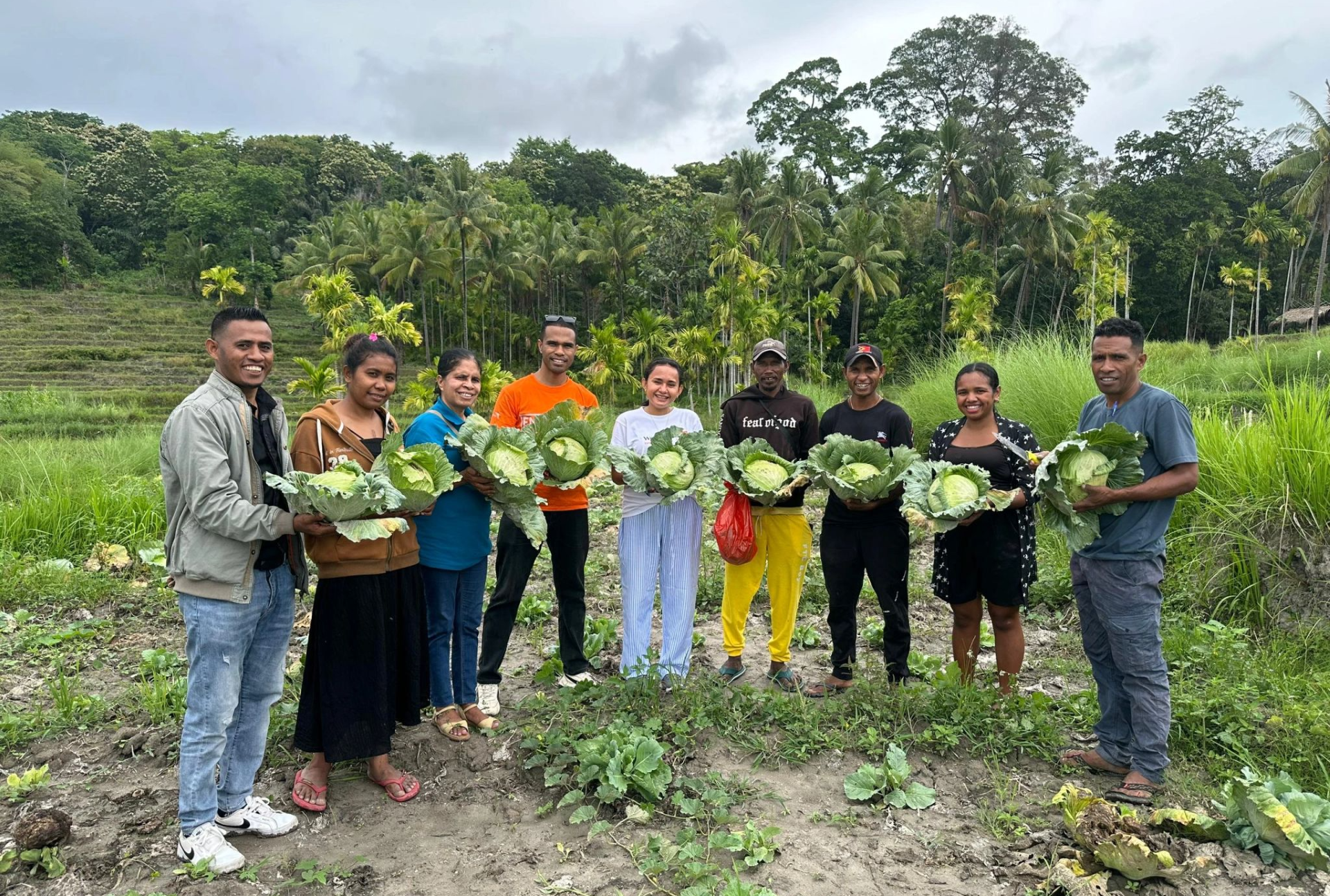
This commitment is visible across the country. In the past year, we mobilised nine regreening groups, nearly 70% of which are led by women, to plant fruit, timber, and resilient species, many on previously degraded land. We are currently working with these farmers to generate carbon credits as these trees grow to maturity, adding another form of income to livelihoods under stress from climate and economic shocks.
To stabilise soil and protect against erosion, communities have planted over 1,680 vetiver plants. This is not just environmentalism; it is the restoration of dignity and the protection of the land that feeds the next generation.
Adaptation in Action
We are also witnessing a shift toward climate-smart agriculture. In Aileu, farmers like Marcelina and Domingos are no longer struggling against the elements but are adapting to them. By adopting organic composting, seed selection, plant spacing, and raised planting beds, they have seen harvests thrive despite the challenges of drought and El Niño.
However, we must remain humble and clear-eyed about the path ahead. Our data shows that only 17% of households currently use clean cooking fuels, and water security remains a critical hurdle. Yet, even in the face of these challenges, there is hope. In Covalima, youth advocates successfully campaigned for a 1km pipeline that now brings water to 43 households. This is the "hope-filled transformation" we celebrate—youth who see a problem and lead the solution.
A Shared Journey
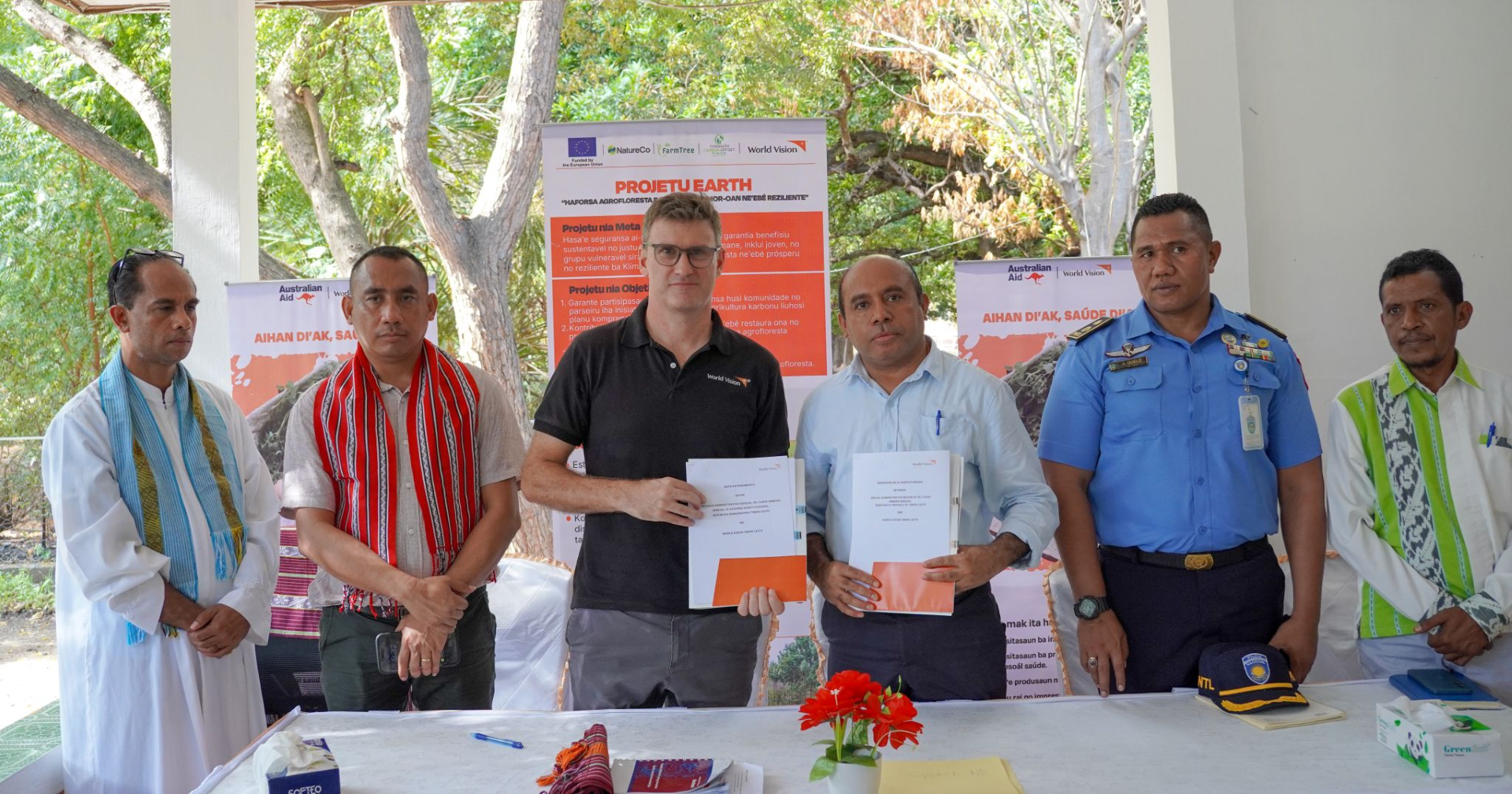
None of this progress is achieved by World Vision Timor-Leste alone. It is the product of walking alongside communities, listening with humility, and working with faith leaders, local organisations, and government ministries. Our role is to nurture the resilience and creativity that already exists within the Timorese spirit.
As we look toward the remainder of 2026 and beyond, let us recognise that climate resilience starts at the community level. When we invest in sustainable land management and community-level innovations, we are doing more than protecting the environment. We are ensuring that every child in Timor-Leste has the opportunity to thrive on a healthy, restored planet.
About the Author
Jared Berends is the National Director for World Vision Timor‑Leste, bringing over 15 years of experience in international development and humanitarian leadership. His career with World Vision has spanned multiple contexts, including Timor‑Leste, Bangladesh, Myanmar, New Zealand and Solomon Islands, where he has held senior leadership roles in operations, programme quality, and resource development. Jared’s work focuses on strengthening programme impact, organisational effectiveness, and partnerships to advance outcomes for children and vulnerable communities.