
From Struggle to Stability: How World Vision Integrated Support Transformed Phepo–E–Ntle Matsekha Farmers Cooperative

By Reentseng Phephetho, Communications and Digital Officer
In Berea District, within the Koeneng Area Development Programme, a group of 22 determined men and women came together in 2014 with a shared dream: to build sustainable livelihoods for their families. At the time, unemployment was high, hunger was widespread, and children’s basic needs were going unmet—denying many of them their rights to education, nutrition, and wellbeing.
United by hope, the group ventured into poultry and crop production, naming themselves Phepo–E–Ntle Matsekha Farmers Cooperative. Their vision was clear, but their reality was harsh. They aspired to begin broiler production, yet lacked a proper structure to raise chickens. Undeterred, each member contributed M100.00, pooling enough funds to purchase 50 broilers and a small supply of feed. With no poultry house, they borrowed a room from one member.
The consequences were devastating.
“Our chickens were dying at a very high rate because we had no knowledge of broiler production,” recalled Malitsabako, one of the cooperative members. The makeshift space was unsuitable for poultry health and growth. Feed frequently ran out, forcing members to contribute repeatedly. They had no proper feeding or watering dishes. Losses mounted.
“Our chickens were dying at a very high rate because we had no knowledge of broiler production,” recalled Malitsabako
Crop production fared no better. Limited skills, poor harvests, and—most critically—a severe water shortage crippled their efforts. To sustain their vegetables and chickens, members hired a truck to fetch water from the river at M300.00 per load. Often, they simply could not afford it. Both crops and poultry suffered.
Their first harvest brought disappointment. With no reliable market, much of their small produce was given on credit to villagers, straining the cooperative further.
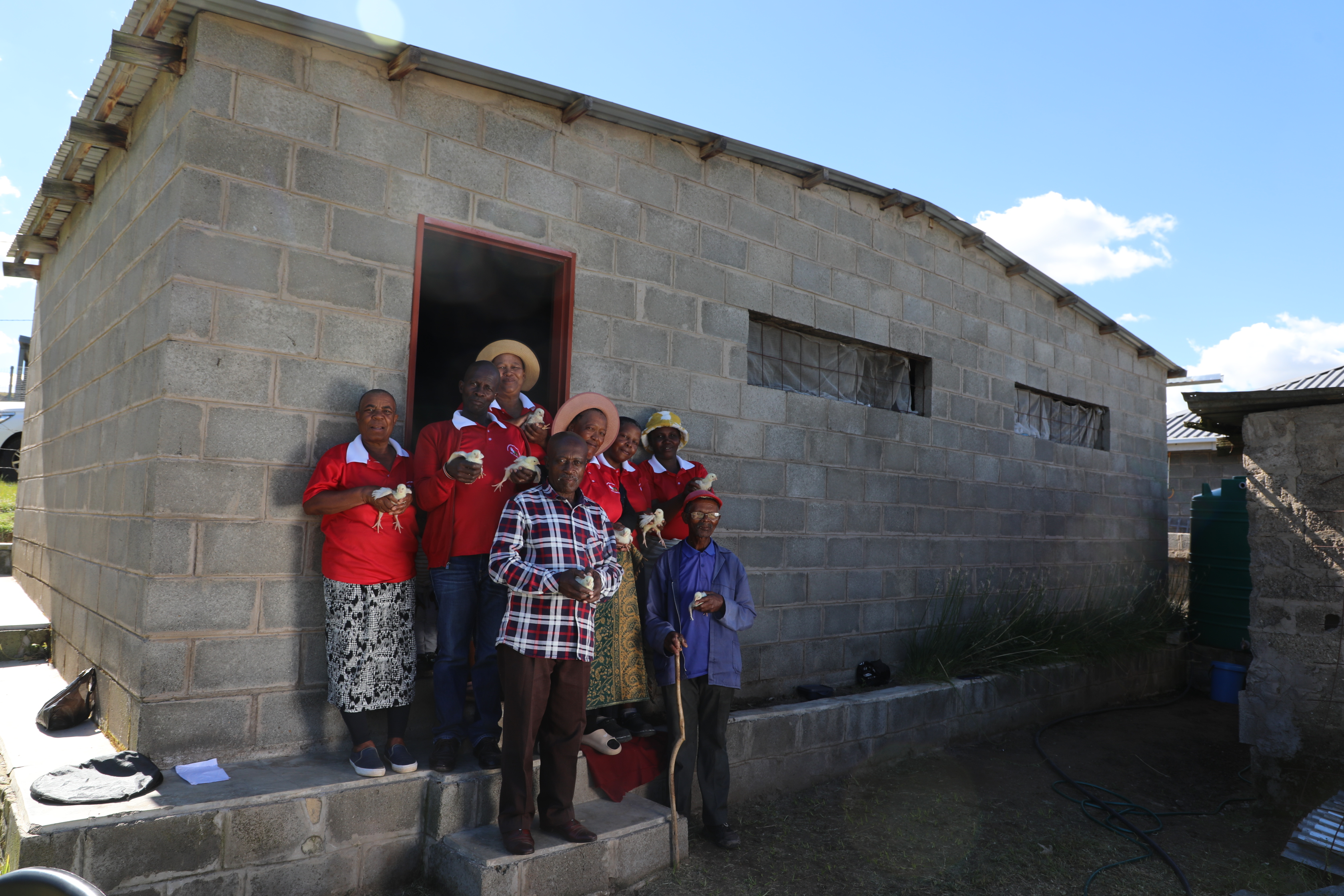
Standing before their broiler structure, members reflect on how World Vision’s support helped turn their vision into reality
Everything began to change in 2015.
World Vision, through its Integrated Livelihoods & Resilience and WASH programmes, stepped in to support the struggling cooperative. The intervention began with capacity building—training members in broiler and crop production, equipping them with essential technical knowledge they previously lacked.
They were also introduced to the Savings for Transformation (S4T) model. This proved to be a turning point.
Through small, consistent savings and internal lending, members gradually built financial confidence and resilience. With their savings, they purchased their own land—establishing a permanent site for both poultry and crop activities.
World Vision’s integrated support continued:
Construction of a proper broiler house
Installation of a water system
Erection of a tap in their yard for irrigation and poultry use
Provision of approximately 30 feeding and watering dishes
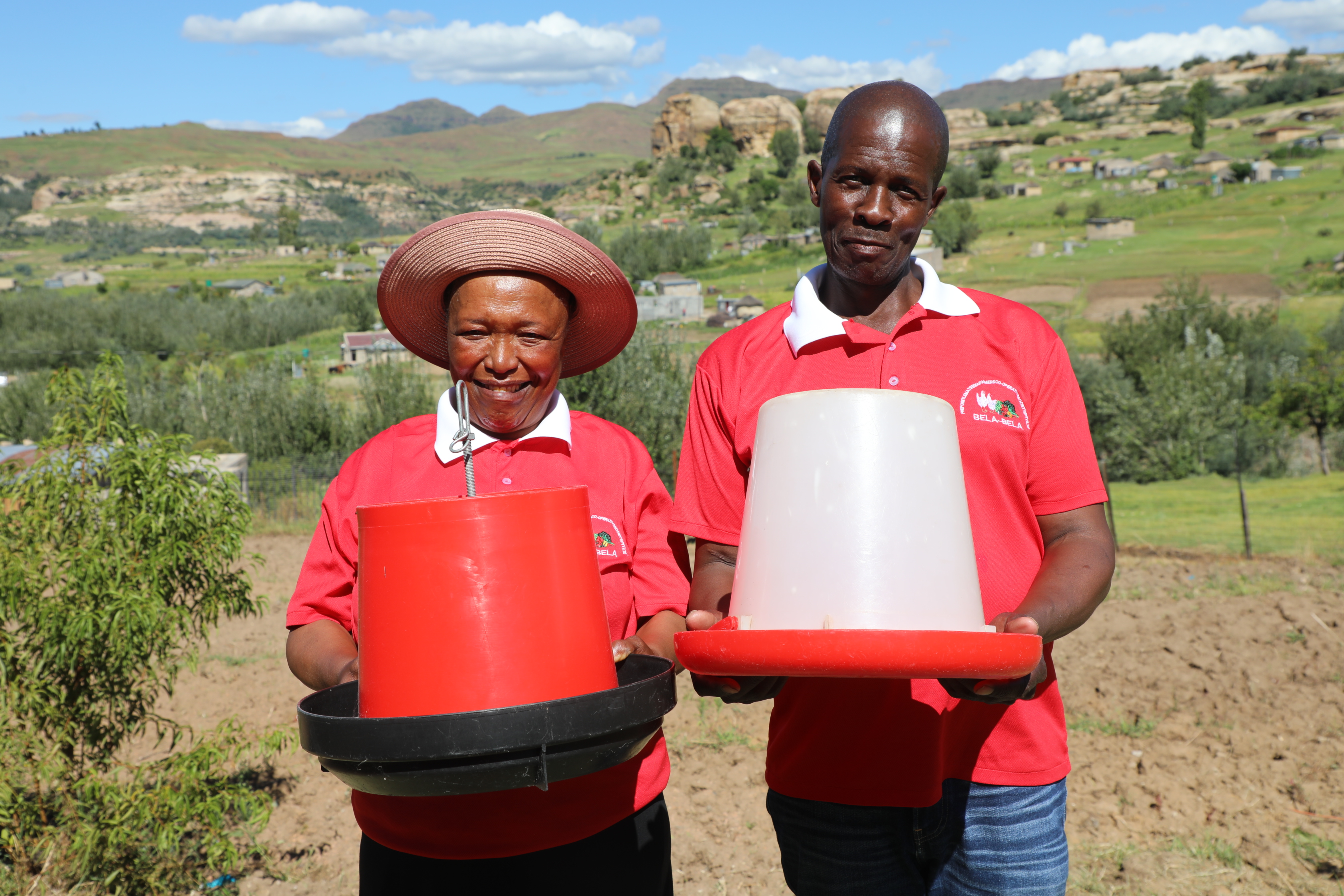
With new feeding and watering dishes from World Vision, members strengthen the care and management of their broiler chickens
The results were profound.
“My children are no longer being expelled from school because I can now pay their fees,” shared Mantsane. Beyond education, families began accessing nutritious food produced by their own hands—quality chickens and fresh vegetables.
“My children are no longer being expelled from school because I can now pay their fees,” shared Mantsane
For Mr Motinyane, the transformation was deeply personal. Income from the cooperative enabled him to install electricity in his home—something he once believed impossible. He also erected a water tank, addressing a long-standing water crisis affecting his household.
The cooperative itself flourished.
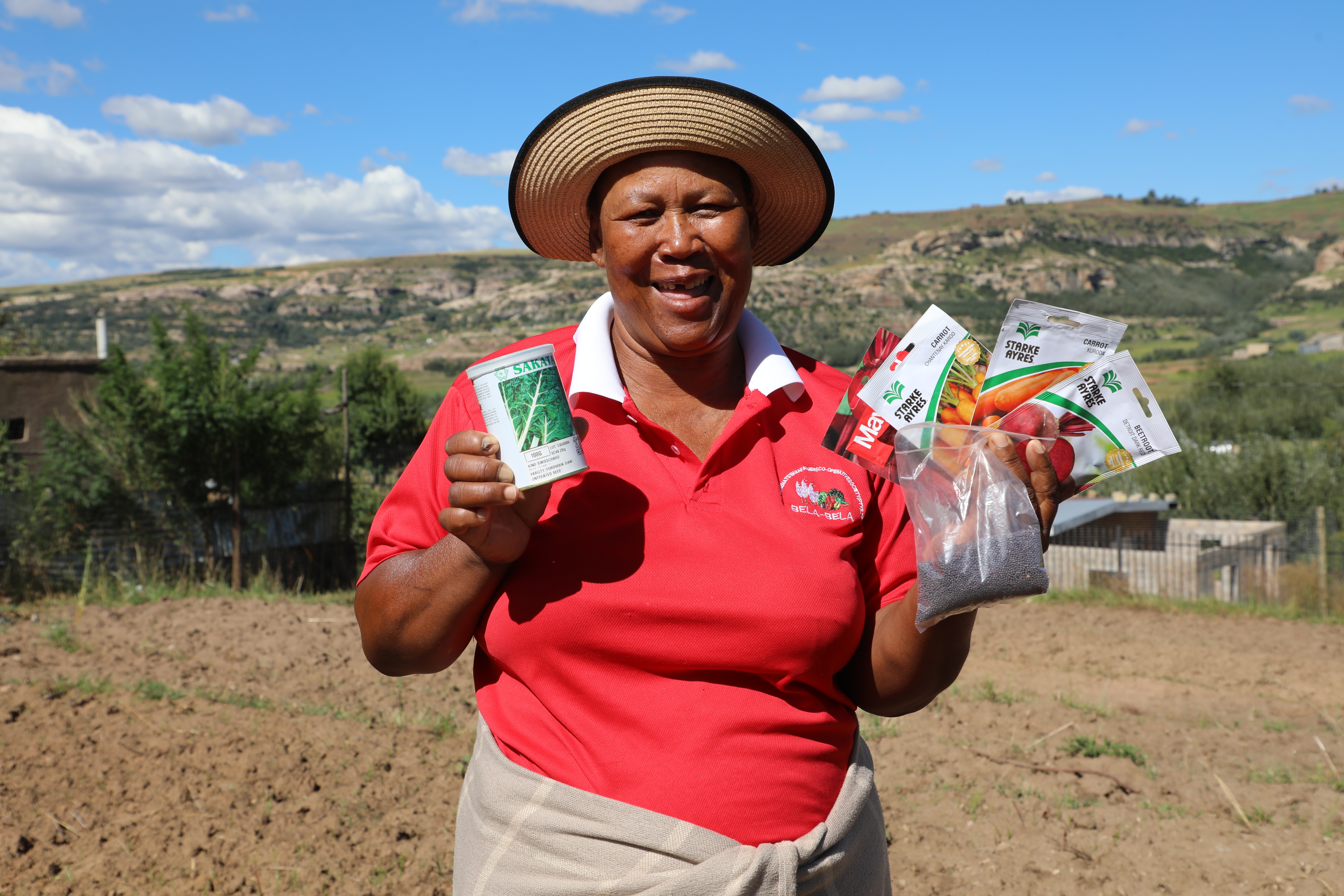
With planting season underway, Maqeto presents the seeds that will soon grow into fresh produce for the cooperative
Members invested in a communal water tank for storage, expanded vegetable production beyond cabbage to include spinach, carrots, potatoes, beetroot, and onions, and purchased improved seeds. Their site evolved into a functional workspace, complete with a toilet for convenience during long working days.
Most notably, poultry production surged.
From an initial 50 broilers, the cooperative now raises up to 500 chickens per cycle. Mortality rates have dropped dramatically, thanks to improved knowledge and a suitable structure. Today, the cooperative generates up to M26,000.00 in sales from chickens.
“We have seen a huge change since the interventions,” members proudly shared. “Our children now eat meat produced by us, and their needs are met.”
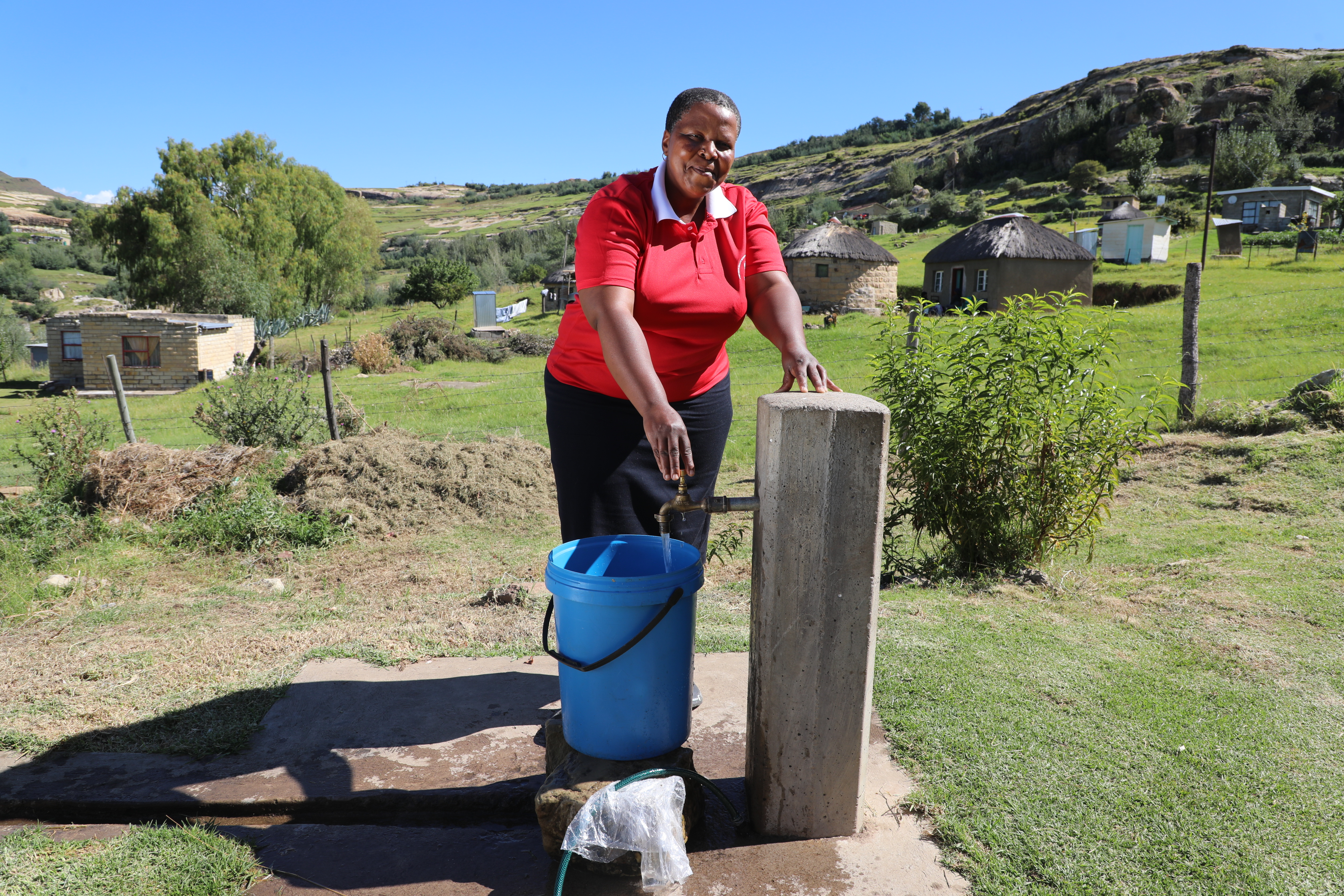
Maliapeng, a member of Phepo–E–Ntle Matsekha Farmers Cooperative, fetches water from the tap in their project yard to provide for the broiler chickens
Water access has been equally transformative. Reliable supply has boosted crop yields, supported poultry health, and even benefited the wider community. In a village still facing water challenges, the cooperative’s tap has become a source of clean and safe drinking water for other households.
What once felt like a distant dream is now a living reality.
Looking ahead, the cooperative is planning for sustainability by engaging young people—bringing fresh energy and innovative ideas to strengthen and expand the enterprise.
From uncertainty and loss to stability and growth, the journey of Phepo–E–Ntle Matsekha Farmers Cooperative stands as a powerful testament to the impact of integrated programming—where livelihoods, resilience, and WASH support converge to transform lives, families, and futures.