
From Struggle to Stability: World Vision Strengthens the Matelile Potato Farmers Association

By Reentseng Phephetho, Communications and Digital Officer
In Matelile Ha Seeiso, poverty once sat heavily on most households. Children went to school in torn uniforms—if they had uniforms at all. Some arrived hungry, others without basic school supplies. Unemployment was not just a statistic; it was visible in empty kitchens, worn clothes, and parents who worried daily about how to provide even the most basic needs for their families.
Yet, in 2018, something powerful happened. Men, women, and young people—63 community members in total—came together with a shared determination to change their story. They formed the Matelile Potato Farmers Association, united by one goal: to help their families graduate from poverty.
Why potatoes?
Climate change had already taken its toll on household gardens. After much discussion, the group agreed to focus on potatoes—believed to be more resilient across changing weather conditions. Each member contributed M40.00, pooling resources to buy potato seeds and plant 20 hectares of their own land.
But determination alone was not enough.
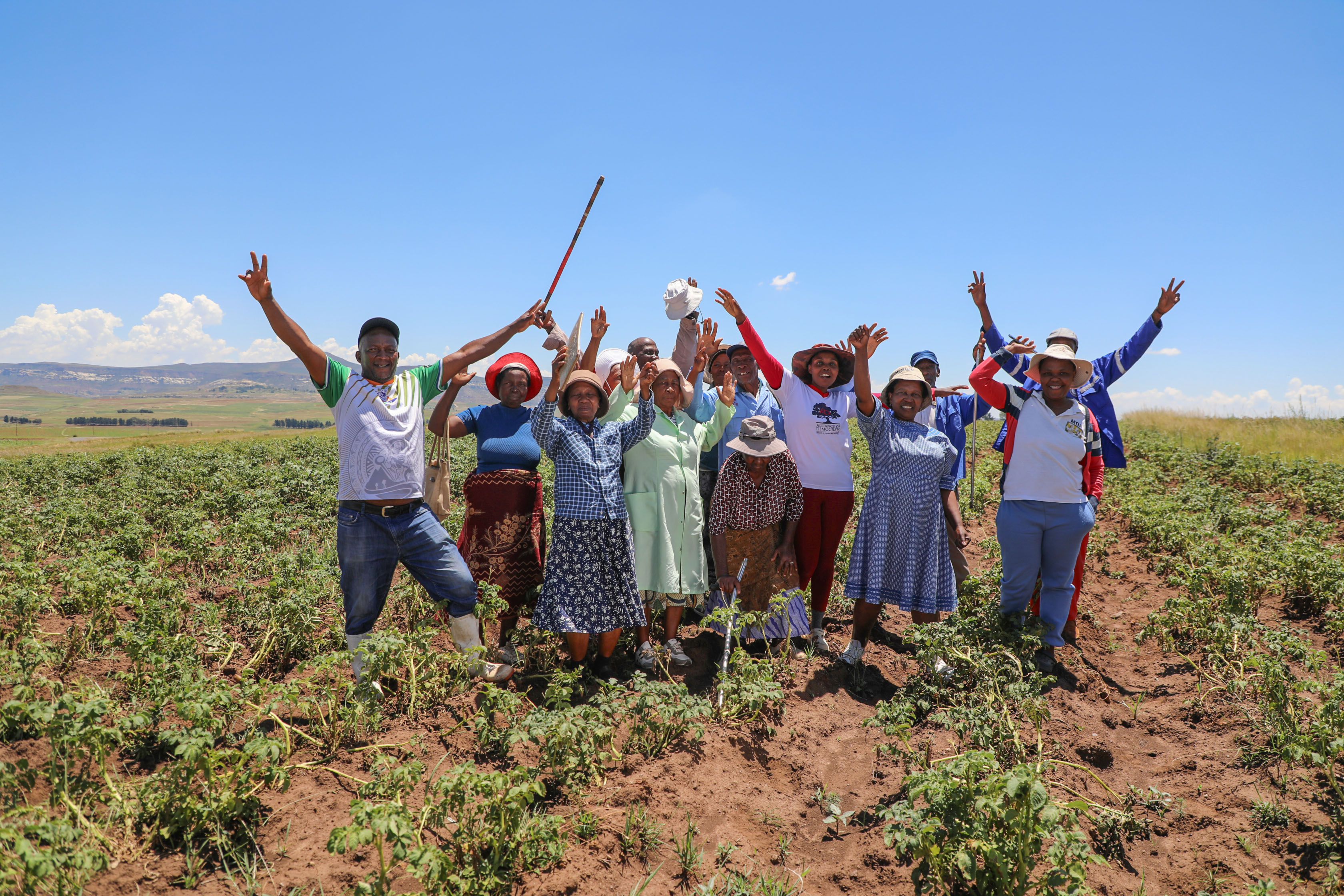
Members of the Matelile Potato Farmers Association inspect potato growth in their fields as part of ongoing production monitoring.
With only indigenous knowledge and no formal skills, their first harvest was disappointing. Worse still, they had no market. They sold to fellow villagers, often on credit. Some potatoes rotted before they could be sold. Bookkeeping was non-existent—money came in, but no one could tell whether the group was making a profit or a loss. Packaging, market timing, and conflict resolution were unfamiliar concepts.
“We did not even know the right season to plant potatoes. We were just trying to make ends meet for our families,” shared Marethabile, chairperson.
Conflicts grew within the association, and without the skills to resolve them, progress stalled. The dream of transforming their families’ lives seemed to be slipping further away.
A turning point: skills, knowledge, and hope
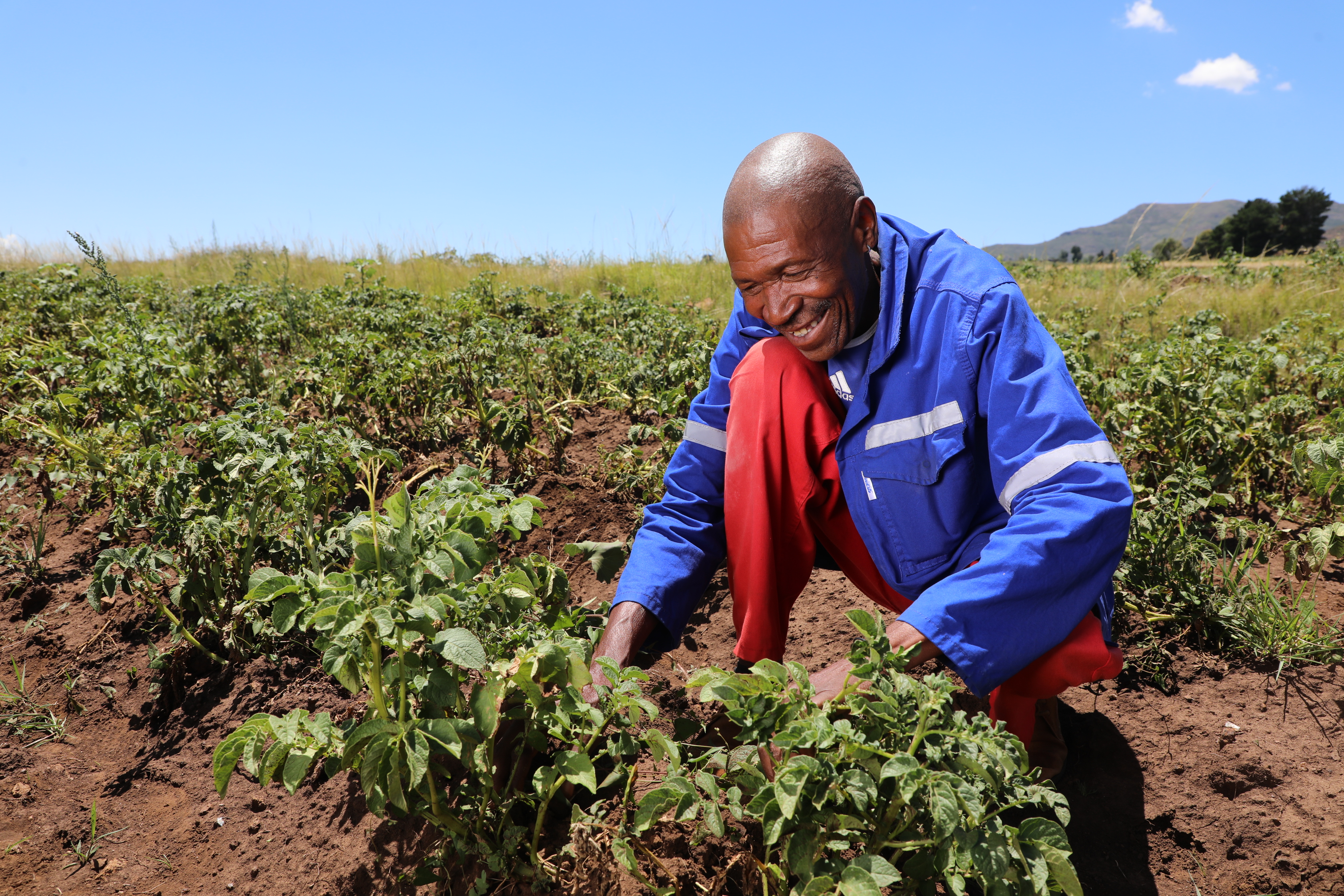
Everything changed in late 2024, when World Vision, through the SADP II-funded Gender Equality and Women Empowerment Project, began working with the group. The Matelile Potato Farmers Association received a series of transformative trainings. One of the most impactful was Smallholder Horticulture Empowerment and Promotion (SHEP)—a model that introduced a simple but powerful concept: “Market before Production.”
“Now we plant knowing exactly who we are going to supply,” shared Masela, a member of the association. That shift changed everything.
Today, the association has secured three official supply contracts with local businesses in Maseru and Mafeteng districts. They supply street vendors and continue selling to villagers. Their sales have skyrocketed—from M20,000.00 to an astonishing M500,000.00, the highest they have ever earned. For the first time, they opened a bank account for the association, ensuring transparency and financial discipline.
Children’s needs are now met. Food is available. School uniforms are bought with dignity. The group has even developed a crop calendar, ensuring they never run out of stock and can consistently meet client demands.
Savings that transformed lives
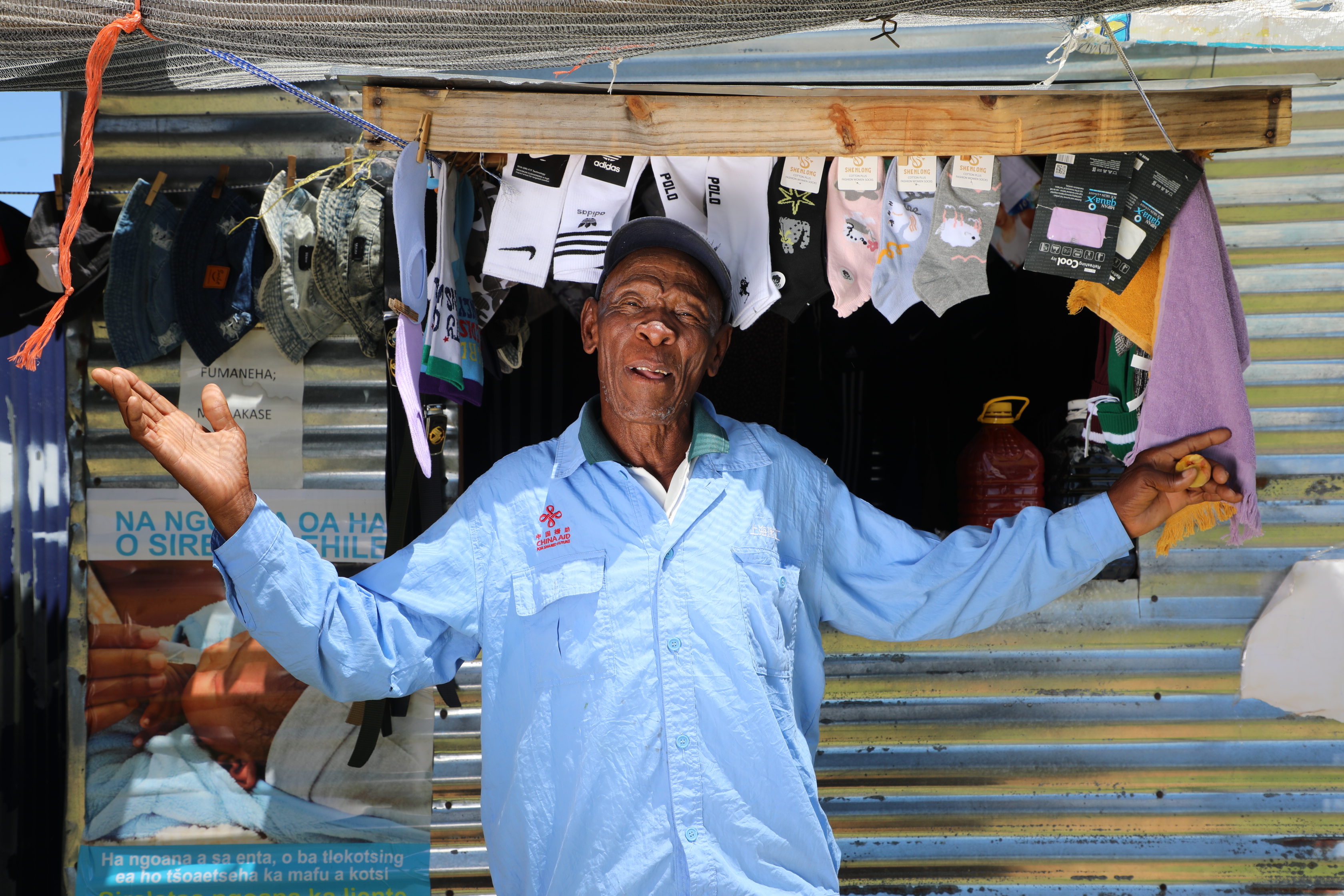
Masela at his small business, established through Savings for Transformation support.
Another life-changing intervention was the Savings for Transformation (S4T) model. Starting with a contribution of just M100.00, members began saving—and dreaming bigger. Through S4T, members are now able to use part of this money to buy potato seeds and expand production to 81 hectares.
For Mr. Masela, S4T went beyond farming. He established a shop that started as a clothing business, and expanded to other small household needs, one that has completely transformed his household.
“Of all the trainings we received, this one changed my life in a way I cannot even explain. My family is living the life I always dreamed of,” he shared.
His business is thriving—so much so that every Wednesday, his son travels to South Africa to buy stock.
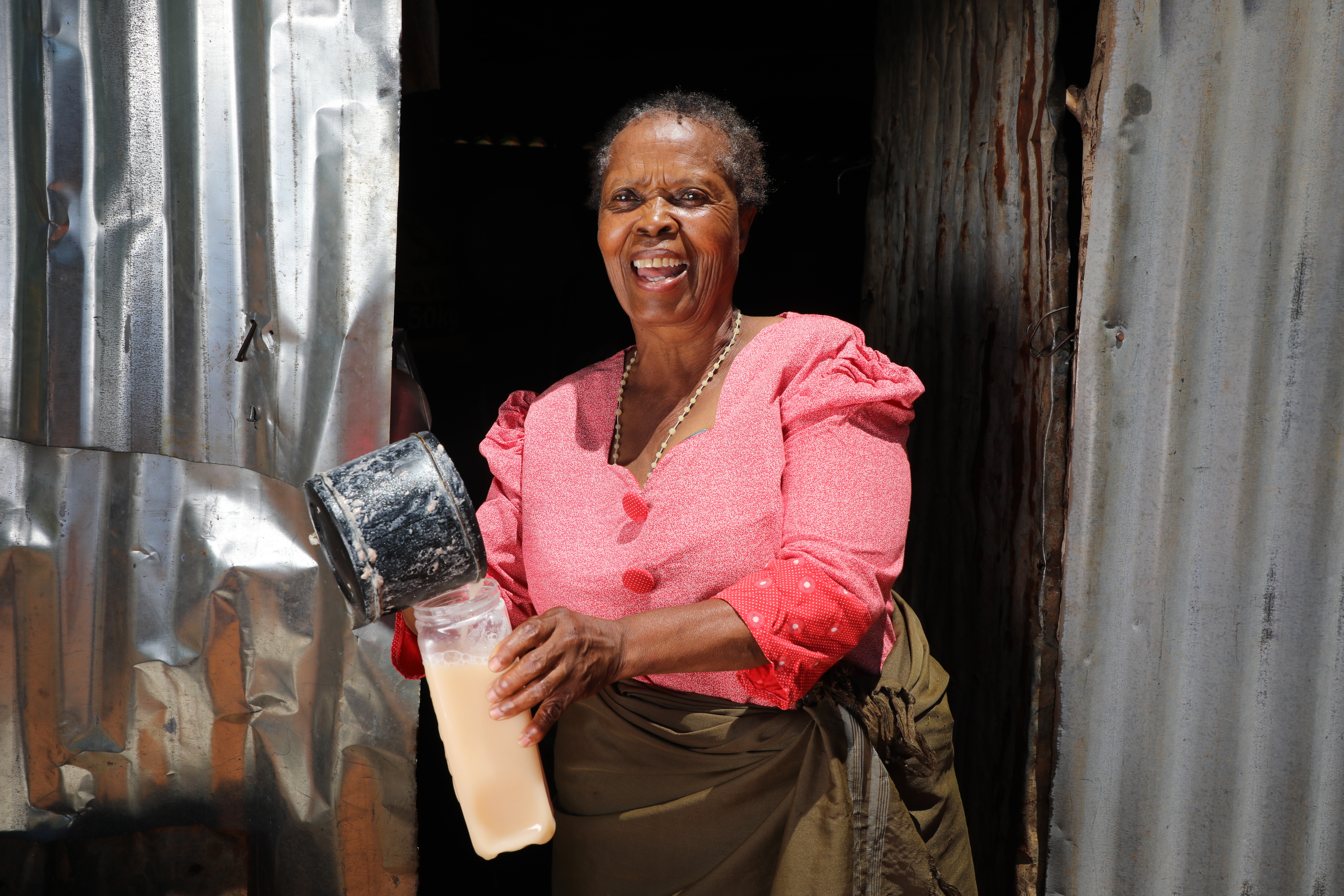
Moroesi serves a client at her “Phephesela” home-brewed beverage business.
For Moroesi, S4T opened the door to entrepreneurship. She now runs a “Phephesela” (home-brewed alcohol) business, supported by skills gained through business planning training.
“I live a nice life with my husband. I do not lack,” she proudly echoed. Her business is well supported by fellow villagers and provides consistent income for her household.
Changing minds, homes, and leadership
World Vision also trained the group on Gender Equality, sparking transformation not only within the association but inside homes.
Cultural norms that once placed leadership and decision-making solely in men’s hands began to shift. Today, women make up the majority of the committee, and the chairperson is a woman. Women feel confident to lead, and men are increasingly involved in household chores—something unheard of before the trainings.
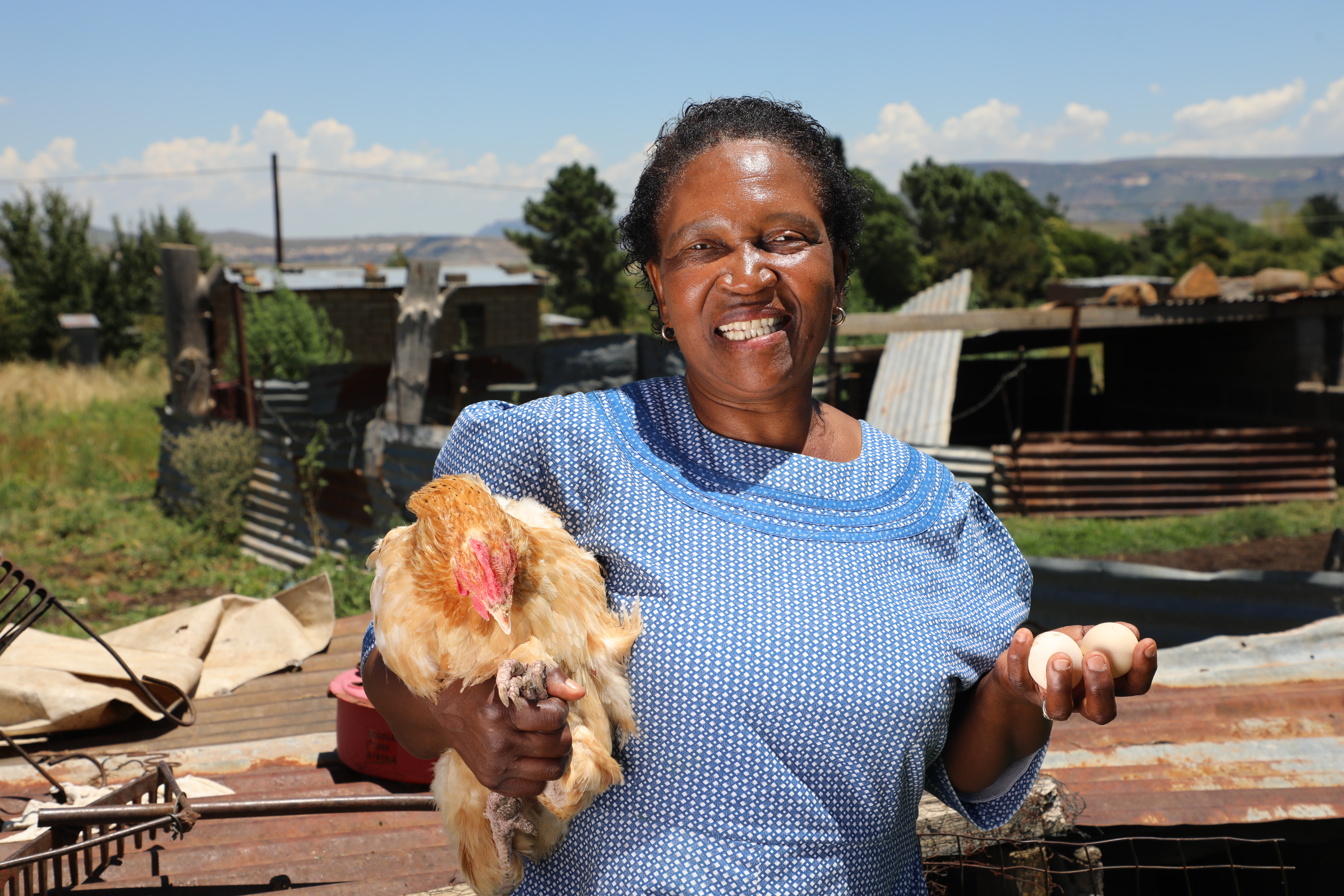
Marethabile holds a chicken and eggs from her poultry business, established after receiving empowerment support.
For Marethabile, now the chairperson, the journey has been deeply personal. Empowered by training and S4T savings, she established a local chicken business, selling both chickens and eggs.
“It feels good to be an empowered woman. Beyond Matelile Potato Association, I am proud that I have established a business that helps me provide for my family,” she shared. She once believed providing for a family was solely a man’s responsibility. Today, she is a living example of economic empowerment in action.
Stronger together, ready for the future
Conflict management training has also strengthened the association. They now have a conflict management committee, handling disputes with transparency and professionalism—something that once threatened to break them apart.
Like any determined group, they dream boldly. They envision building a large storage facility, buying their own tractor, expanding production even further, and one day becoming national suppliers of potatoes across Lesotho.
From hunger to hope. From uncertainty to contracts. From survival to sustainability.
The story of Matelile Potato Farmers Association is proof that when communities are equipped with the right skills, knowledge, and support, poverty does not stand a chance.