
EU-Funded World Vision Programme Reaches 4,800 Children as War Continues to Disrupt Learning

Kyiv, Ukraine – As air raid sirens continue to interrupt lessons and displacement reshapes childhood, a European Union–funded initiative led by World Vision has helped restore safe, inclusive education for thousands of children across Ukraine.
The “Safe Access to Equitable and Inclusive Education in Ukraine” initiative, implemented by World Vision in partnership with Save Ukraine and funded by the European Union (ECHO), ran from January 2024 to October 2025. During this period, more than 5,400 people — including over 4,800 children — received critical educational and psychosocial support across seven oblasts.
Across Kyiv, Zhytomyr, Ivano-Frankivsk, Khmelnytskyi, Lviv, Kharkiv, and Odesa oblasts, the programme established 11 dedicated learning centres, providing structured catch-up classes in Ukrainian language, English and Mathematics for children aged 6 to 17. Delivered through a blended model of in-person and online learning, the initiative ensured continuity with the national curriculum for children whose education had been repeatedly disrupted by displacement, insecurity and damaged infrastructure.
With more than 4.6 million children across Ukraine facing obstacles to learning and hundreds of schools damaged or destroyed since February 2022, education remains one of the war’s most profound casualties.
For families like Natalya’s from Irpin, the programme provided more than academic support. “The nearest options for special classes and therapy are in Kyiv, and they’re costly. This centre was a lifeline for us,” she says, reflecting on the support her child received at a Save Ukraine-managed learning space.
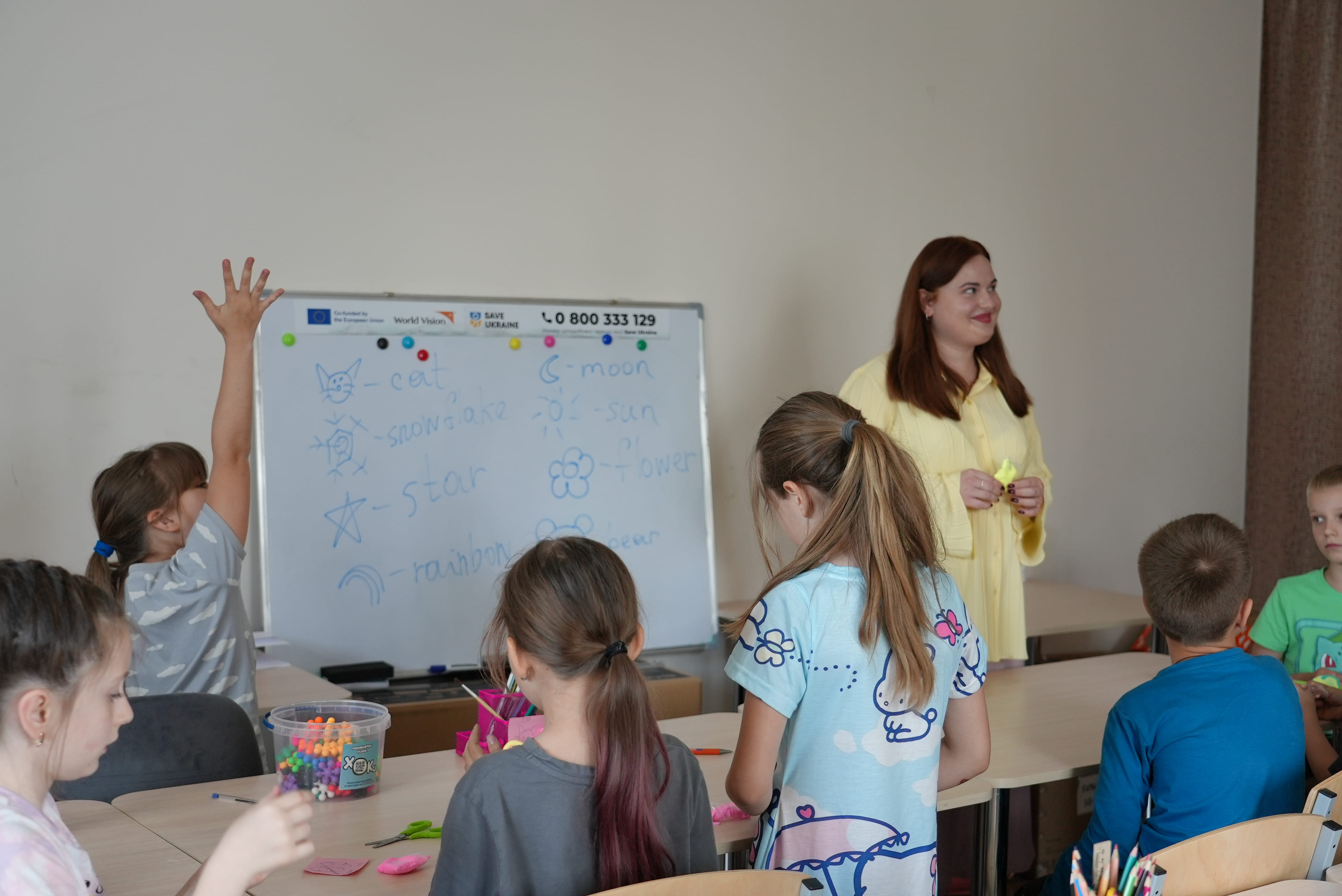
Beyond academic recovery, the initiative embedded psychosocial support and child protection into daily learning. Through art therapy, counselling sessions and mine risk awareness activities, children were supported to cope with trauma and ongoing insecurity. The programme prioritised inclusive participation, ensuring children with disabilities — who often face heightened barriers — received tailored and accessible support.
Nine-year-old Karolina described the daily reality many children continue to face: “When the air raid alarm goes off, we have to run to the shelter. It’s scary. In the catch-up classes, I could focus on learning Ukrainian and Math again. I wanted to keep learning, even when it felt frightening.”
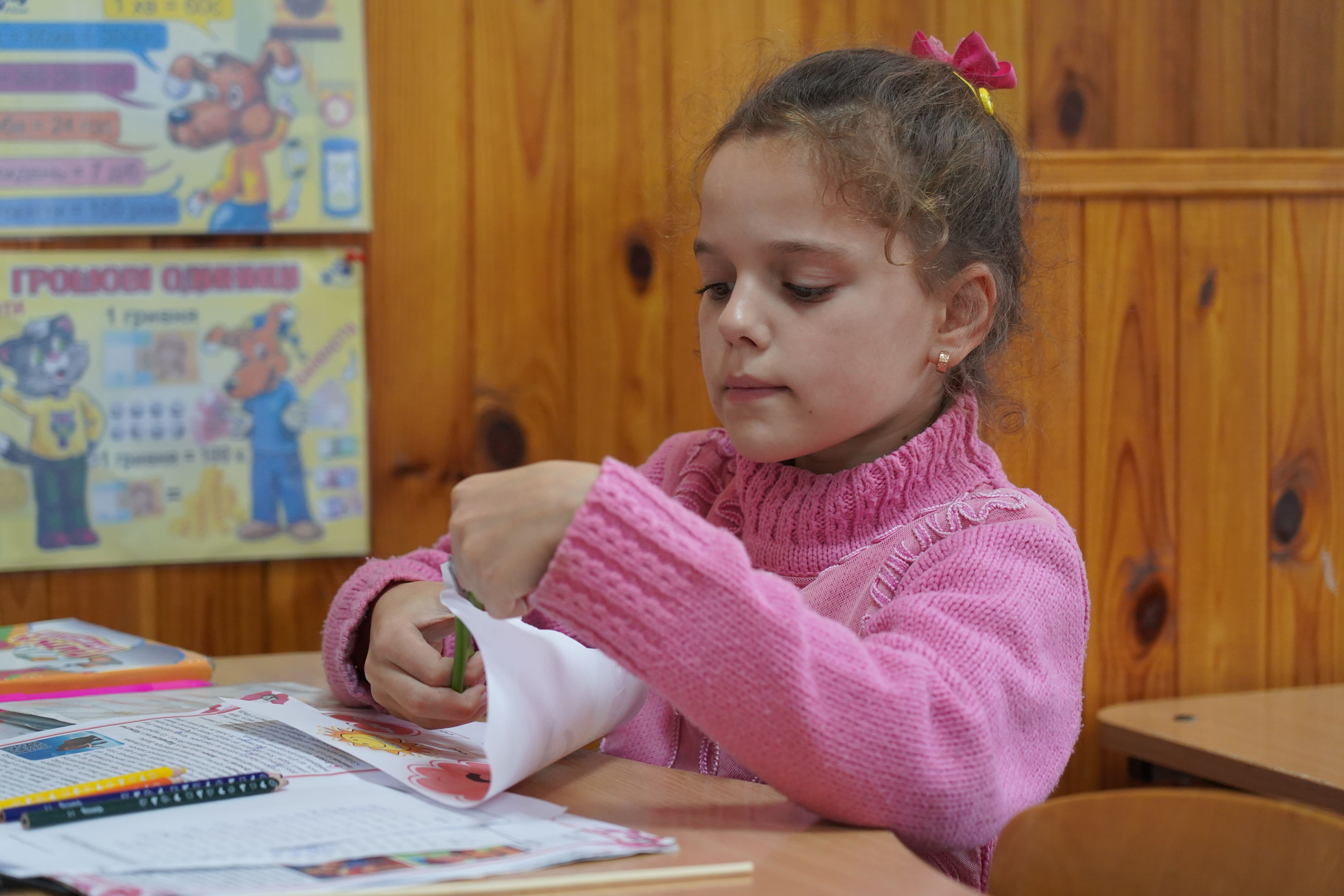
Frequent alarms, disrupted schooling and repeated displacement have defined childhood for millions. Maria, 12, displaced from Kharkiv, changed schools four times in four years.
“In four years, I’ve changed schools four times, leaving friends behind. Moving to Kyiv, I started my fourth school, but I hold onto hope for a better tomorrow.”
The initiative also strengthened educator capacity, equipping teachers and staff with specialised training in safety, protection and mine risk awareness to create secure learning environments in volatile conditions.
“Education in emergencies is not a secondary intervention – it is a core, lifesaving response. Safe, inclusive learning environments provide far more than academic continuity; when integrated with psychosocial support and child protection, they offer children stability, routine and critical mechanisms to cope with trauma. In contexts of protracted crisis, education becomes a protective space that safeguards well-being and dignity,” said Arman Grigoryan, World Vision Ukraine Response Director.
He added, “We are grateful for the strong partnership and financial support of the European Union, which has enabled us to reach thousands of children at risk of being left behind. While this project has concluded, the needs remain acute. Sustained and predictable investment in integrated education programming is essential to prevent long-term learning loss, mitigate protection risks and safeguard the future of an entire generation of Ukrainian children.”
As of December 2025, World Vision has reached more than 242,000 children across Ukraine with educational services. Yet with millions still facing daily disruptions to learning, continued international commitment is essential.
Notes to Editor:
About EU Civil Protection and Humanitarian Aid: The European Union and its Member States are among the world's leading donors of humanitarian aid. Relief assistance is an expression of European solidarity with people in need all around the world. It aims to save lives, prevent and alleviate human suffering, and safeguard the integrity and human dignity of populations affected by disasters and human-induced crises. Through the Directorate General for European Civil Protection and Humanitarian Aid Operations of the European Commission, the European Union helps millions of victims of conflict and disasters every year. With headquarters in Brussels and a global network of field offices, the EU provides assistance to the most vulnerable people on the basis of humanitarian needs.