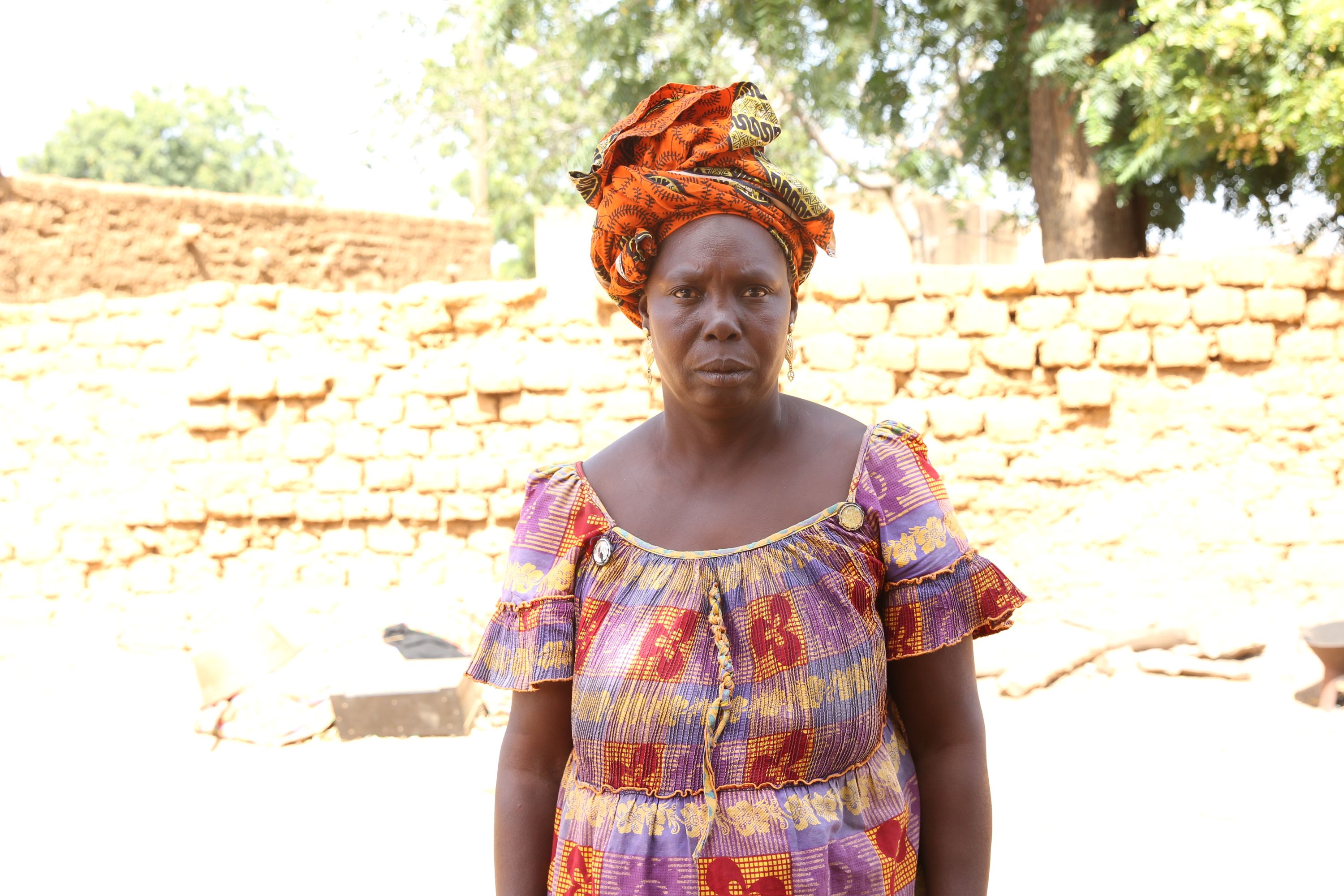
When hunger threatens Awa’s daily life

Awa is 12 years old and lives in Koro with her mother, Fatim, and her five siblings. After fleeing violence in their home village, every day is a struggle to find food, safe drinking water, and a bit of security. Awa is in 4th grade and loves school, but some weeks her empty stomach makes it impossible to focus on lessons.
In August 2024, thanks to the Integrated Humanitarian Approach in Mali (IHAM) project, funded by USAID’s Bureau for Humanitarian Assistance (BHA), Awa and her family received their first food distribution: rice, beans, oil, sugar, and pasta. For the first time in months, she could eat without worry. “That day, I ate my fill and even helped my little sister eat too,” she recalls with a smile.
But before the next distributions could reach her home, funding was cut. The IHAM project, which was supposed to support 100 displaced and vulnerable families, was halted. Like 17,460 internally displaced people and 12,900 vulnerable residents in central Mali, Awa and her family were left without assistance, leaving children at risk of malnutrition and daily hunger.
Fatim tries to sell gravel and do small chores to feed her children, but resources are limited. The older children are still too young to earn a stable income. Hunger makes school difficult and daily life uncertain for Awa.
“I just want to go to school and eat enough every day,” Awa confides. The aid cut is not just a number it changes a child’s life, learning, and health.
Despite everything, whenever a neighbor or small local initiative distributes a little food or water, she knows that support can make a difference. Her mother, Fatim, continues to find ways to protect her children, even in the storm.