
World Vision’s Integrated Programs Transform Learning, Health, and Hope for 1,052 Learners in Pitseng

By Reentseng Phephetho, Communication and Digital Officer
In a primary school under the Pitseng Area Development Program, learning once took place under conditions that made education a daily struggle. With a school roll of 1,052 learners, the lack of water, inadequate sanitation, and overcrowded classrooms combined to frustrate both teachers and students, undermining effective teaching and learning.
A School Day Defined by Hardship
Water — the most basic necessity — was scarce.
Learners were regularly forced to walk long distances to a neighbouring village to fetch water from a community tank. The journey stole precious learning time, as students stood in long queues when they should have been in class. It also exposed them to danger, requiring them to cross a busy tarred road with passing vehicles.
Teacher Tampose recalled the strain this placed not only on learners but also on relationships with the surrounding community: “It even brought about bitter relationships with the community because learners consumed their water.”
With so little water available, hygiene suffered. The limited supply was prioritised for preparing school meals, leaving little for handwashing, cleaning lunchboxes, or maintaining classrooms and toilets. “Learners even started experiencing illnesses like diarrhoea due to not practising good hygiene,” Ms Tampose explained.
Efforts to grow vegetables to supplement school feeding repeatedly failed. Without water for irrigation, crops could not survive.
A Sanitation Crisis
Sanitation conditions were equally alarming.
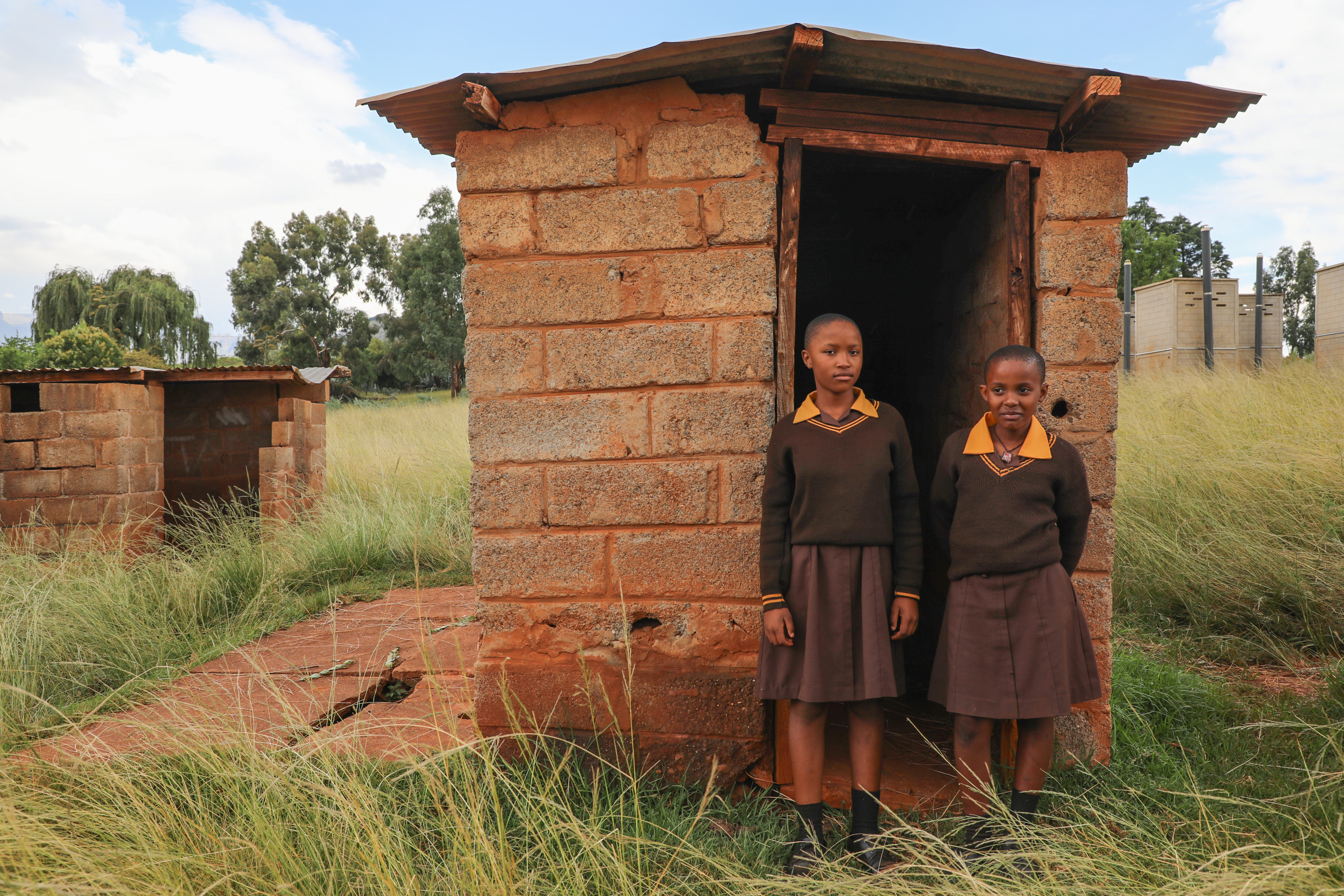
Mankoane and Reabetsoe next to the unsafe, dilapidated toilet they previously used as learners
For over a thousand learners, the school had only four toilets — two for girls and two for boys. The facilities were in poor condition: unclean, without doors, and with cracks that threatened collapse.
The consequences were severe.
Because of overcrowding, learners often relieved themselves on the floor when toilet seats were unavailable. Others resorted to nearby bushes, polluting the environment and creating further health risks.
The shortage also bred conflict. “Learners would push and bully one another just to get a toilet seat,” teachers observed, noting frequent fights caused by desperation and frustration.
Overcrowded and Unsafe Learning Spaces
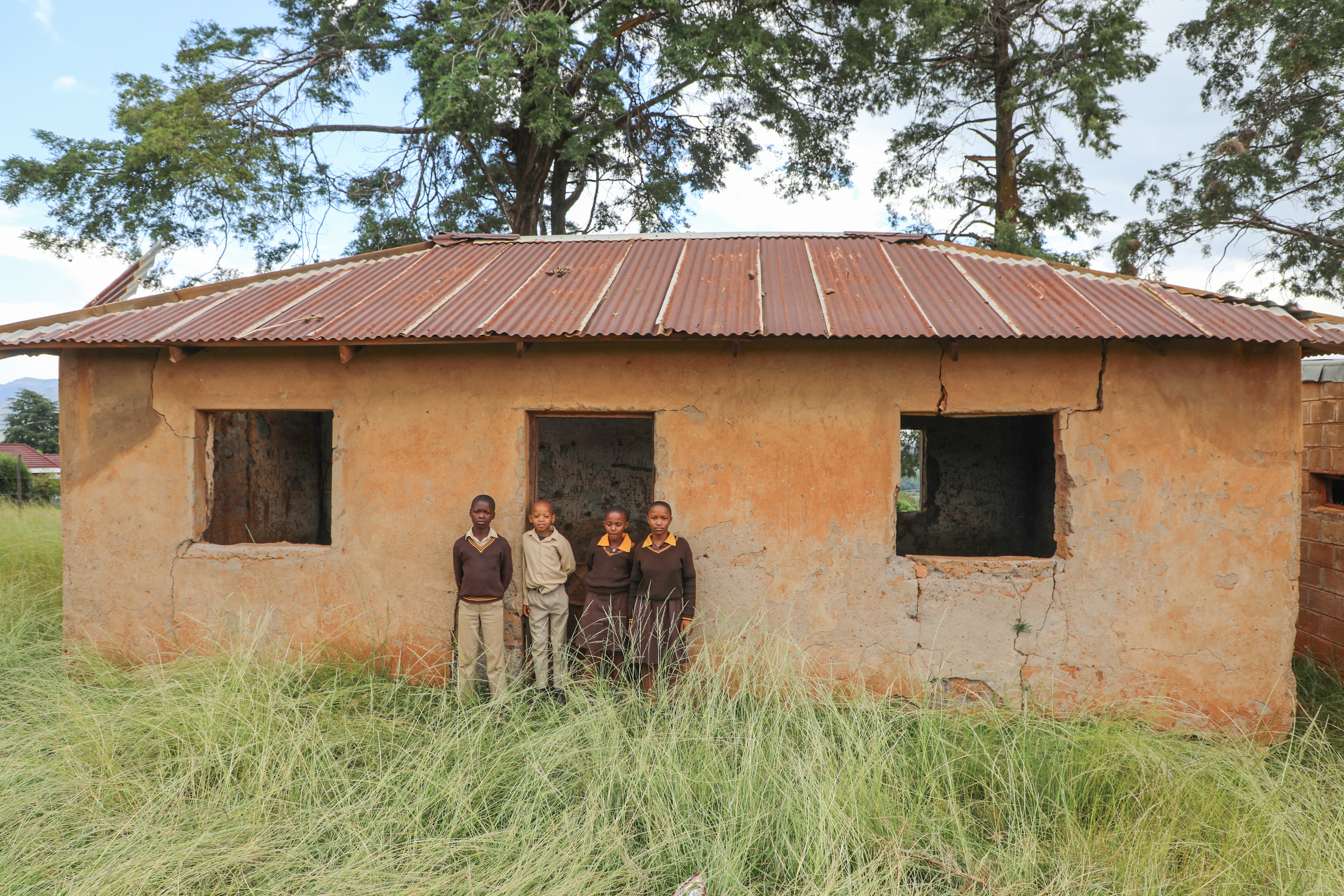
Learners stand beside the dilapidated classroom they once used due to a shortage of classrooms
Classrooms were painfully insufficient.
Some classes accommodated nearly 100 learners, making it difficult for teachers to manage lessons effectively. Congestion increased the spread of illness, while many students had no classroom at all.
“We were forced to take other learners into a dilapidated house and some under a tree and teach them,” Teacher ‘Makebone shared.For learners, it was a demoralising experience — one that diminished both comfort and concentration.
A Turning Point: World Vision’s Integrated Response
In 2018, World Vision, through its integrated programs, stepped in with a comprehensive package of interventions designed to address the school’s interconnected challenges.
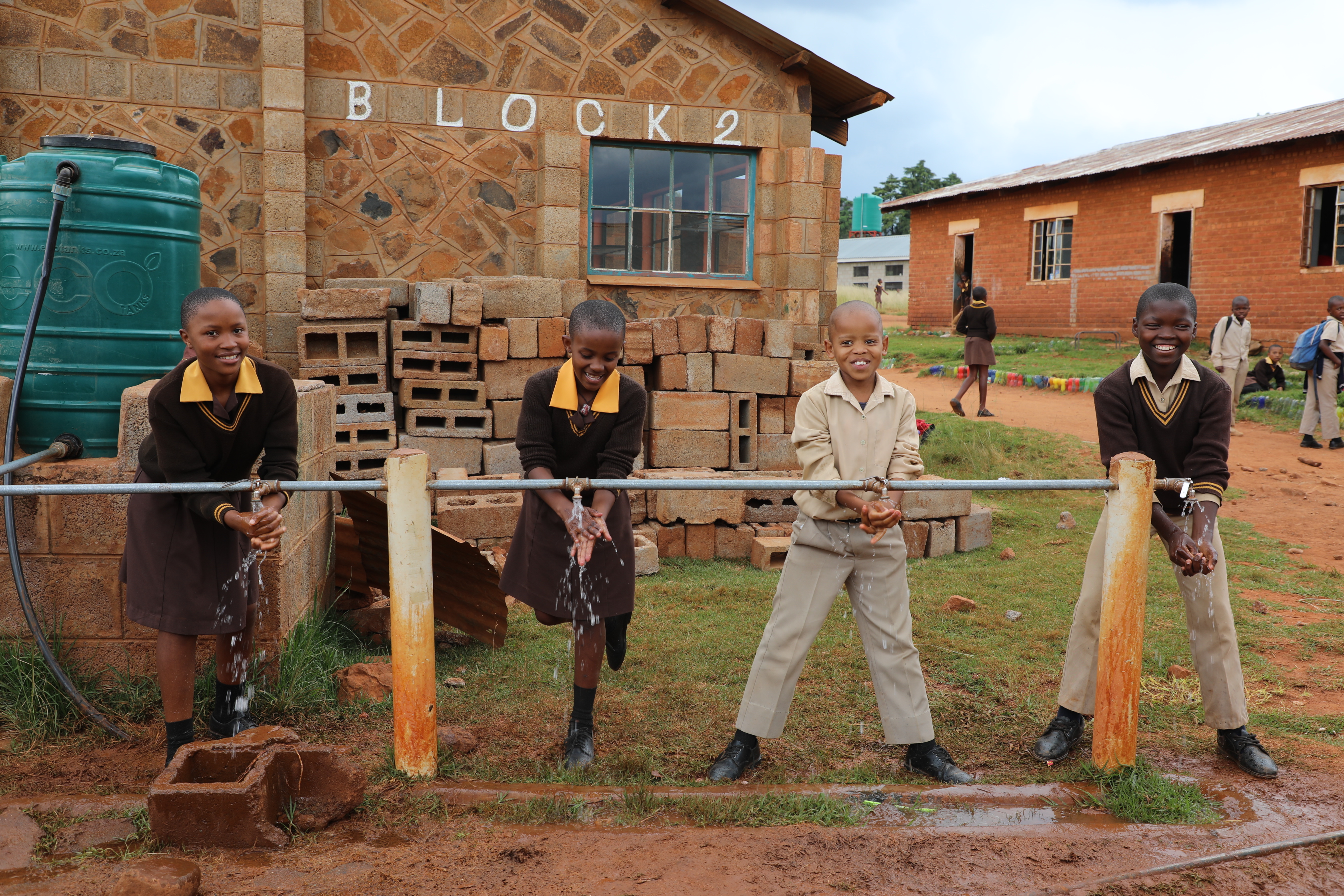
With access to clean and safe water, learners happily practise handwashing at their school
Restoring Access to Safe Water
World Vision supported the school with:
Reliable water facilities
Handwashing stations
Five rainwater harvesting tanks
The impact was immediate and profound. Learners now had continuous access to safe drinking water within the school premises.
“We are now drinking clean water any time we feel thirsty. We never run out of water in our school,” said Reabetsoe, an 11-year-old student.
The exhausting and risky journeys to fetch water ended. Learners spend more time in class, and hygiene practices improved dramatically. Students can wash hands regularly, clean their lunchboxes, and maintain cleaner classrooms. School meals are prepared using sufficient clean water, enhancing food safety.
Importantly, tensions with the surrounding community eased, as the school no longer depended on village water sources. To sustain good hygiene practices, the school established a WASH Club, with learners trained to champion hand, food, and environmental hygiene.
Growing Food — and Income
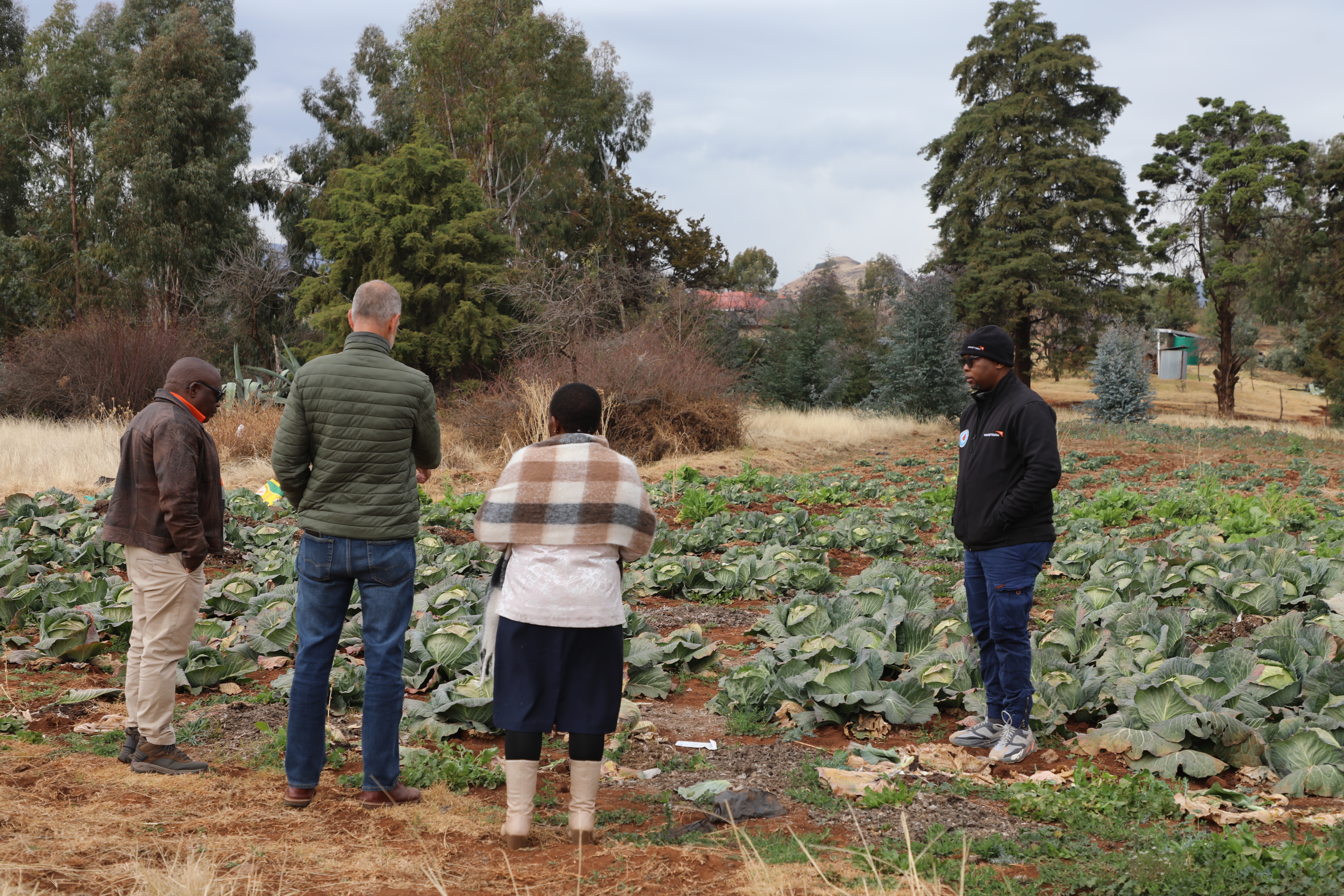
Partnership in action — World Vision and the School Principal caring for the school vegetable garden
With water now available, World Vision supported the school garden by providing:
Vegetable seeds (cabbage, carrots, spinach, beetroot)
Garden tools
Agricultural skills training
For the first time, crops flourished.
The school began selling vegetables to National Management Agent (NMA) — the institution responsible for school feeding — generating income used to purchase learning materials. Some produce supported vulnerable learners’ families with home meals.
A Thriving Egg Production Project
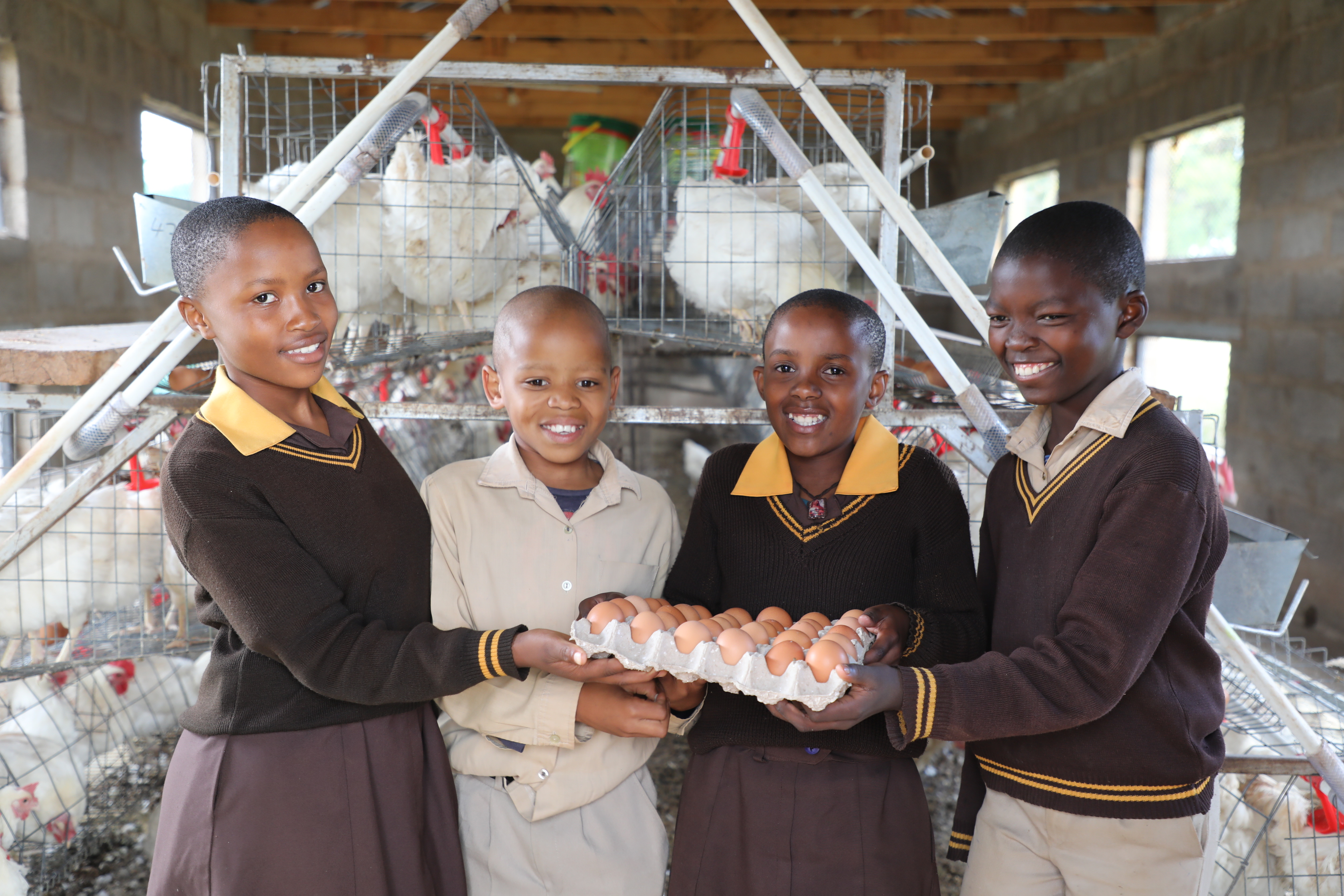
Fresh from their school poultry project, learners celebrate collecting a tray of eggs
World Vision further strengthened school sustainability by supporting:
600 layer chickens
Poultry housing and equipment
Three months of layer feed
The project succeeded beyond expectations.
The school now sells trays of eggs to NMA, contributing directly to learner nutrition. Markets expanded to nearby communities and supermarkets around Pitseng Village.
Egg sales — at M45.00 per tray — provide income used to:
Support school workshops and meetings
Respond to emergencies affecting learners
Assist vulnerable students
Help cover high school fees for disadvantaged learners
Provide groceries for learners from food-insecure households
“It feels so good to eat fresh eggs from our own school because they are important to our bodies,” shared Lebohang, 13.
Creating Space for Learning
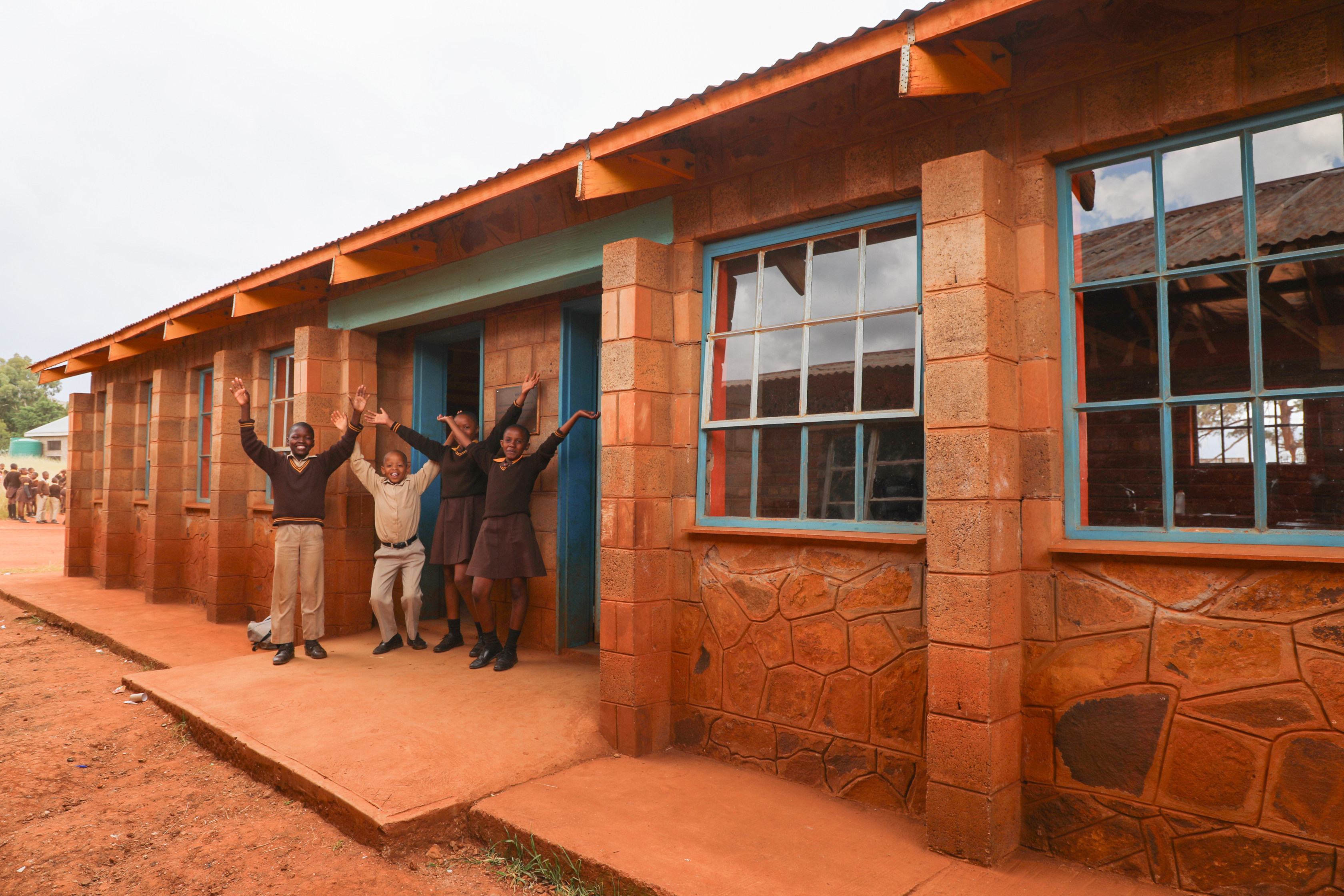
Smiles of hope — learners celebrate their new classrooms and improved learning conditions
To address overcrowding, World Vision constructed two new classrooms. Congestion decreased significantly. All learners gained access to proper learning spaces, improving comfort, concentration, and classroom management.
“Learners are now looking forward to school days because they all learn in comfortable classrooms,” Teacher Tampose said happily.
Teachers also reported a noticeable reduction in disease transmission linked to overcrowded environments.
Restoring Dignity Through Sanitation
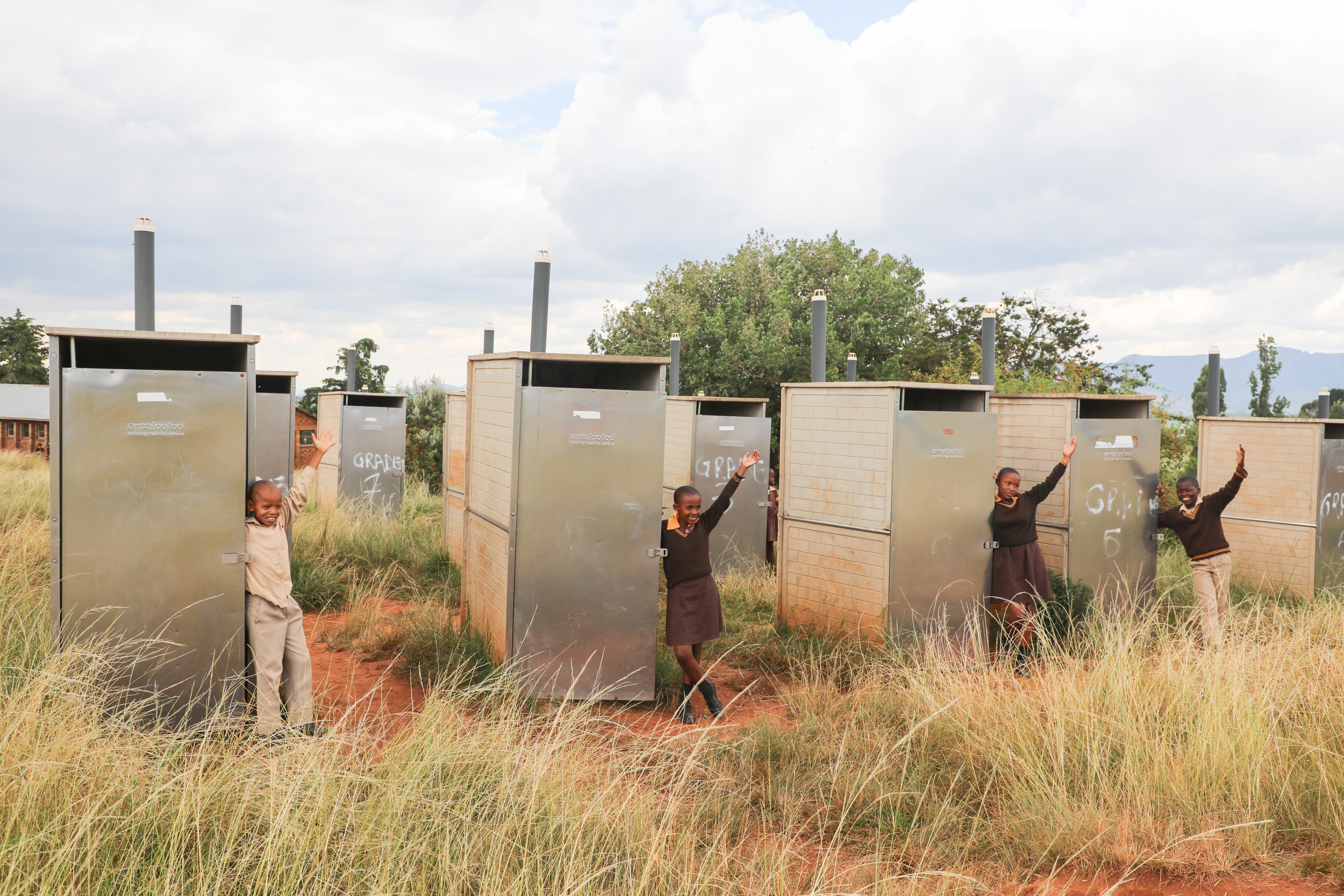
Smiles of dignity — learners celebrate access to safe Amalooloo toilets supported by World Vision
World Vision supported the school with 42 Amalooloo toilets.
The transformation restored safety, hygiene, and dignity. Learners now use clean, secure toilets with doors that ensure privacy. Open defecation stopped, protecting the environment and improving health conditions.
Each toilet was fitted with she-bins, supporting girls’ menstrual hygiene management. The facilities are sufficient to meet demand. Learners no longer fight or wait long periods for access.
Nurturing Hearts and Minds
Through its Faith and Development ministry, World Vision introduced Spiritual Nurturing of Children. Learners received books related to God’s word, strengthening not only spiritual awareness but also reading skills. Teachers also benefited, describing a renewed sense of Christian values within the school.
The impact extended beyond academics. Spiritual nurturing contributed to reduced conflicts and bullying while fostering a culture of sharing, respect, and empathy among learners.
A School Renewed
Today, the school stands as a powerful example of how integrated interventions can transform an entire learning environment.
What was once marked by scarcity, illness, overcrowding, and conflict is now characterised by:
Reliable access to clean water
Improved hygiene practices
Safe and dignified sanitation
Successful food production
Sustainable income generation
Comfortable classrooms
Strengthened values and relationships
For 1,052 learners, education is no longer a daily struggle — but an opportunity filled with health, dignity, and hope.