publication / March 24, 2026
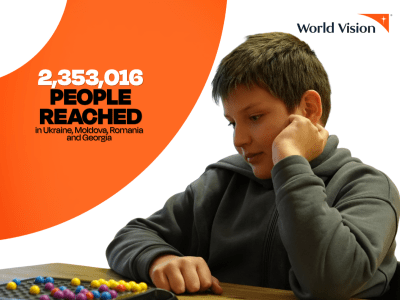
February 2026 updates: over 2,35M people reached
As of February 2026, World Vision has reached 2,353,016 people. 45% of the total reach are children (1,053,379 Children).
opinion / March 19, 2026
An Inflection Point for Our Sector and What Comes Next
Explores why our sector has reached a critical inflection point and the role civil society should play in helping build better systems.
article / March 19, 2026
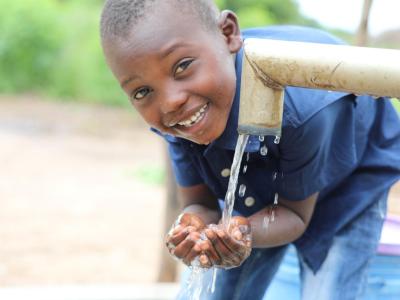
World Water Day: 13,000 More People Gain Access to Clean Water in Mozambique
World Vision Mozambique expands clean water access in Mutarara, benefiting 13,000 people through 43 new water sources. The initiative supports rural communities, aligns with national goals and SDG 6, and improves health, resilience, and daily life for families, especially children.
article / March 25, 2026
Water security in East Asia: Climate change is deepening the inequality divide
On World Water Day 2026, East Asia stands at a critical crossroads. Climate change is transforming water, once a foundation of economic growth and social stability, into one of the region’s sharpest drivers of inequality. And this inequality is not evenly felt. It falls hardest on women and girls, children, persons with disabilities, and rural and marginalised communities whose access to safe water was already fragile.
By Alexander Pandian, WASH Programmes Senior Advisor, World Vision East Asia
publication / February 26, 2026
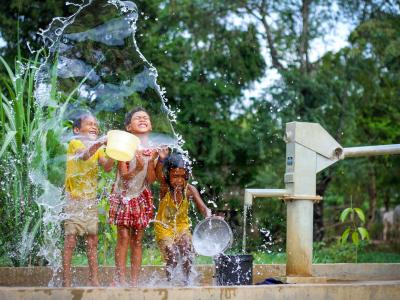
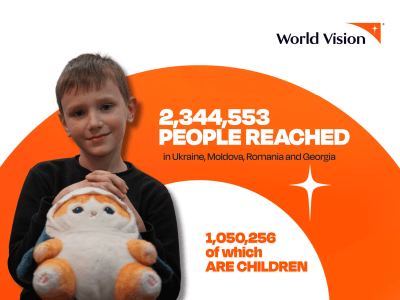
January 2026 Highlights – over 2.3M people reached
By January 2026, World Vision reached 2.34M people, with 45% children, through food, cash, protection, education, livelihoods, and MHPSS.
article / March 11, 2026
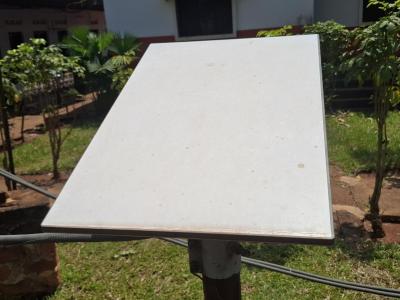
DR Congo: How Starlink is Transforming Connectivity and Improving Our Operations Impact
In FY26 Q1, World Vision in the Democratic Republic of the Congo transitioned from costly VSAT internet services to Starlink to improve connectivity across its field operations. The move is expected to save more annually, allowing resources to be redirected to programmes that support vulnerable children and communities. Beyond cost savings, the new system provides faster, more reliable internet in remote areas, enabling better data collection, quicker reporting, stronger collaboration, and more efficient programme delivery.
press release / February 25, 2026
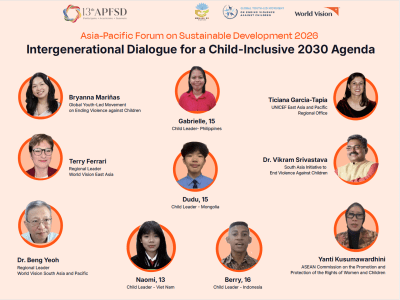
“Our Rights, Our Future”: Strengthening Safe Civic Spaces for Child Participation at the Asia Pacific Forum on Sustainable Development 2026
At APFSD 2026, children and regional leaders unite to close the 88% SDG progress gap. Explore how child-centred innovation and direct negotiation are shaping a resilient future for communities across the Asia-Pacific.
opinion / March 6, 2026
Progress for Girls: Are Our Promises Outpacing Delivery?
Why meaningful progress for girls will depend not on declarations but on political discipline and sustained investment.
article / March 13, 2026
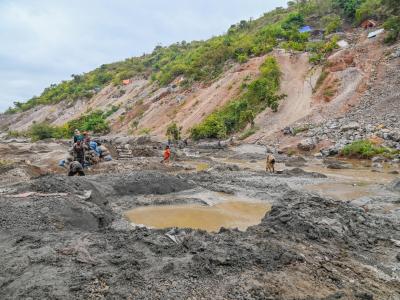
A Landslide at The Artisanal Mine in Kakanda Has Left Around a Dozen People Dead, Including a Child, And Has Highlighted Safety Concerns
A deadly landslide at the Safi artisanal mining site in Kakanda, Lualaba Province, has raised serious concerns about safety conditions in informal mining areas. The incident, which occurred on 11 March 2026 within the Boss Mining concession, claimed several lives, including that of a child, and highlighted the risks faced by artisanal miners working in unstable and poorly supervised environments. Initial findings point to factors such as heavy rains, unstable soil, steep slopes and inadequate drainage. The tragedy has prompted calls for stronger safety measures, improved oversight of artisanal mining activities and better protection for vulnerable workers and surrounding communities.