publication / September 4, 2026
Global Accountability Report 2025
Explore World Vision's 2025 Accountability Report, highlighting transparency, safeguarding, financial stewardship, resilience, and community impact.
article / September 4, 2026
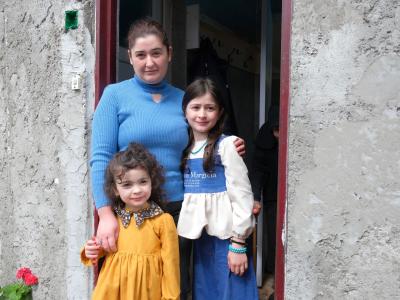
A Mother of Six and Her Path to Accounting Career
In a small village in Western Georgia, Teona, , a 35-year-old mother of six, proved that it is never too late to pursue a dream. Driven by a determination to build a better future for her family, she set out to turn her passion for numbers into a professional accounting career. With the support of her devoted family and World Vision, Teona overcame financial and practical obstacles, proving that resilience and timely support can turn ambitions into reality.
publication / September 4, 2026
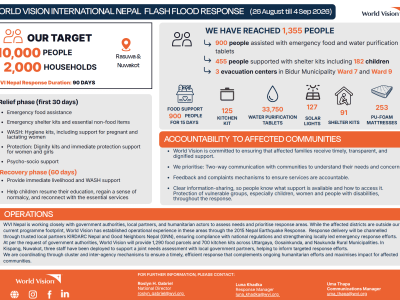
Situation Report 2: Nepal Flash Floods Response 2026
World Vision Reaches 1,355 People Following Nepal Flash Floods
press release / September 3, 2026
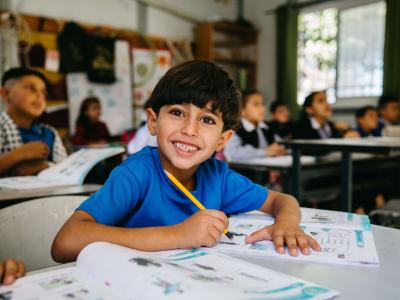
New EU-Funded Project to Restore Safe, Inclusive Education for Over 22,000 Conflict-Affected Children in the West Bank
World Vision, in partnership with the Teacher Creativity Center (TCC) and the Palestinian Ministry of Education, today announced the launch of a new EU-funded two-year project to safeguard access to safe, inclusive and dignified education for the most vulnerable conflict-affected children across the West Bank.
publication / September 3, 2026
Situation Report 1: World Vision International Nepal | Nepal Flash Floods Response 2026
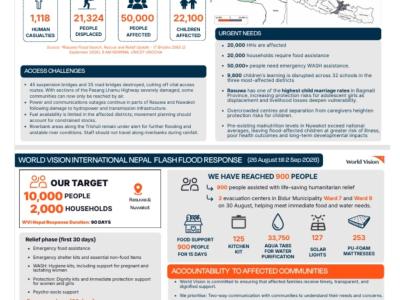
As of 2 September 2026, World Vision International Nepal's Flash Flood Response Situation Report 1 provides an overview of the humanitarian impact of the devastating floods affecting Rasuwa, Nuwakot, Dhading, and surrounding districts. With 50,000 people affected and more than 21,000 displaced, the report highlights urgent needs in food security, shelter, WASH, child protection, and education. It outlines World Vision's 90-day emergency response targeting 10,000 people across 2,000 households and reports that 900 people have been reached with life-saving assistance, including food support, kitchen kits, shelter kits and essential non-food items, water purification supplies, solar lights, hygiene kits, dignity kits for women and girls, and psychosocial support.
article / August 30, 2026
"The community is no longer recognizable" | Nepal Flash Floods Response 2026
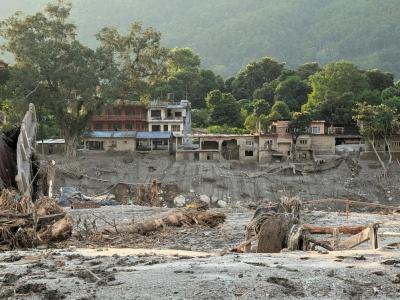
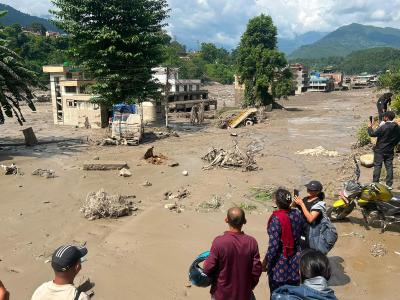
When floodwaters swept through Devighat, Nuwakot, they left behind more than damaged homes. Families were displaced, children's routines were disrupted, and entire sections of the community became unrecognizable. In this field account WVI Nepal staff shares observations from the ground and the urgent needs facing children and families in the aftermath of Nepal's 2026 flash floods.
publication / September 2, 2026
Context and Conflict Analysis: Sustainable and Resilient Future Ninewa Project
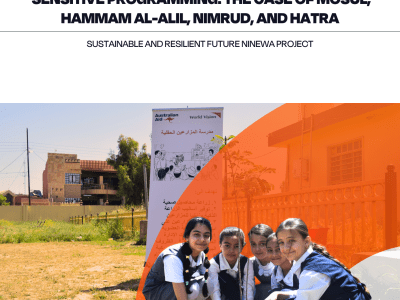
Explore World Vision’s Context and Conflict Analysis for Ninewa, Iraq, examining conflict dynamics, livelihoods, climate pressures, inclusion, and opportunities to strengthen resilience and social cohesion.
press release / September 2, 2026
Two in Three Ukrainian Children Missing School Say Shelling Is the Reason
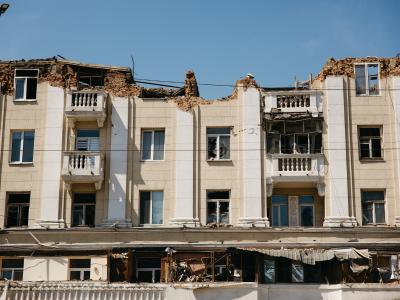
Two in three Ukrainian children miss school because of shelling or fighting, according to a needs assessment by World Vision.
article / August 27, 2026
World Vision Ghana Calls for Enhanced Border Preparedness as Humanitarian Pressures Rise in West Africa
World Vision Ghana is urging stronger border surveillance and humanitarian preparedness as insecurity and climate shocks in Burkina Faso increase displacement pressures across West Africa, threatening vulnerable communities along Ghana's northern frontier.