World Vision Ghana Calls for Enhanced Border Preparedness as Humanitarian Pressures Rise in West Africa

By Vivian Adu, Communications Officer
As Ghana joined the global community to commemorate World Humanitarian Day, World Vision Ghana has urged government and stakeholders to strengthen surveillance and humanitarian response systems along the country's northern borders, warning of growing displacement pressures resulting from insecurity and climate-related shocks in neighbouring Burkina Faso.
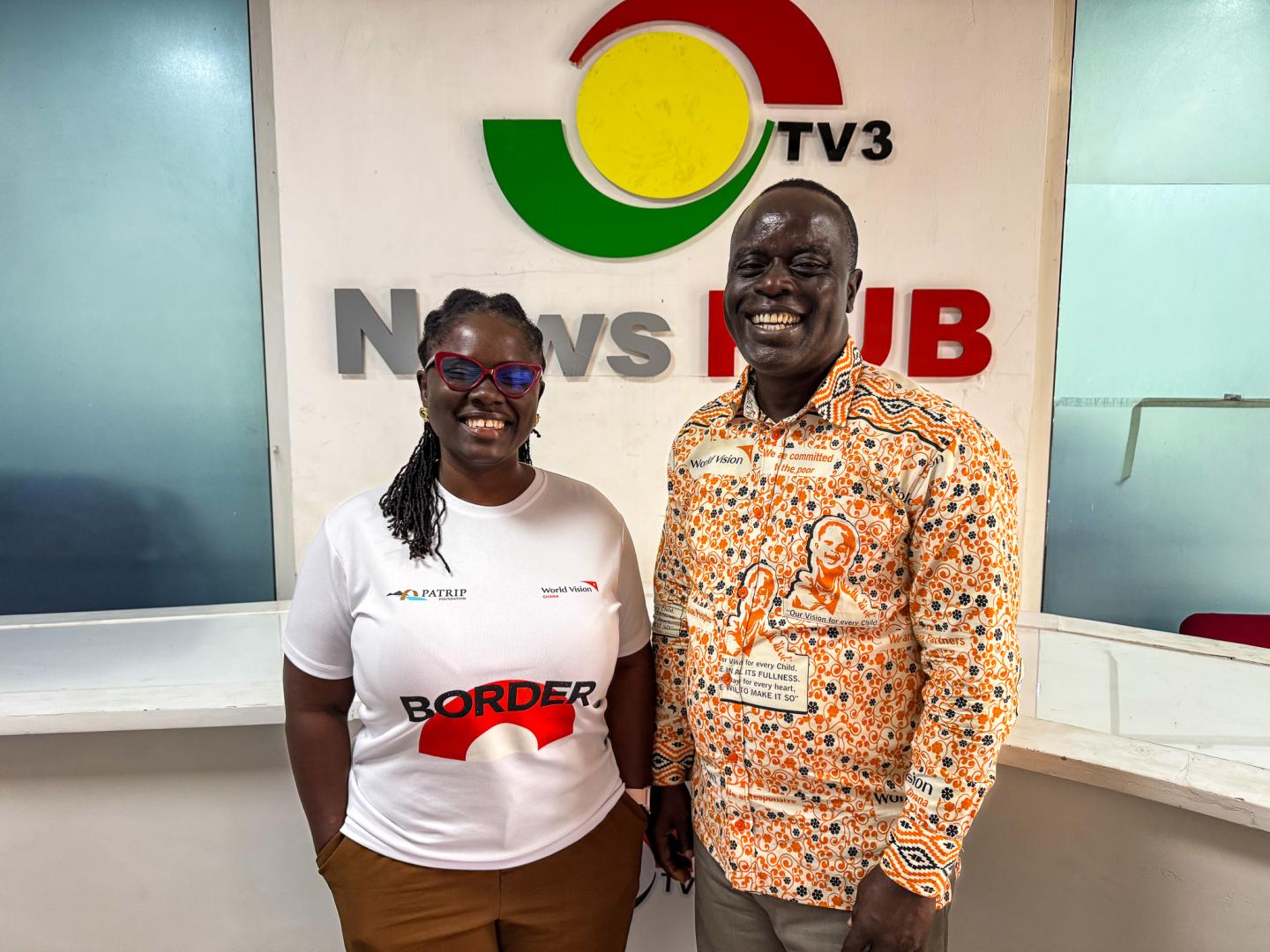
Speaking on TV3's flagship morning programme, New Day, Ghana's national broadcast station, World Vision Ghana's Humanitarian and Emergency Affairs Manager, Samuel Gmalu, called for increased attention to Ghana's border regions, particularly areas bordering Burkina Faso, amid an evolving humanitarian landscape across the Sahel.
"One thing I want us to know is to pay close attention to the Burkina Faso border. Government should strengthen surveillance and response mechanisms around the border so that we are able to support those who genuinely need help while ensuring that criminals do not take advantage of the situation,” Samuel Gmalu said.
According to Gmalu, the humanitarian situation in Burkina Faso remains deeply concerning, with millions of people displaced by conflict and instability. He noted that ongoing insecurity, coupled with climate shocks, could lead to increased movement of people into neighbouring countries, including Ghana.
"If you look at the latest humanitarian reports, internal displacement within Burkina Faso alone is over two million people. Combined with climate shocks and other vulnerabilities, more people are likely to move into neighbouring countries such as Ghana and Côte d'Ivoire," he explained.
He emphasised the need for proactive planning and preparedness to ensure that displaced populations receive humanitarian assistance while national security concerns are effectively managed.
"We should be more prepared to receive these people and ensure that criminals do not take advantage of the situation. Strengthening border surveillance is something we should all pay attention to," he added.
Also speaking on the programme, Perpetual Diabene, Project Manager for World Vision Ghana's BORDER Project, highlighted the organisation's ongoing efforts to support both refugees and host communities in Ghana's border regions.
The BORDER Project, which stands for Building Opportunities, Resilience, Infrastructure Development, Ecosystems and Social Cohesion for Refugees and Host Communities, is a 3-year project funded by the Government of Germany through the PATRIP Foundation and implemented by World Vision Ghana in partnership with RACED Ghana.
The initiative operates across six communities and two refugee settlements in the Upper East and Upper West Regions, serving communities that continue to host refugees fleeing armed conflict and extremist violence in Burkina Faso.
In the Upper West Region, the project is being implemented in the Sisala West District, covering the Zini, Fielmo and Zini Refugee Camp communities. In the Upper East Region, interventions are underway in the Bawku West and Binduri Districts, including Tarikom, Yarigu, Bansi and Issa-Katanga communities, alongside refugee settlements.
Perpetual explained that the project focuses on addressing urgent humanitarian and development needs for refugees and host communities alike.
"The BORDER Project is responding to critical humanitarian needs. We provide access to safe water, sanitation facilities, livelihood opportunities, and support for peacebuilding and social cohesion,” she explained.
She noted that displacement often places pressure on already limited local resources and services, making investments in community infrastructure and social cohesion essential for long-term stability.
The project is therefore working to improve access to clean water and sanitation while helping families build sustainable livelihoods. It is also supporting mechanisms that strengthen peaceful coexistence between refugees and host communities, reducing the risk of conflict and promoting community resilience.
Celebrating Humanity in Action
Reflecting on the arrival of refugees from Burkina Faso in 2023, Perpetual Diabene paid tribute to the extraordinary generosity demonstrated by local communities that welcomed displaced families before formal assistance became available.
"When refugees first crossed into Ghana, our host communities became the first responders. Before government support and donor assistance arrived, community members shared their homes, food and water with people who had travelled long distances seeking safety," she said.
Many of those arriving, she noted, included women, children, pregnant women, nursing mothers and older persons who had endured difficult journeys through conflict-affected areas before reaching safety in Ghana.
"These communities opened their doors to people in need. They shared what little they had and provided a place of refuge. This is humanity. This is what World Humanitarian Day is about," she noted.
Recognising Humanitarian Efforts
World Humanitarian Day serves as a reminder of the sacrifices made by humanitarian workers and communities around the world in responding to crises and supporting vulnerable populations.
For World Vision Ghana, the occasion was an opportunity to highlight both the growing humanitarian needs along Ghana's northern border and the importance of collective action in addressing them.
As pressures from conflict, displacement and climate-related shocks continue to affect West Africa, the organisation is calling for strengthened partnerships between government agencies, development actors, humanitarian organisations and host communities to ensure that vulnerable populations receive protection while communities remain secure and resilient.
Through initiatives such as the BORDER Project, World Vision Ghana continues to support refugees and host communities, building resilience, promoting social cohesion and helping vulnerable children and families access the services and opportunities they need to thrive.
Call to Action
In his concluding remarks, World Vision Ghana's Humanitarian and Emergency Affairs Manager, Samuel Gmalu, called on government and development partners to strengthen surveillance and response systems along Ghana's northern border and to invest in preparedness ahead of further displacement from Burkina Faso and the wider Sahel.
"Government should strengthen surveillance and response mechanisms around the border so that we are able to support those who genuinely need help while ensuring that criminals do not take advantage of the situation," he explained.
He urged development partners to back this preparedness with sustained investment in water, sanitation, livelihoods and social cohesion programmes in border communities, building on the model of the BORDER Project, so that Ghana can continue to protect vulnerable people while remaining secure.