publication / July 31, 2026
Health and Nutrition Capacity Statement
World Vision International Myanmar (WVIM) is one of the longest-serving humanitarian and development organization in Myanmar, with more than three decades of operational presence across both stable and conflict-affected contexts. We partner closely with government ministries, civil society, faith based groups, local leaders, and communities to deliver integrated programs in education, child protection, health and nutrition, WASH, livelihoods, and disaster response. Our locally rooted teams ensure culturally relevant, community owned solutions that support children to thrive. In livelihood, our work focuses on strengthening household resilience, restoring livelihoods, and protecting the well-being of vulnerable children through integrated, community-driven approaches that address both immediate needs and long-term recovery. Each year, our programmes reach millions, reflecting our commitment to ensure children are educated, protected, and cared for in safe and resilient communities.
article / August 3, 2026
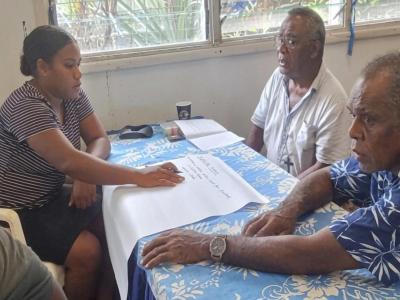
From Floodwaters to Hope: Gwaimaoa Community's Journey to Safe Water and Resilience
Discover how Gwaimaoa Community transformed from flood and water insecurity to resilience through safe water access, disaster preparedness, and community action.
article / July 28, 2026
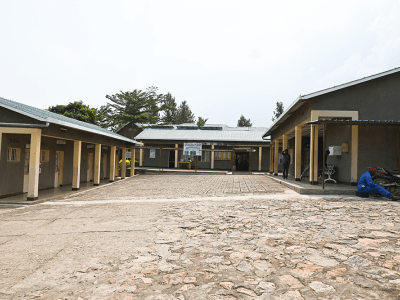
Better Care, Better Nutrition, Healthier Children at Kibingo Health Centre
Kibingo Health Centre serves more than 2,500 people each month, providing essential healthcare to families in Rutsiro District. Through its partnership with the Government of Rwanda and the local community, World Vision Rwanda has strengthened the health centre by improving infrastructure, expanding nutrition education, and supporting community-led efforts to combat child malnutrition.
From constructing a covered walkway and a nutrition demonstration kitchen to implementing Professional Umuganda and the Positive Deviance/Hearth (PDH) model, these interventions have contributed to a reduction in child malnutrition from 32% to 16% while empowering caregivers with practical skills to keep their children healthy.
article / July 28, 2026
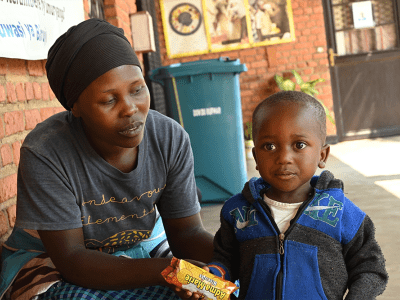
“We Thought He Wouldn’t Survive”: How Professional Umuganda Is Transforming Child Nutrition in Rutsiro
Adolphe’s remarkable recovery from severe undernutrition highlights the transformative impact of World Vision Rwanda’s Professional Umuganda initiative. After being identified as underweight during community nutrition screening, he received support through the Iziko rehabilitation programme, where his caregiver gained practical knowledge on nutrition, hygiene, and childcare.
Today, Adolphe is a healthy, active child a testament to the power of community-led action. His story reflects the broader success of Professional Umuganda in Rutsiro District, where collaboration among health workers, local leaders, and community members has helped reduce the prevalence of underweight children from 33% to 20% between December 2024 and April 2026, advancing the ENOUGH Campaign’s goal of ensuring every child survives, grows, and thrives.
press release / July 20, 2026
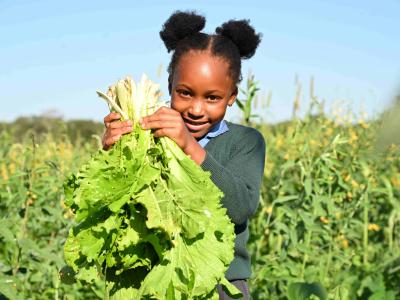
World Vision Zambia Welcomes National Food and Nutrition Security Policy, Calls for Stronger Action on Child Hunger
Lusaka, Zambia – Thursday, July 16, 2026: World Vision Zambia welcomes the launch of the National Food and Nutrition Security Policy by the Office of the Vice President, a major step toward addressing child hunger, malnutrition and food insecurity across Zambia. The policy shows the Government's commitment to building a Zambia where every citizen has access to adequate, safe and nutritious food, and where all forms of malnutrition are eliminated.
publication / July 31, 2026
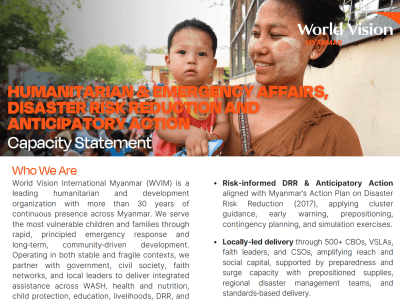
HEA and DRR Capacity Statement
World Vision International Myanmar (WVIM) is one of the longest-serving humanitarian and development organization in Myanmar, with more than three decades of operational presence across both stable and conflict-affected contexts. We partner closely with government ministries, civil society, faith based groups, local leaders, and communities to deliver integrated programs in education, child protection, health and nutrition, WASH, livelihoods, and disaster response. Our locally rooted teams ensure culturally relevant, community owned solutions that support children to thrive. In livelihood, our work focuses on strengthening household resilience, restoring livelihoods, and protecting the well-being of vulnerable children through integrated, community-driven approaches that address both immediate needs and long-term recovery. Each year, our programmes reach millions, reflecting our commitment to ensure children are educated, protected, and cared for in safe and resilient communities.
publication / July 21, 2026
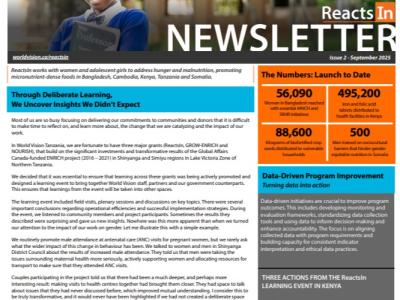
ReactsIn Newsletter Issue 2 Sept 2025
Explore the September 2025 ReactsIn newsletter featuring nutrition, gender equality, adaptive learning, and programme updates across five countries.
publication / August 6, 2026
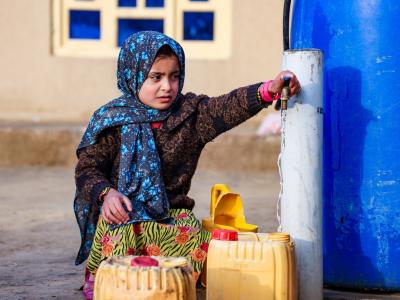
Situation Report | Reporting Period: 1 April – 31 May FY26
World Vision Afghanistan's April–May 2026 humanitarian response reached 223,734 people across multiple sectors.
publication / August 6, 2026
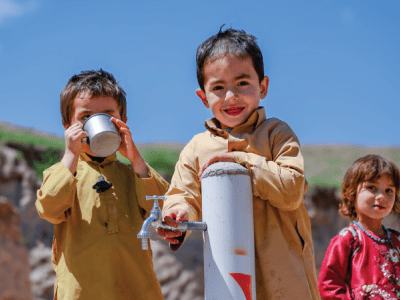
Situation Report | Reporting Period 1 February – 31 March FY26
World Vision Afghanistan reached 463,622 people through health, WASH, food security, livelihoods, protection, and emergency response.
publication / August 6, 2026
Situation Report I Period 1 December 2025 – 31 January FY26
World Vision Afghanistan reached 450,542 people with health, WASH, food security, livelihoods, protection, and emergency assistance.