
Staying to Tell the Story: Bearing witness to courage and survival during the floods in Guijá, Mozambique

At the height of the crisis, when the rains would not relent and floodwaters swallowed roads, homes and memories, World Vision was there, on the ground, in the midst of uncertainty, documenting the stark reality faced by communities affected by the floods in Guijá.
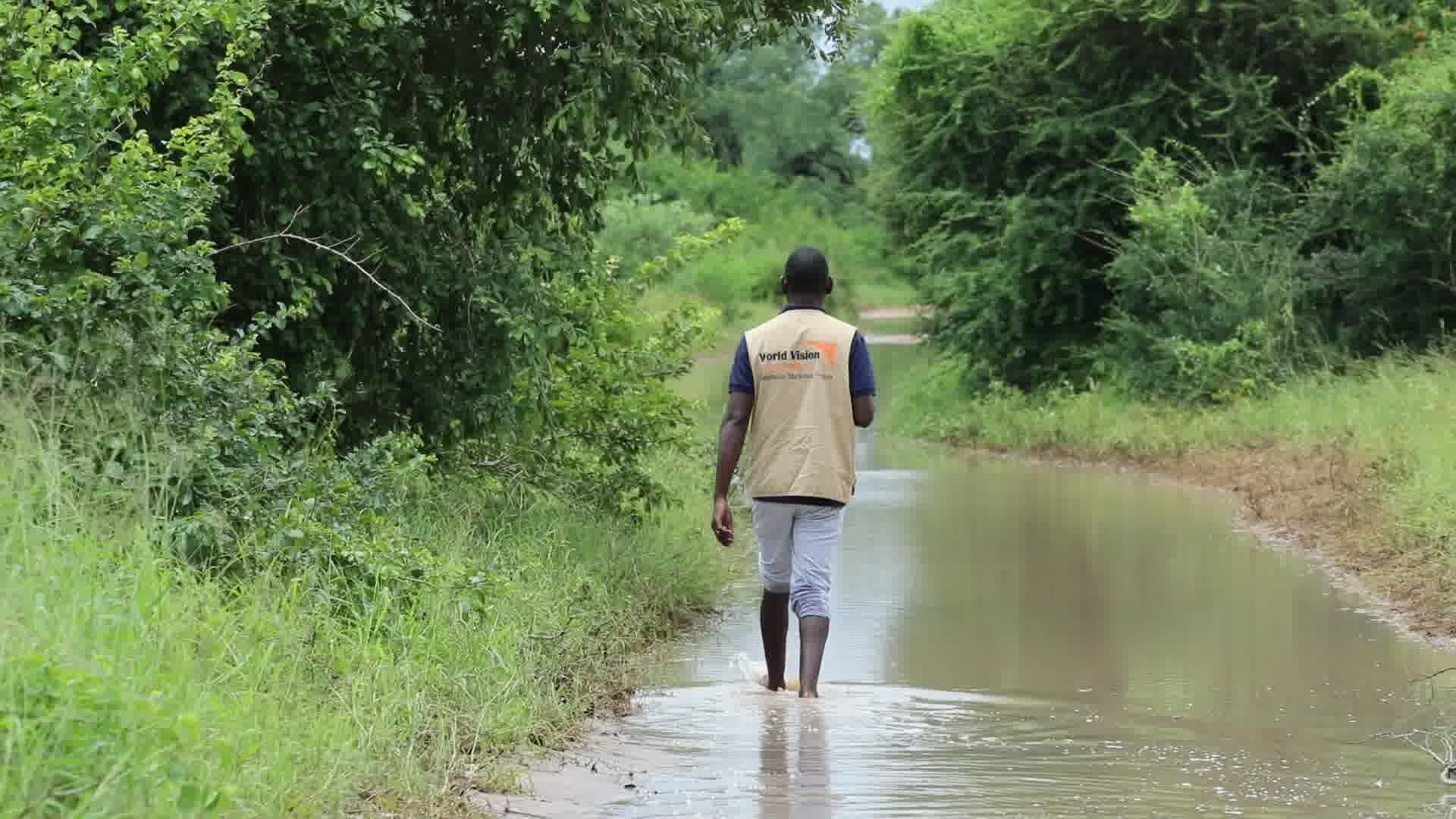
Torrential rains devastated several districts across Gaza Province, including Guijá and Mabalane, where the organisation runs its programmes. Access roads were cut off. Guijá was virtually isolated from the rest of the province. Supplies could not get in. People could not get out. What had once been difficult became almost impossible.
But isolation did not affect communities alone.
The World Vision team deployed for the emergency response endured the same hardships. Food stocks were running dangerously low. Prices of basic commodities soared, in some cases tripling within days. Local shops were emptied in a matter of hours.
“The rush to buy essential goods was overwhelming. Shops were overcrowded and prices nearly tripled,” recalls Henriques Limone, a World Vision driver who witnessed shelves stripped bare and anxiety etched across people’s faces.
Hunger was a real threat, but it was not the only one.
The rains brought down electricity poles. Entire districts were left without power. Without electricity, there was no mobile network. No calls. No internet. No contact with the outside world.
Suddenly, the team itself was cut off.
With no communication link to the national office, it became impossible to transmit the images and field reports that captured the scale of the tragedy, evidence that could mobilise support and solidarity.
“We faced significant challenges and constraints. We were completely cut off. It wasn’t right that we couldn’t send the content,” says Álvaro Malamba, Communications Coordinator and lead of the team.
Although the situation was extremely challenging, all movements and operational decisions were made under the clear guidance and security protocols of World Vision’s security teams, ensuring that staff safety remained a priority at all times.
But giving up was never an option.
The team travelled kilometres in search of a signal, quite literally. Eventually, they found higher ground in Chinhacanine, near the largest accommodation centre for flood-affected families in Guijá. A kind of oasis in the midst of chaos. A modest rise in the landscape where, for brief moments, a fragile network signal could be detected.
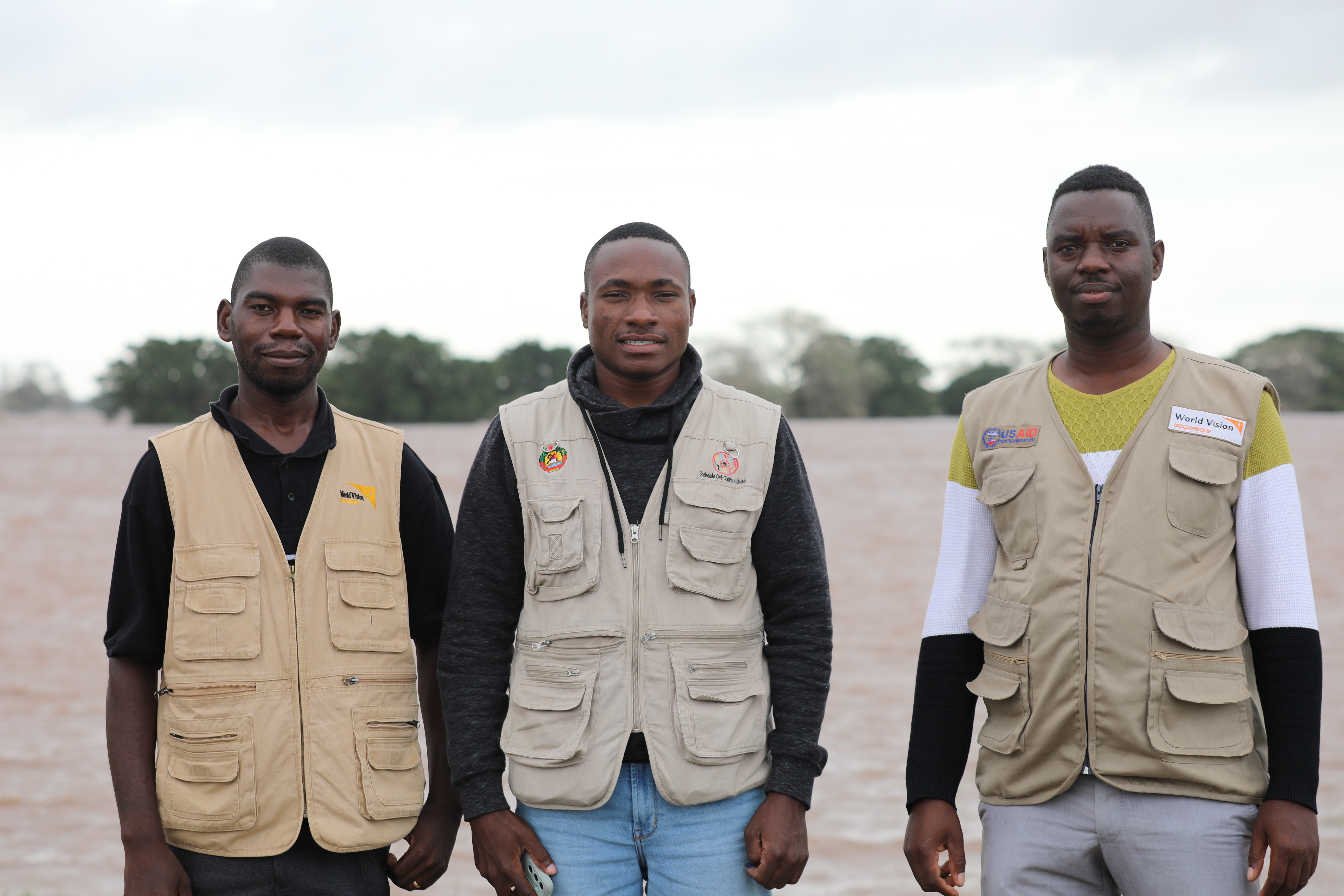
There, on a hill that became an improvised newsroom, everything happened.
Each day followed the same routine: powering laptops with a generator, drafting reports under pressure, selecting photographs, some captured by drone, and then travelling nearly 15 kilometres to reach the one spot where, with luck, there was enough connectivity to upload the material.
“They were powerful images. We were the only team on the ground delivering humanitarian assistance while also documenting what was happening. It wasn’t right for the world not to see it,” Álvaro Malamba adds.
Because of that persistence, the country and the world were able to witness, through World Vision’s platforms, the harsh reality faced by families affected by the floods. And that visibility translated into tangible action: blankets distributed, dignity kits delivered, and practical support provided to families who had lost almost everything.
Today, looking back, what remains is exhaustion, but also pride.
“After everything, what we can do now is celebrate the work we did. We stood with communities at their most difficult moment. When many were leaving, we chose to stay,” says Dulcério Banze, Sponsorship Assistant and member of the emergency response team.
Amid the mud, the silence of dead networks, and the fear of the unknown, one truth became clear: presence matters. And when everything else fails, remaining alongside the most vulnerable can be the most powerful act of all.