

Advocating for Children in Times of Foreign Aid Cuts
World Vision Advocates Katie Fixter and Ian Dyke recently joined more than 150 volunteers on Capitol Hill in Washington, D.C., United States, to speak up for the world’s most vulnerable children. Their visit came at a time of unprecedented change: the U.S. political landscape had shifted dramatically, foreign aid budgets were cut, and the government was shut down. It was uncharted territory, and the strategies that once worked to reach policymakers may no longer be enough.
1 December 2025
It’s been about nine months since massive cuts to U.S. humanitarian assistance forced World Vision to suspend operations in multiple countries, leaving nearly one million people without critical emergency aid. In the days after the Executive Order pausing foreign assistance, advocates called their members of Congress to urge the Secretary of State to allow funding to continue during the review. Since then, they’ve kept up steady communication through virtual meetings and ongoing email outreach. Now, volunteers from across the United States were preparing to meet face-to-face with their congressional offices.

Many Advocates had been here before, but this time felt different.
With so much change in Washington, preparation alone wasn’t enough; we had to know our audience.
Before stepping into each meeting, we studied who we were speaking to, what they cared about, and how our mission aligned with their goals. Advocacy isn’t just about making a case; it’s about making the right case, one that resonates with our lawmakers.
Here’s how we shifted:
Understand who our leaders represent, and where we overlap
The President and members of Congress are elected to represent the American people, and we believe most Americans care about the world’s most vulnerable children.
Across every state with every political leaning, thousands of Americans sponsor children through World Vision.
At the start of each meeting, we shared how many of those sponsors live in their state—a number that surprised staffers. It’s a reminder that their constituents care about children living in the world’s most difficult places and trust World Vision to use their support wisely.
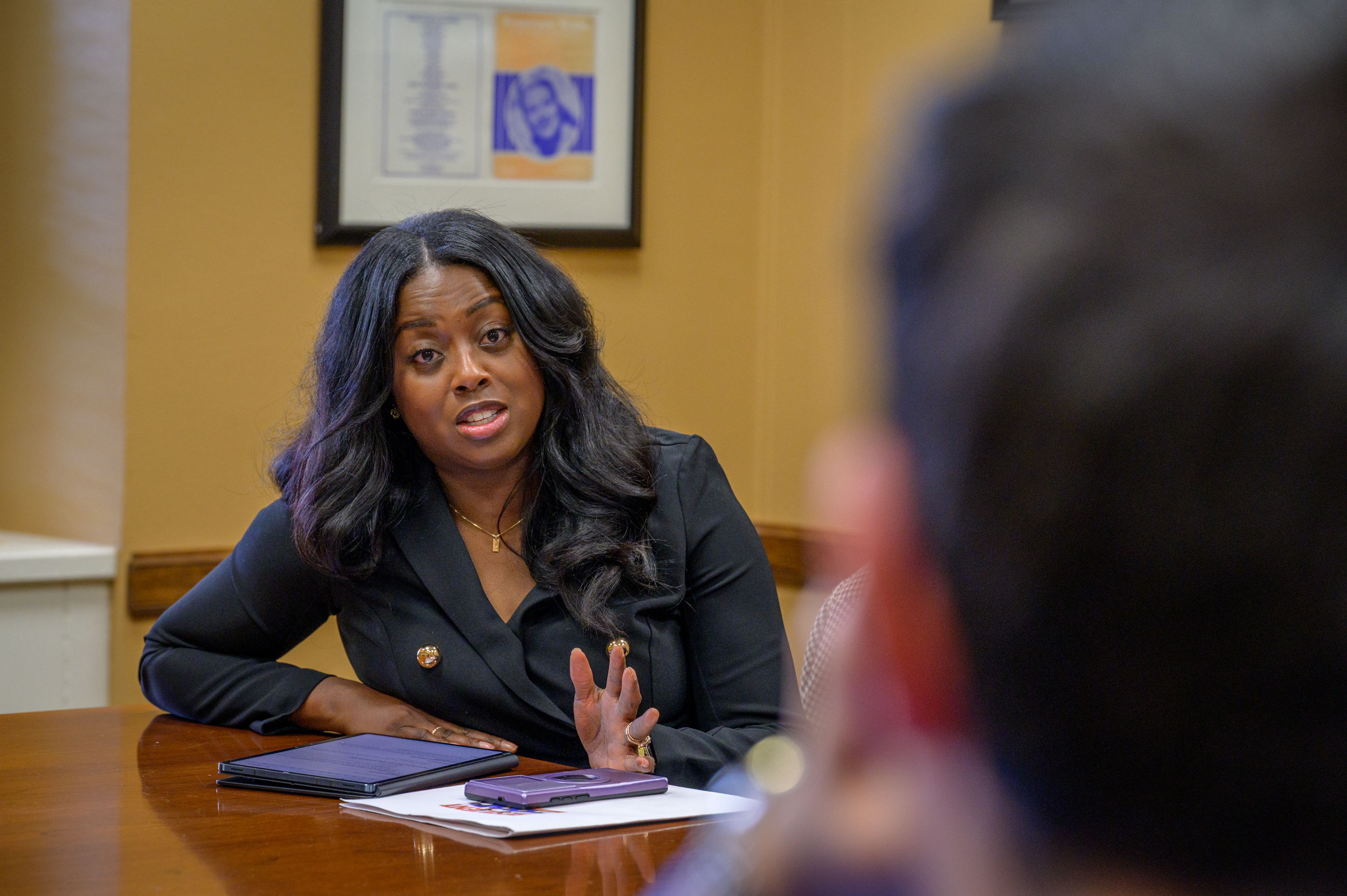
Even when our lawmakers are focused solely on helping Americans, foreign aid does that too. U.S. farmers, for example, ship surplus crops overseas through aid programmes, strengthening both local economies and the American heartland.
This idea of helping both Americans and the world isn’t new. After World War II, a Kansas farmer proposed using surplus crops to fight global hunger. His idea became what’s known as Food for Peace in 1954, and today it purchases over a million metric tons of surplus American crops each year to feed families affected by war, drought, and disaster. Since its creation, it has fed more than four billion people.
Listen to their concerns – and engage honestly
Elected officials have valid questions about how foreign assistance is used, and it’s important to listen carefully. As U.S. Secretary of State Marco Rubio once said: “The best foreign aid projects are the ones that end because they have achieved their purpose.” We agree—that’s why World Vision designs our programmes to be phased out and handed over to communities and local leaders. Within about 15 years, most communities will have reached their goals and no longer need our support.
World Vision follows the Nexus model, also known as the Humanitarian-Development-Peace (HDP) approach.
Working alongside governments, faith leaders, and local organisations, we combine immediate relief with long-term development and peacebuilding, helping communities move from crisis to lasting stability. And then, the aid ends, but the impact remains.

Discuss possible ways to move forward together
With U.S. foreign assistance now administered through the State Department, significant change is already underway.
As these new relationships take shape, World Vision continues to position itself as a trusted partner of choice by delivering measurable results and empowering communities toward self-sufficiency. Advocates highlighted how our programmes align with the Administration’s vision for effective foreign assistance, and their efforts led multiple members of Congress to recommend funding key World Vision programmes. These programmes include food security and health interventions that continue to deliver lifesaving impact today.
Since our day on Capitol Hill...
The government has now reopened after being closed for 54 days, and some hopeful news is emerging. The agriculture bill in the government funding package includes support for two major international food-aid programmes—US$1.2 billion for Food for Peace, and US$240 million for the McGovern-Dole Food for Education programme. This reflects strong congressional support for food assistance, which is a positive sign.
Following our meetings, Republican Senator Susan Collins of Maine included the photo below in her newsletter to constituents, reiterating her support for programmes such as PEPFAR, which she stated she had “successfully protected from proposed funding rescissions earlier this year.”
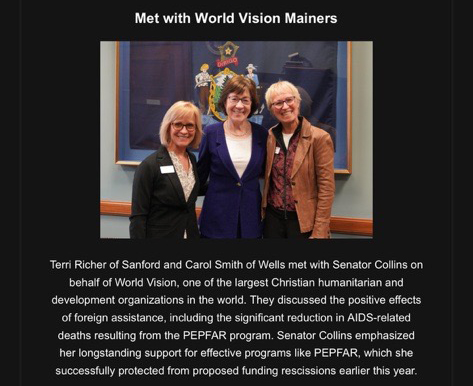
This feedback is encouraging, and it also reminds us why we must keep moving forward. With more than 14 million lives at stake, effective advocacy is essential.
In a moment of global uncertainty, one truth remains clear: our voices matter. And how we approach these conversations makes a difference. When we understand our audience and advocate with both strategy and compassion, we amplify the voices of these precious children—reminding them they are not forgotten. Through the actions and will of the American people and their leaders, may these children know that they are deeply loved by us and, above all, by God.
-----------------------------------------------------------------
Katie Fixter is an Advocate and the Media Manager for World Vision International. She holds a master’s degree from the London School of Economics and Political Science in International Social and Public Policy.
Ian Dyke is an Advocate and the Senior Policy Communications Advisor at World Vision U.S. He holds a master’s degree in Strategic Global Leadership and Communications from Purdue University and is currently pursuing a Master of Divinity from Duke Divinity School.
Subscribe to see more content like this
Related Resources

Are We Serious About Children’s Justice or Still Comforted by Declarations?

Why won’t governments see the win-win of investing in children?
