

After COP30: Will the World Finally See the Children of the Amazon?
For João Diniz, World Vision’s Regional Leader for Latin America and the Caribbean, the children of the Amazon remain at the heart of the climate emergency, their wellbeing inseparable from the planet’s future.
December 17, 2025.
COP30 has now concluded in Belém, deep within the Amazon basin. The summit brought intense global focus to a region often described as the lungs of the Earth. Yet a stark contradiction persists: the venue for the world’s most urgent climate deliberations remains one of the hardest places for a child to grow up.
The Amazon should be a sanctuary a living classroom shaped by rivers, forests and extraordinary biodiversity. Instead, for millions of children it is marked by deprivation and deepening inequality. Over half of all families live in multidimensional poverty and 45% face food insecurity. One in four children is chronically malnourished, and in some communities up to 80% lack safe drinking water and sanitation.
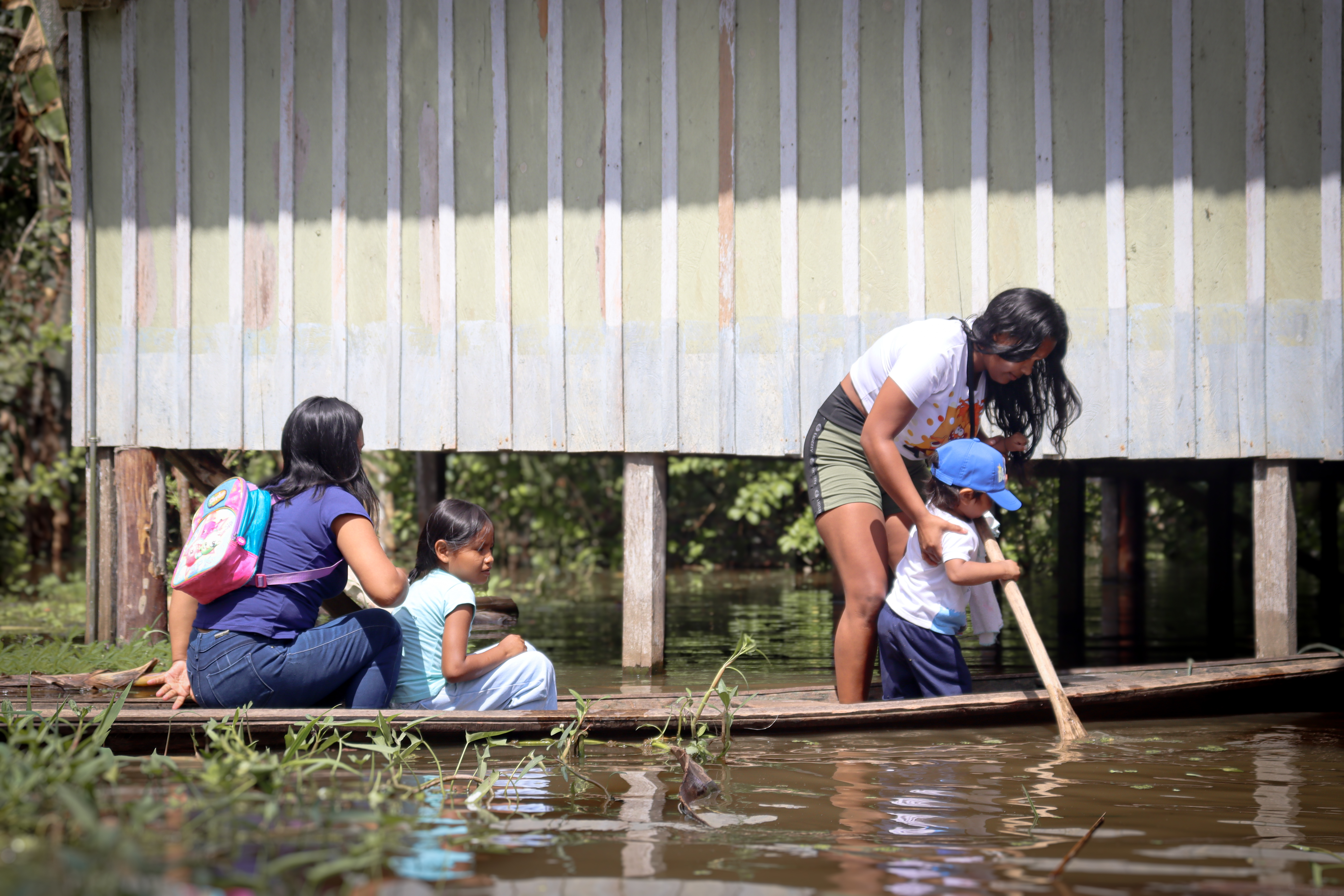
These challenges intersect with acute social pressures: in several areas, two in three children have experienced physical or psychological violence; adolescent pregnancy affects more than 37% of girls aged 15 to 19; and child labour among those under 15 can reach 36%. For these children, the climate crisis is not theoretical it is the fever from a mosquito bite, the smoke-filled air that triggers a cough, or the fear that the next flood will destroy their home.
Beyond the Forest Canopy
Global attention frequently centres on carbon, biodiversity and conservation targets vital pillars of climate action, yet insufficient when detached from the human experience beneath the canopy. For Indigenous communities, forests and rivers represent heritage, identity and continuity. Their degradation is not simply environmental loss but cultural erosion.
Poverty, violence and environmental decline do not merely coexist; they reinforce one another, weakening the foundations of childhood. Without sustained investment, the next generation may inherit not a thriving rainforest but a legacy of irreversible loss.
A New Mandate Emerging from COP30
Brazil’s US$125 billion “Tropical Forests Forever Facility” signalled a bold step towards long-term conservation financing. Yet a critical question remains: will climate investments reach the children who depend most on resilient services and protected ecosystems? For decades, climate finance has largely overlooked children, with only 2.4% of major multilateral funding tailored to their needs. This omission is both strategically flawed and ethically untenable.
Strengthening climate-resilient public services—health, education, water, sanitation and child protection is central to community resilience. Schools able to withstand floods, clinics operating through droughts, and robust protection systems are not ancillary to climate action; they are its human backbone.
A Pivotal Announcement: A US$500 Million Investment in Children
Against this backdrop, COP30 marked a significant milestone. World Vision announced a US$500 million plan to protect children living in Amazonian communities most exposed to climate impacts. With US$21.5 million already secured, the initiative aims to reach 10 million people across Bolivia, Brazil, Colombia, Ecuador, Peru and Venezuela by 2030, placing children at the centre of global climate action.
The plan prioritises:
- Protecting children’s right to life and wellbeing, expanding access to clean water, sanitation, nutrition, health and education.
- Restoring ecosystems, regenerating 3 million hectares of degraded land and conserving 22 million hectares of rainforest.
- Building sustainable livelihoods that empower women, youth and Indigenous peoples through regenerative agriculture and climate-resilient value chains.
World Vision has urged global leaders to allocate half of all climate finance to adaptation and ensure at least one-fifth reaches fragile and crisis-affected contexts. It is also pressing for the Loss and Damage Fund to adopt specific child-protection criteria, noting that no climate agreement is just if it excludes those most vulnerable.
Three Shifts for a Living Amazon
Redefining the region’s future requires three systemic shifts. First, climate-resilient public services must become a baseline expectation. Second, climate finance must be both child-responsive and locally led, strengthening the systems children rely on. Third, children and young people especially Indigenous youth must shape the decisions that determine their future, in line with UNFCCC guidance.
A Mirror to the World
Satellite data reveal that forest degradation alerts rose by 44% between 2023 and 2024, a 163% increase since 2022. More than 25,000 square kilometres of forest were damaged last year, most through fire. Rivers are receding, ecosystems are weakening and the region is approaching dangerous tipping points. Should the Amazon collapse, up to 300 billion tonnes of carbon could be released rendering global temperature targets unattainable.
After the Speeches, the Real Test Begins
COP30 may have ended, but its legacy depends on action. The fundamental question remains: will we prioritise childhood as firmly as we prioritise carbon? If the children of the Amazon cannot breathe clean air, drink safe water or learn in safety, global climate progress remains incomplete.
The Amazon’s story is the world’s story. Protecting its children is not only a regional responsibility but a global moral imperative.
João Diniz is Regional Leader for Latin America and the Caribbean at World Vision, with over 35 years of experience in strategic leadership and organisational management. He has held senior global and regional roles and holds degrees in Agronomy, Tropical Agriculture, and an MBA specialising in Financial Management.
Subscribe to see more content like this
Related Resources

The Future We Owe Them: Reflections from COP30

Has COP30 Really Brought Us Any Closer to Protecting Children from Climate Breakdown?
