

Are We Investing Early Enough to Protect the Future?
Dr Jean-Baptiste Kamate (JBK) sheds light on the imperative of early childhood investment and why we must rethink how human capital policy is designed and delivered.
13 April 2026
Last year, I stood at a water supply system in rural Rwanda and raised a cup of clean water. To an outsider, it might have seemed like a small moment. It wasn’t.
When I visited The Mbazi Water Supply System, the impact was immediate and tangible. Safe water now reaches tens of thousands of people. Children go to school instead of walking for hours to fetch water. Health centres function. Families have time again. It exists because government and community partners chose to invest together, early and deliberately.
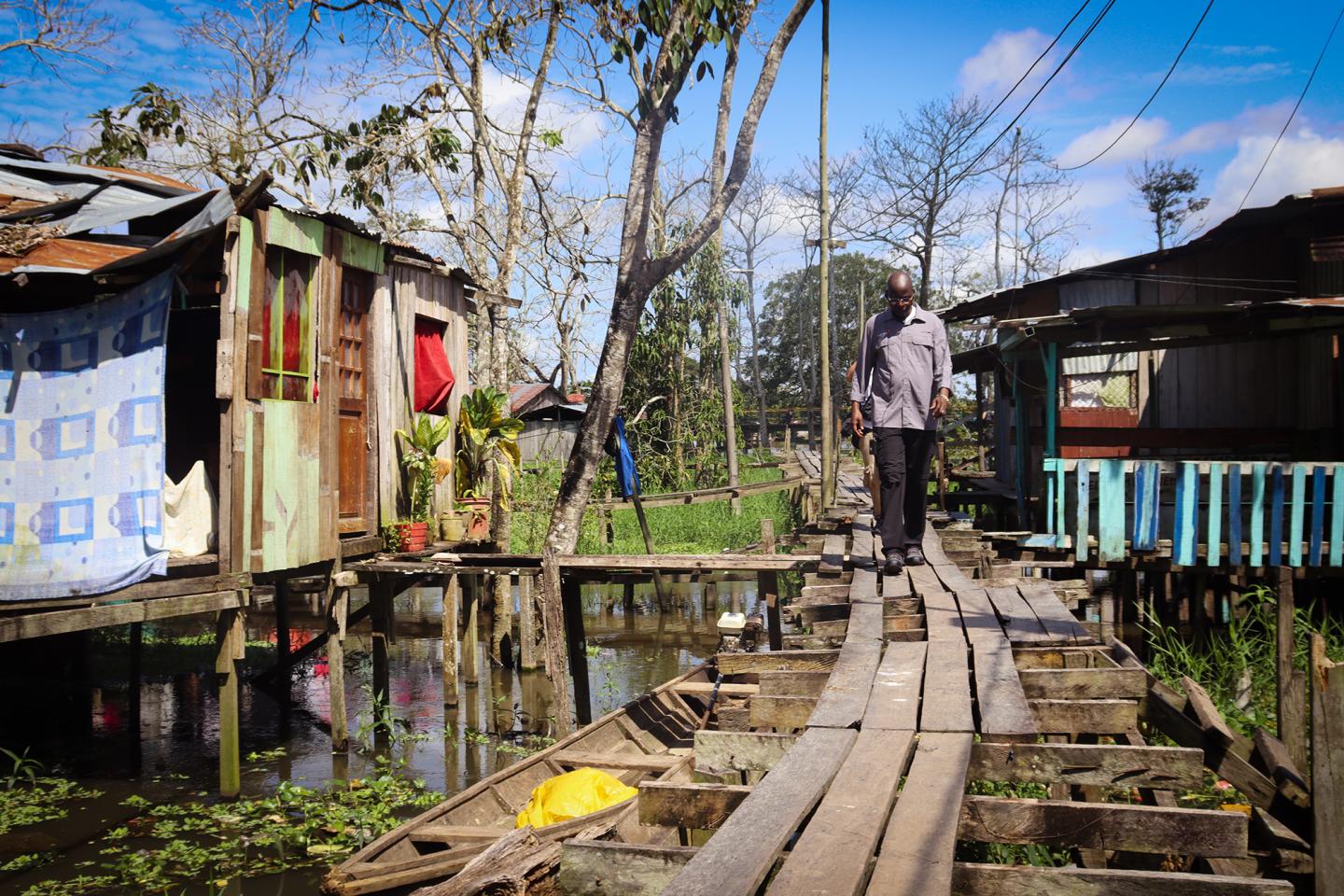
A few months later, I found myself in the Amazon, a place defined by water. Rivers stretch for miles. Rainfall is abundant. And yet, for many families, water has become a source of fear rather than security.
“The water comes faster now. It stays longer. We don’t know what will happen,” a mother of three told me.
Homes flood unpredictably. Children miss school. Livelihoods are disrupted. In a place of apparent abundance, climate risk has turned water into instability.
These two experiences could not be more different. But they point to the same truth: children’s futures are not shaped by single services, but by whether systems connect early, consistently, and at scale.
As Mamta Murthi, Vice President for the People Vice Presidency at the World Bank noted:
“We must broaden our lens to where human capital is built. Policies cannot stop at individual sectors or ministries. Human capital is formed in settings in the home, in the neighbourhood and at work.”
As fiscal pressures reshape national priorities and aid budgets contract, we are quietly redefining what children can expect from the future. Across fragile and climate-exposed contexts, children are navigating a convergence of risks that would test even the most resilient systems. Approximately 1 billion children currently live in countries that already face high risk of climate and environmental hazards. At the same time, according to UNICEF, funding cuts to development and humanitarian assistance in 2025 are projected to contribute to at least 4.5 million deaths of children under five by 2030.
These are not distant projections. They are the direct consequence of political and economic choices already made.
Rethinking how human capital is built
For years, policy and investment have prioritised expanding access to health and education services, often tracked through sector-specific gains. This has delivered measurable progress. Yet human capital does not emerge from systems or sectors in isolation. For children, it is forged in the realities of daily life, within homes, across communities, and through consistent access to adequate nutrition, clean water, healthcare, and opportunities to learn. These elements do not operate independently; they build on one another over time, shaping outcomes in ways that are both layered and mutually reinforcing. I’ve seen this in Rwanda, the Amazon and many other countries.
World Vision’s 5toThrive policy briefing reinforces this point, calling for a decisive move away from fragmented interventions towards coordinated packages of support spanning health, nutrition, education, child protection and social protection that work in concert. Drawing on evidence from development accelerators, it shows that integrating services such as cash-plus programmes, early childhood development and parenting support can generate multiple, reinforcing gains, protecting children from overlapping risks while delivering stronger and more sustainable returns.
The highest return, at the earliest stage
If there is a moment to invest decisively, it is the earliest years. Over 90% of brain development occurs before the age of five. During this period, nutrition, early stimulation, healthcare and access to safe water and sanitation form the foundation for lifelong learning, health and productivity. These are not parallel investments; they are mutually reinforcing.
The economic case is equally compelling. Nutrition interventions alone can yield returns of up to US$23 for every US$1 invested. Early investment reduces future costs across health, education and social protection, while strengthening economic resilience. In fragile contexts, it is one of the few interventions that delivers both immediate and long-term dividends.
The Mbazi Water Supply System in Rwanda brings clean water to more than 30,000 people. It reaches 58 villages, connects six schools, one health centre, and three public offices, helping reduce waterborne diseases and improve hygiene. But it effects span deeper, giving families back precious time once spent walking long distances for water. This allows for investment in maternal health, early nutrition interventions, access to education and much more.
This is how human capital is built and nourished. Yet child-focused programming remains persistently underfunded.
What must happen next?
The implications for current financing debates, including IDA21 implementation and evolving approaches to fragility, conflict and violence, are immediate:
- First, early childhood must be further prioritised within development financing frameworks.
- Second, investments must be designed to integrate across sectors, reflecting the realities of children’s lives.
- Third, fiscal constraints must not systematically deprioritise children. Where debt limits spending, concessional financing and innovative approaches should protect essential services for children.
The choice is not between competing priorities. It is between short-term constraint and long-term resilience.
About the author:
Jean Baptiste Kamate, (JBK) is an international development executive and humanitarian expert overseeing World Vision’s operations in 83 countries. He has led operations across West and East Africa, including Mali, the Democratic Republic of Congo, and Rwanda. He holds a PhD from Regent University in Virginia Beach, USA.
Subscribe to see more content like this
Related Resources

Investing in Children: The Foundation of Human Capital

Amidst budget cuts and rising debt, focus on children
