

When Instability Becomes the Environment of Childhood
Mike Kirakossian argues that when instability is not an interruption to childhood but the condition in which childhood unfolds, our humanitarian models need to change.
24 April 2026
Some children in the Middle East, especially in Lebanon, have never sat in a physical classroom, not once. They have not known desks, corridors, or the steady rhythm of a school day that builds a sense of time and belonging.
For many kids, school exists more as an idea than a lived reality, something intermittent, fragile, or entirely absent. Childhood, in this sense, develops within persistent instability.
In Lebanon and across similar contexts, we are no longer dealing with exposure to a single crisis that disrupts an otherwise stable trajectory. What we are witnessing instead is accumulation.
Economic collapse folds into political paralysis, which spills into displacement and is punctuated by episodes of violence. These forces do not resolve; they layer, repeat, and ultimately become the environment within which children grow. For a child, there is no clear beginning or end to disruption, only a steady normalisation of uncertainty.
This reality exposes a deeper limitation in how the humanitarian sector continues to understand and respond to children’s needs. Much of the prevailing framing remains anchored in event-based thinking. We look for symptoms tied to specific moments, distinguish between before and after, and interpret disruption as something that occurs against a stable baseline.
Yet for many children, there is no meaningful “before” to return to. Instability is not episodic; it is structural. When continuity is absent, development does not pause for conditions to improve. It reorganises in response to what is available.
Children’s attention fragments because the environment does not sustain focus long enough for it to consolidate. Emotional responses intensify and flatten in cycles, mirroring the unpredictability surrounding the child. Trust becomes more complex, stretched between the need for connection and the expectation of loss.
These patterns are often interpreted as deficits, yet they are more accurately understood as adaptations to conditions that do not hold steady. The difficulty is that our systems remain more comfortable diagnosing these adaptations than confronting the environments that produce them.
At the same time, the way we design support continues to reflect an assumption that stability is imminent. Programmes are structured as short-term interventions with fixed timelines and neatly defined indicators of progress, implicitly relying on the idea that children will eventually return to a stable environment where gains can be sustained.
In places like Lebanon, however, the ground does not stop shifting. Children move in and out of education systems that barely resemble one another. Caregivers carry accumulated strain, often with little support of their own. Services expand and contract in response to funding cycles and political developments, creating further inconsistency in the very systems meant to provide stability. There is no clear baseline and no steady state to anchor to. Instability is not a phase within a broader trajectory; it is the condition itself. As a result, many interventions are more than insufficient; they are limited by design, calibrated for continuity that does not exist.
In this context, what is required is not incremental improvement but a shift in orientation. Interventions must be designed for continuity within instability, prioritising consistency, predictability, and sustained relationships over intensity and scale. This also requires confronting the fragmentation that continues to define service delivery.
Education, mental health, child protection, health, and social protection are not parallel domains but interdependent conditions of a child’s development. When delivered in isolation, they reproduce fragmentation rather than reduce it, weakening the very outcomes they aim to achieve.
As UNICEF puts it, “Education is a lifeline for children in crises”.
Equally, the way resilience is framed must be reconsidered. For children growing up in protracted crises, resilience is not recovery. It is endurance, adaptation under constraint, and the capacity to function within ongoing uncertainty. Continuing to measure it against standards rooted in stable environments does not capture reality; it distorts it.
Although these dynamics are particularly visible in Lebanon, they are not unique to it. What is unfolding here reflects a broader global shift. Protracted crisis is no longer the exception; it is increasingly the norm, driven by conflict, climate pressures, and economic volatility. Yet the humanitarian model remains largely anchored in short-term response and recovery.
This misalignment is not neutral; it reflects a continued tendency to design for stability in environments where it does not exist. It risks normalising the delivery of partial solutions to conditions that require continuity, creating cycles of support that fall short by design. It risks misreading adaptation as dysfunction and, in doing so, investing in approaches that fail to resonate with lived experience. Over time, this goes far beyond ineffectiveness; it becomes a structural limitation on impact.
The more difficult recognition is that many of these children are not trying to return to something that was lost. They are growing up in conditions that have never stabilised in the first place. The question for the humanitarian sector, therefore, is no longer how to help children ‘bounce back,’ but whether we are willing to design systems capable of holding them in a world that isn’t holding them back.
About the author:
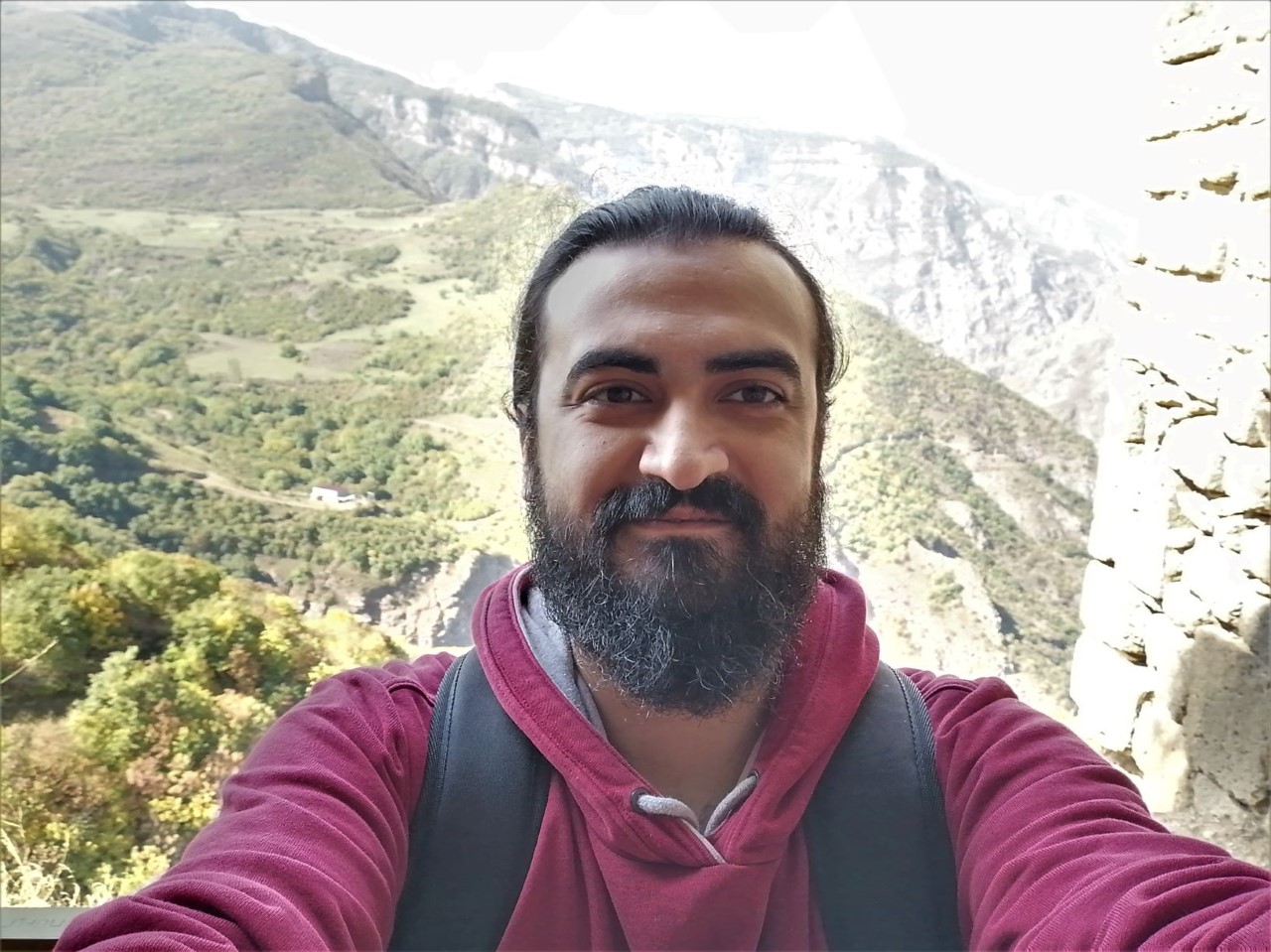
Mike Kirakossian is the Mental Health and Psychosocial Support (MHPSS) Adviser at World Vision’s Middle East and Eastern Europe Regional Office, based in Beirut, Lebanon. He joined World Vision in 2019 and holds a bachelor’s degree in psychology and a master’s degree in clinical and adjustment psychology. A licensed clinical psychologist, Mike specialises in trauma-informed care and psychosocial interventions for children, youth, and adults. He brings over eleven years of experience in humanitarian, development, and peacebuilding work with reputable national and international organisations.
Subscribe to see more content like this
Related Resources

Voices from MEER: Mental health in catastrophes and emergencies cannot be ignored

Our top ten calls for improved mental health care for the Middle East and Eastern Europe
