


Cost of Treeless Farms Is Child Hunger: Kenya’s Case for Farmer Managed Natural Regeneration
Treeless Kenyan farms are quietly worsening child hunger by stripping agriculture of resilience to drought and heat, shrinking harvests and driving up food prices. Drawing on decades of evidence, the authors, Tony Rinaudo and Dr. Carol Munyao argue that Farmer Managed Natural Regeneration (FMNR) offers a proven, farmer‑led solution, restoring trees, strengthening food security, and improving children’s nutrition, if policy finally catches up with what works.
Across Kenya’s drylands and increasingly in its high-potential zones, a quiet but powerful belief continues to influence farming practices: a “clean” farm is considered modern. Trees in crop fields are often viewed as outdated, unproductive, or signs that a farmer has not adopted progress.
But what if that idea makes children hungrier?
The problem hiding in plain sight
Kenya is among six countries committed to restoring 10.6 million hectares of degraded land through the African Forest Landscape Restoration Initiative. However, land degradation remains a major national challenge. Over 80 percent of the country is classified as arid or semi-arid, and ongoing degradation continues to weaken agricultural productivity and water systems.
In farming communities across Kenya’s drylands, unpredictable rainfall, soil erosion, and declining soil fertility are not just environmental issues. They directly lead to smaller harvests, fewer meals, higher food prices, and greater vulnerability for children.
When trees are cut down in pursuit of “tidy” fields, the impacts are both immediate and noticeable. Crops and livestock face exposure to extreme weather, while households experience less access to staple foods, fodder, fruit, and fuelwood.
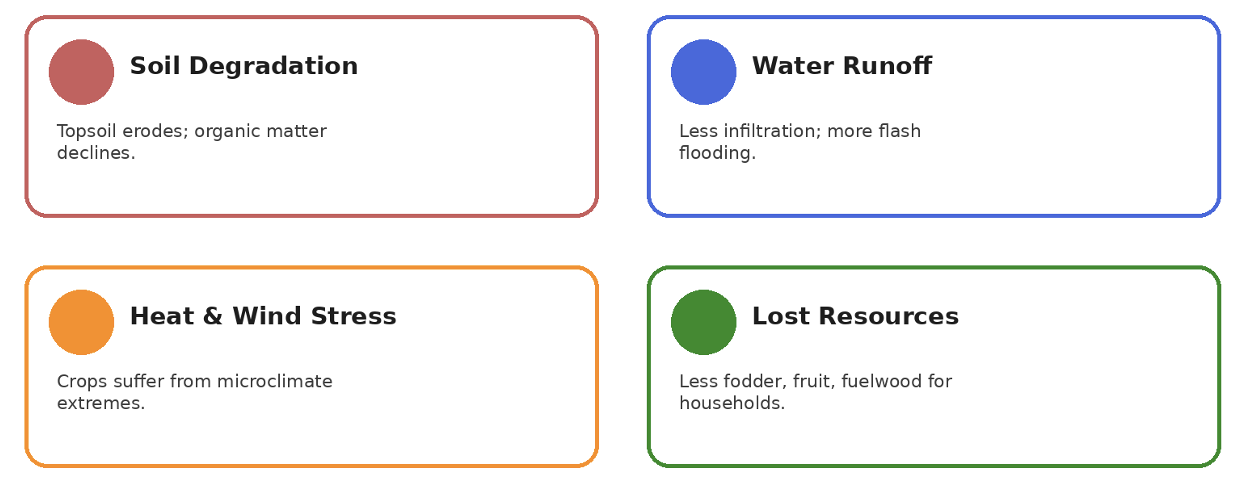
Trees act as natural shock absorbers, reducing the negative effects of climate and environmental shocks on agricultural systems. Removing trees from landscapes incurs a very high cost. For children, this results in less diverse diets, longer hours collecting firewood, and increased exposure to climate shocks.
The problem isn't that farmers don't care. It's that policies, training programs, and extension models often define “good agriculture” in ways that sideline trees and undervalue indigenous knowledge.
What works: Farmer Managed Natural Regeneration
Farmer Managed Natural Regeneration (FMNR) is an affordable, practical method that allows farmers to restore native trees and shrubs using existing root systems and seed banks. Instead of removing regrowth as weeds, farmers selectively prune and manage shoots to restore tree cover while keeping crop production stable.
FMNR has restored millions of hectares in Niger and has been adopted in more than 40 countries. Research and field evidence consistently show that integrating trees into farms improves soil fertility, enhances moisture retention, reduces erosion, and increases resilience to drought.
In Kenya, farmers practicing FMNR report better pasture availability, diversified income sources, and more stable crop yields. Restoration is strengthening agriculture rather than competing with it.
As climate variability increases, this distinction becomes more important.
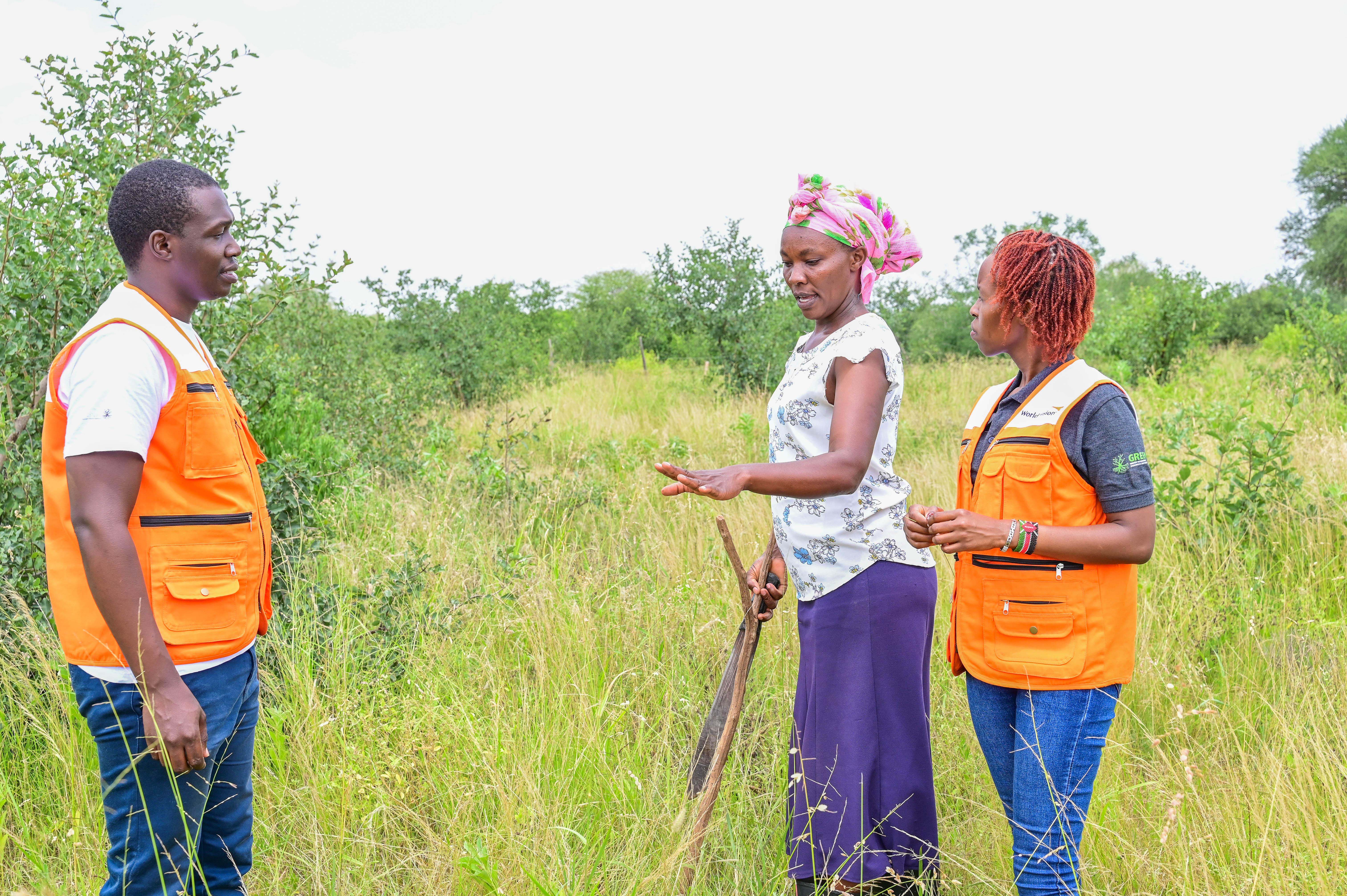
Why resilient lands matter for children
A “clean field” may seem efficient, but a resilient field nourishes children.
When trees regenerate on farms:
- dietary diversity improves through access to fruits and nuts;
- livestock productivity increases, strengthening household nutrition;
- women and girls spend less time collecting fuelwood; and
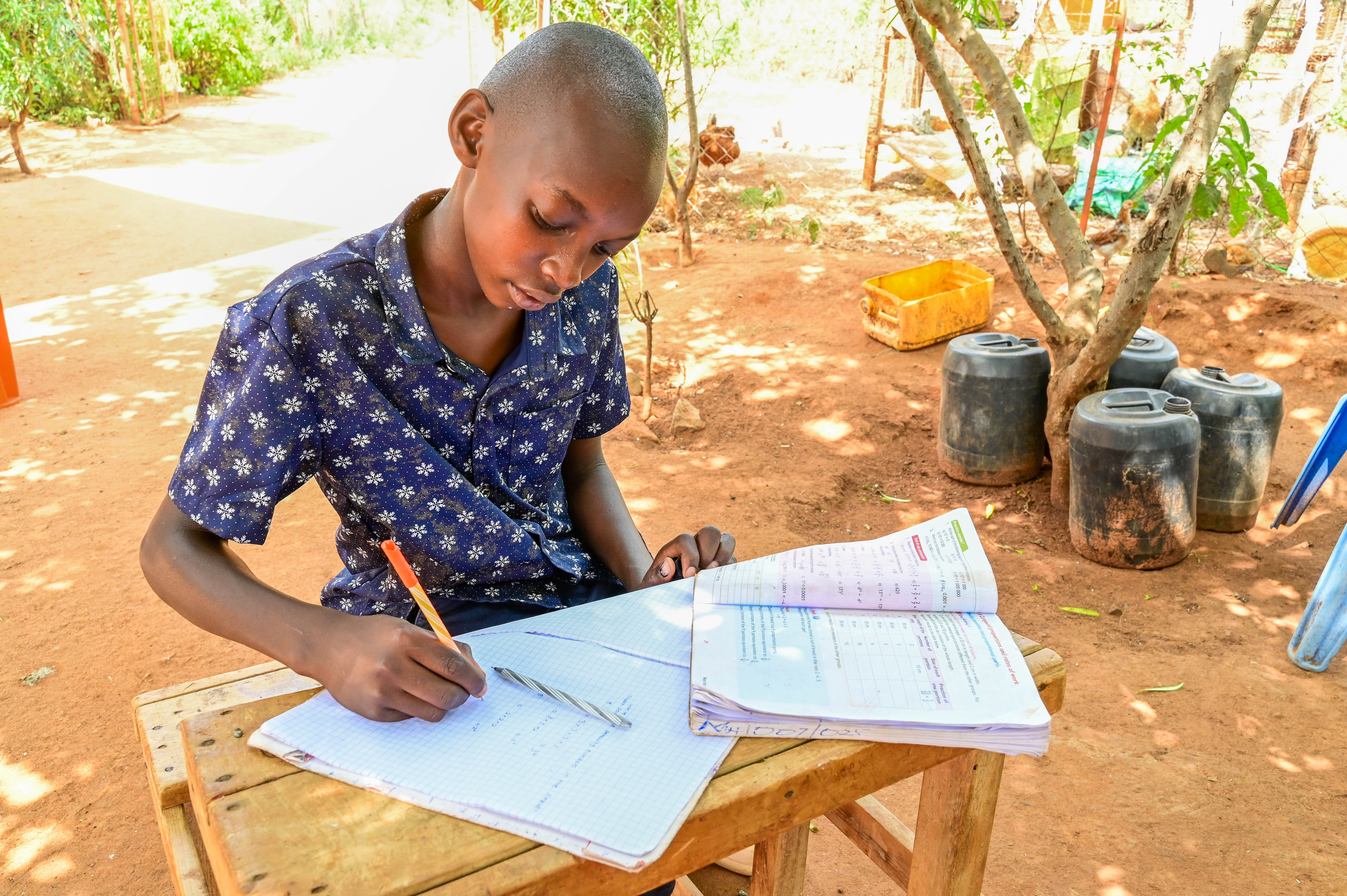
- household income stabilises, protecting education continuity during shocks.
“Since adopting FNMR, I am less worried about delays in rainfall because even if we struggle with maize, we still have fodder, fruit, and something to sell, and our children will continue with their education,
Restoration, in this sense, is child protection.
 World Vision’s role: From fields to systems
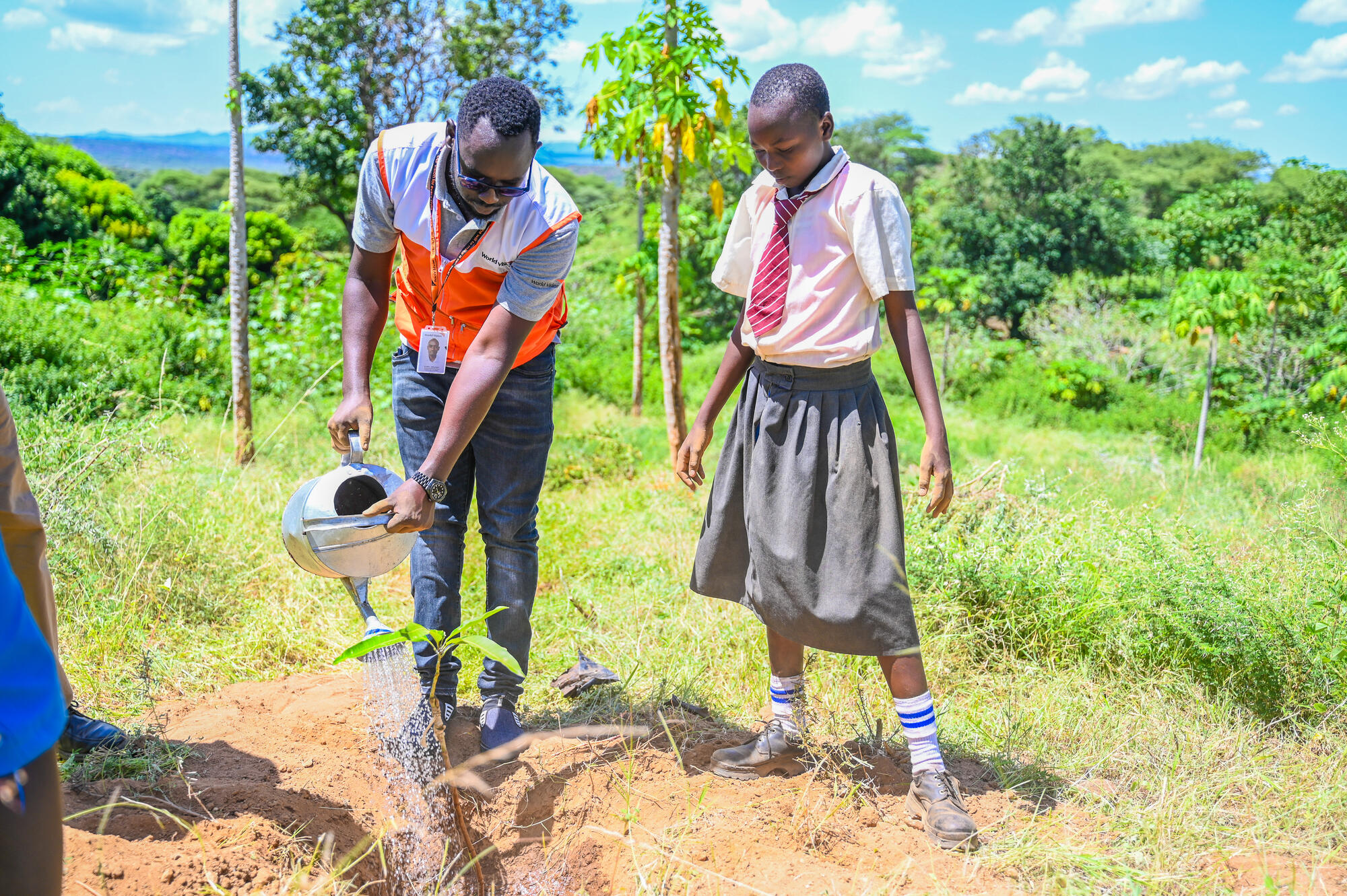
World Vision collaborates with communities across Kenya to expand FMNR as part of a broader strategy for resilience and child well-being. Through farmer training, peer learning groups, and partnerships with county governments, thousands of households are now regenerating trees on their farms and communal lands.
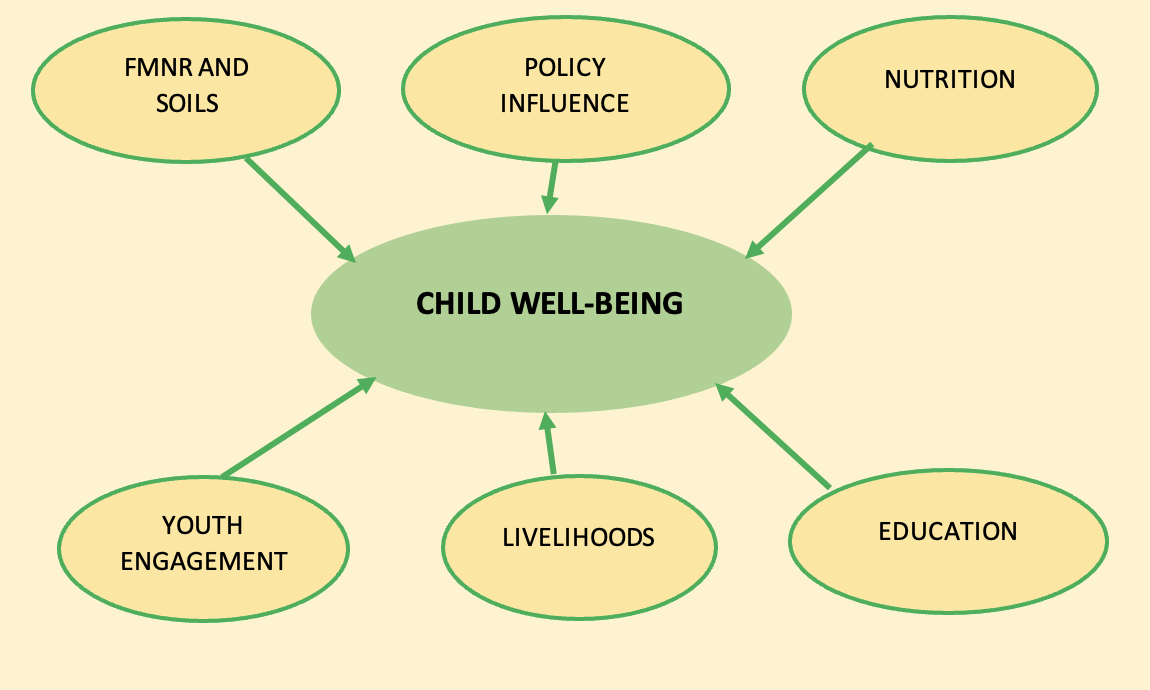
It is essential to move beyond viewing restoration solely at the level of individual farm fields and instead see it as part of a larger system. This involves recognizing how land restoration practices like FMNR interact with nutrition, education, livelihoods, youth engagement, and policy environments. Therefore, a systems perspective prioritizes child well-being, demonstrating how improvements in land management impact household food security, income, learning opportunities, and ultimately the health and development of children.
The conditions that make regeneration stick:
- Farmer Managed Natural Regeneration should be seen as more than just trees. It is a form of systems change, rooted in communities, shaped by policy, and vital to how families survive climate stress, not merely about trees.
- FMNR’s success relies on trust, not handouts. Farmers embrace regeneration when organizations commit long-term, build relationships, and support communities beyond short project cycles. Subsidies don’t sustain change; people do.
- Restoration is most effective when children are prioritized. When FMNR is combined with nutrition, livelihoods, savings groups, and youth engagement, revitalized farms lead to fuller plates, more stable incomes, and stronger households.
- Community action must be supported by policy. In Kenya, collaborating with government partners to integrate farmer-led regeneration into national frameworks is essential so that decisions made on individual farms contribute to national impact.
- FMNR is not an environmental add-on work. It is about whether children eat, families cope, and rural communities have a future in a changing climate.
The science is settled; the policy gap is what’s holding farmers back. Global institutions increasingly recognize agroforestry and farmer-led regeneration as key to climate adaptation and food security. The FAO and the UN Decade on Ecosystem Restoration emphasize the importance of locally driven restoration models that merge ecological recovery with livelihoods.
The science and evidence base are no longer in question. The main challenge arises in scaling within enabling policy environments.
Despite alignment with national goals on climate resilience and land restoration, policy barriers still hinder the quick adoption of FMNR in countries like Kenya.
- Tree tenure unclear: Farmers hesitate to invest in trees;
- Extension capacity gaps: Limited FMNR/agroforestry training; and
- Thin Budgets: Restoration not integrated across sectors.
Scaling FMNR requires community awareness, but more importantly, it needs policy coherence. If national frameworks validate what farmers already know works, adoption accelerates. If they penalise it directly or indirectly, progress stalls.
A practical invitation
As the world observes Earth Day, we must remind ourselves that restoring the planet begins with rethinking the systems that influence daily choices. If we want nationwide change in countries like Kenya, we need to expand our idea of "successful agriculture"—shifting focus from short-term neatness to long-term resilience and creating policies that actively support it.
That raises a crucial question for development actors, especially policymakers: Will they?
- Challenge the status quo and review policies;
- Reward farmers who are contributing to climate, land restoration, and food security targets through regenerating trees;
- Protect farmers’ rights to trees.
- Empower extension services to promote FMNR, and
- Drive cross-sector investment to make restoration a national priority?
The future won't be secured by pitting “modern” agriculture against indigenous systems. Instead, it will rely on integrating effective local practices with scientific innovation, which have historically provided food and resilience for generations of children.
The true test is very practical rather than based on ideology: can these methods be scaled, affordable, and sustainable amidst the daily challenges farmers face? For millions of children, the answer will influence their health, growth, and opportunities in life.
About the authors:
Tony Rinaudo is the Principal Climate Action Advisor at World Vision Australia. With over 40 years of experience, he is a global leader in land restoration whose work in Niger helped recover more than six million hectares of degraded land and inspired re-greening efforts worldwide. He is internationally recognized for promoting Farmer‑Managed Natural Regeneration (FMNR) and has received the Right Livelihood Award, the Luxembourg Peace Prize, and was appointed as a Member of the Order of Australia.
Dr. Carol Munini Munyao is the Regreening and FMNR Scaling Lead at World Vision Kenya. She is an environmental health and climate change expert with over twenty years of experience promoting ecosystem restoration and climate resilience across sub-Saharan Africa. A prominent advocate for Farmer‑Managed Natural Regeneration (FMNR), she operates at the crossroads of research, policy, and community-led initiatives to expand sustainable land restoration and boost livelihoods.
Subscribe to see more content like this
Related Resources

A Mother of Six and Her Path to Accounting Career

We Know Who Protects the Amazon. Why Aren't We Funding Them?
