
Returning Home Through Land and Livelihood

At 29 years old, Vian Mirza Jundi has already endured years of conflict, displacement, and uncertainty. A single mother of two from Qasrki village in Sinjar district, Ninewa Governorate, Vian returned to Sinjar in 2021 hoping to rebuild her life after being displaced. Instead, she found herself facing severe economic hardship, prolonged drought, and growing isolation.
Living in the Al-Adnaniya community, where only a small number of families had returned, Vian struggled to support her children alone. The deteriorating agricultural conditions in her area made it impossible to cultivate or benefit from her family land in Qasrki village, despite her strong emotional connection to it.
“Working on my land again changed my psychological state completely,” Vian says. “I no longer feel isolated or powerless. I feel that I have a future again.”
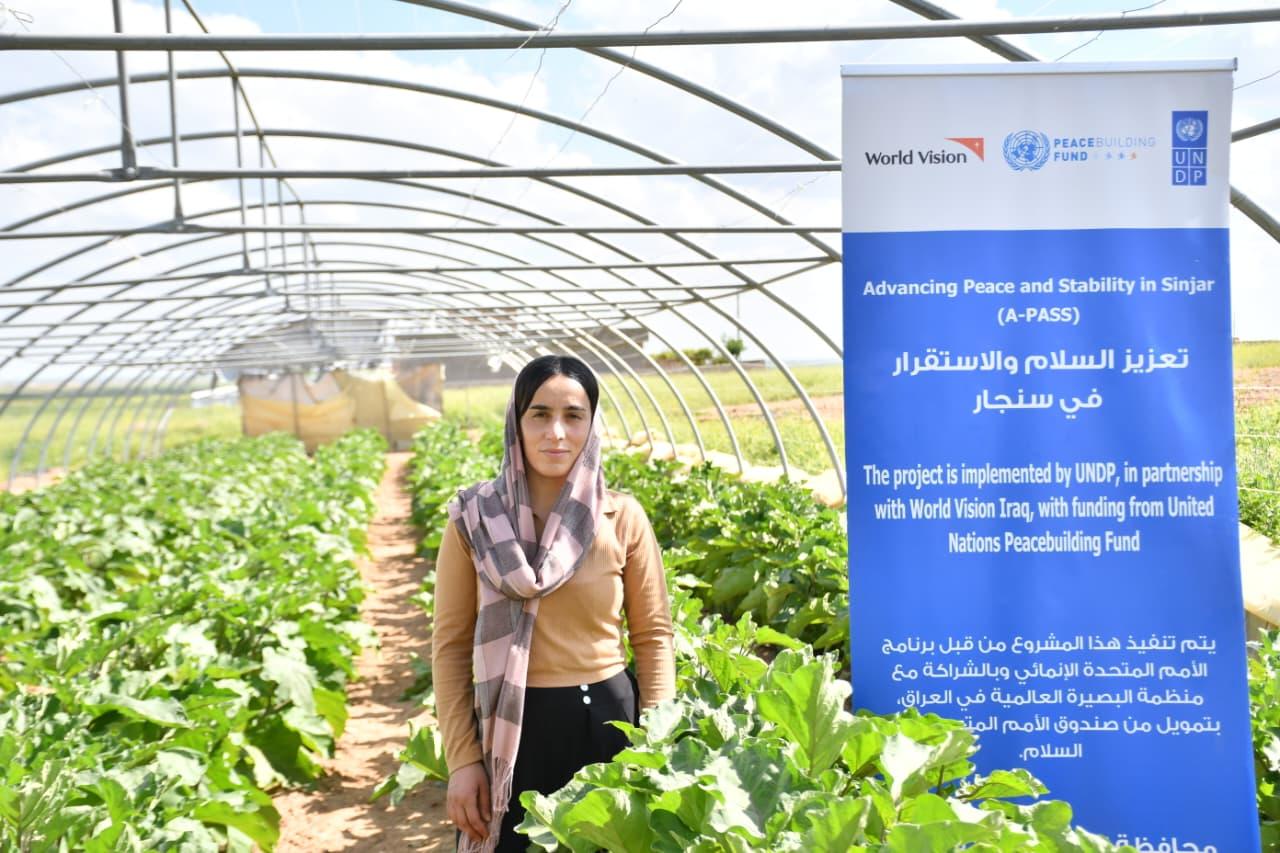
Vian’s turning point came through the Advancing Peace and Stability in Sinjar (A-PASS) project, implemented by World Vision Iraq in partnership with the United Nations Development Programme (UNDP) and supported by the United Nations Secretary-General’s Peacebuilding Fund (PBF).
She first learned about the project through the local peace committee and the mukhtar (village leader), who encouraged women in the community to participate. Through the project, Vian joined a livelihoods and psychosocial support programme designed to help conflict-affected communities rebuild stability and strengthen social cohesion.
Vian completed a 20-day vocational training course on modern agriculture and irrigation techniques, where she learned sustainable farming methods that enabled her to envision returning to her land in a more productive and resilient way. She also participated in a 10-day small business management course that strengthened her ability to independently manage and sustain an agricultural project.
Alongside the livelihood support, psychosocial support sessions helped her cope with stress, rebuild confidence, and regain hope after years of instability and displacement.
With financial assistance provided through the project, Vian established a greenhouse equipped with modern irrigation systems on her family land in Qasrki village. Today, she cultivates seasonal fruit for local markets while rebuilding stability for herself and her children.
“I thought returning to my normal life would be impossible,” she says. “But this project gave me hope again and showed me that I could start over for the sake of my children.”
For Vian, returning to her land represented far more than economic recovery. It marked the beginning of rebuilding dignity, belonging, and a sense of peace after years of uncertainty. As her situation stabilised, she was able to reconnect with her community and rebuild social ties disrupted by displacement.
Her renewed agricultural activity has also contributed to wider recovery efforts in Qasrki village, where restoring livelihoods and encouraging families to remain on their land helps strengthen local stability and social cohesion.
“When I returned to my land and saw the greenhouse standing there for the first time,” Vian recalls, “I felt that life was returning to me step by step.”
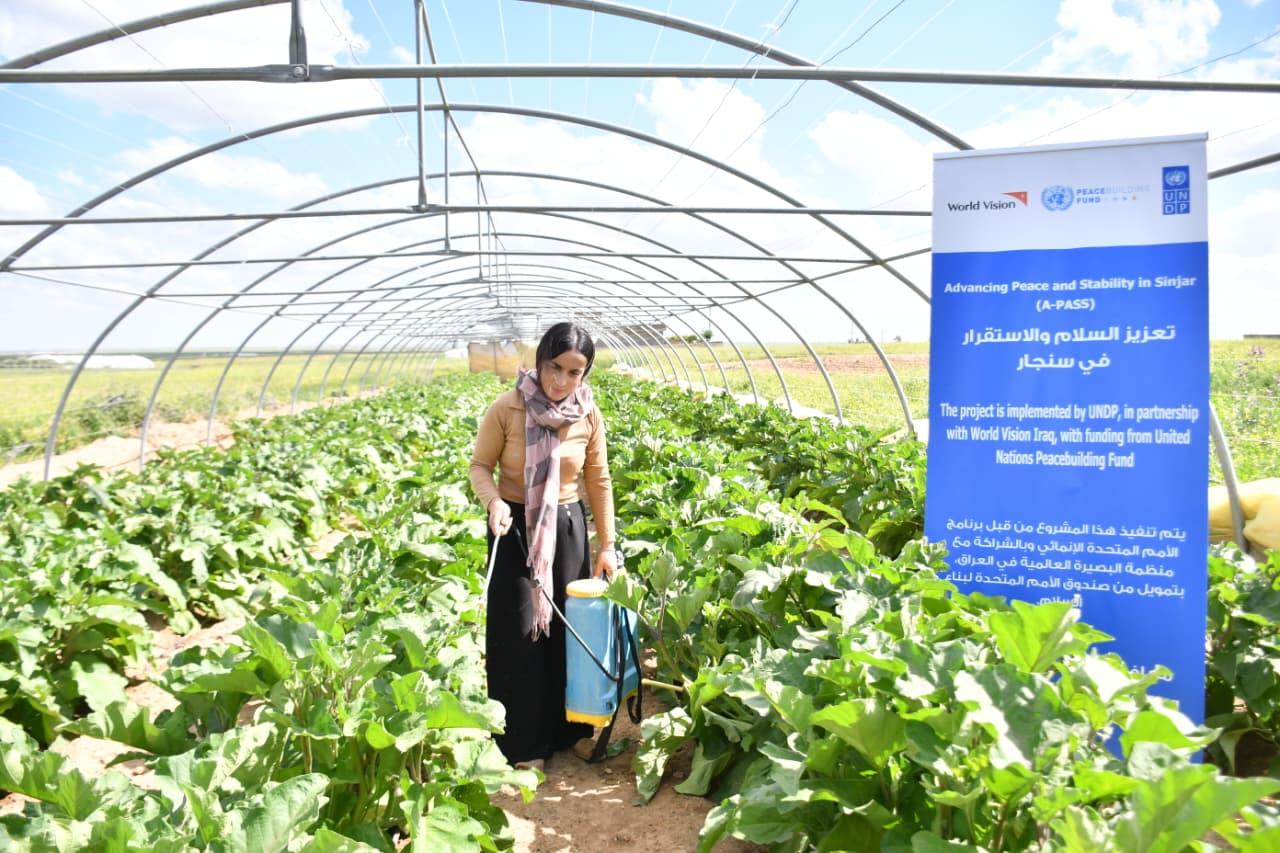
“Vian’s story shows how integrated peacebuilding support can help families move beyond survival toward stability and recovery,” says Muntasser Hamid Abdullah, Project Manager at World Vision Iraq. “By combining livelihoods support, psychosocial care, and community engagement, the project is helping conflict-affected communities in Sinjar rebuild trust, resilience, and social cohesion.”
Looking ahead, Vian plans to expand the greenhouse project by planting additional fruit trees and diversifying production to create a more sustainable source of income for her family. She also hopes to continue strengthening her skills in modern agriculture to improve the quality and productivity of her work over time.
Vian's story reflects how integrated peacebuilding support can help conflict-affected families rebuild livelihoods, restore dignity, and reconnect with their communities after displacement.