

Investing in Teachers Powers Lifelong Learning
Bounmee Phommachan, Education Specialist for World Vision International Lao PDR, says teacher shortages threaten early education access. Read why she believes investing in teachers is key to lifelong learning for every child.
20 January 2026
Teachers are more than instructors. They are mentors, motivators, and role models who shape young minds with creativity and care. Through playful and engaging activities, they transform classrooms into vibrant spaces where curiosity thrives and learning feels like an adventure.
Education is a lifelong journey of discovery and growth. From the earliest years, children dream of going to school, not just to be with friends, but to experience the wonder of learning guided by a teacher. For many, this dream becomes a cherished reality; for others, it remains out of reach.
A teacher shortage crisis
In recent years, a growing teacher shortage crisis has emerged in many countries worldwide. According to the International Task Force on Teachers for Education, a substantial shortfall of seven million teachers remains: 1.7 million primary teachers and 5.3 million secondary teachers are needed.
Lao PDR is similarly grappling with this challenge. National teacher recruitment figures have declined sharply, from 340 teachers recruited in 2022 to just 285 in 2023, despite an estimated need for 900 new teachers to fulfil the national education plan. This acute shortage has compelled many educators to manage multi-grade classrooms, leading to a reliance on community volunteers who teach without remuneration or formal training.
For students, the absence of qualified teachers significantly limits access to quality education, contributing to increased rates of grade repetition and school dropout. Furthermore, the proliferation of multi-grade teaching environments has exacerbated already low learning outcomes.
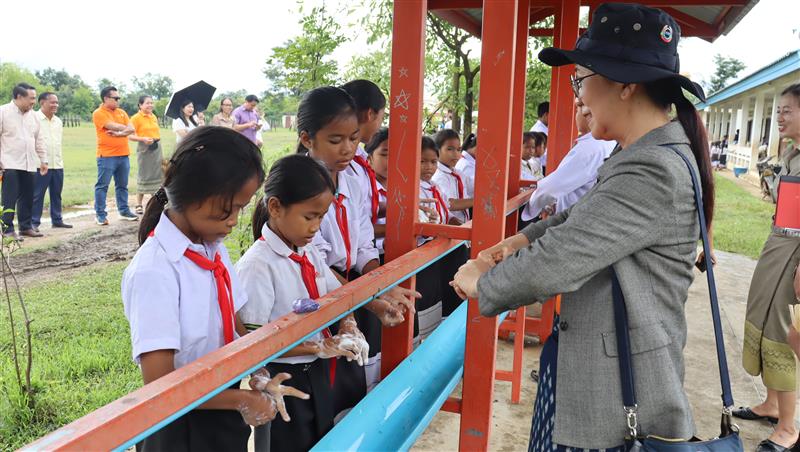
Quality education must start early
The persistent shortage of qualified teachers continues to hinder access to Early Childhood Education (ECE), particularly in rural and remote regions of the Lao PDR. This challenge was underscored in the November 2024 Round Table Meeting Education Report, which highlighted three critical concerns:
- declining enrolment rates
- insufficient teacher supply
- and persistently low learning outcomes
Enrolment figures continued to fall across all educational sub-sectors throughout the 2023–2024 academic year, reflecting systemic barriers to participation. Notably, the report identified approximately 30 districts nationwide that currently lack pre-primary classrooms, further exacerbating disparities in early educational access and equity.
In the districts of Xonnabuly, Sanamxay, and Toomlan, World Vision Laos is implementing the "Improving Learning Outcomes for Early Childhood and Primary Education" project. At Toumlan, among the 20 target schools, only eight are equipped with Early Childhood Education (ECE) classrooms. This limited coverage indicates that children aged 3 to 5 in the remaining schools lack access to foundational early learning experiences.
As a result, many enter Grade 1 without basic literacy and numeracy skills, which significantly impairs their ability to engage with the curriculum and develop reading comprehension. The lack of preparedness not only undermines academic performance but also hinders the broader aspects of children's holistic development, including cognitive, social, and emotional growth.
Filling in the educational gaps
To support the government's efforts in ensuring school functionality and inclusive education, World Vision Laos has mobilised community volunteers and strengthened their capacity through training in the Learning Roots Project Model methodology. These volunteers play a pivotal role in bridging educational gaps by assisting teachers and caregivers in delivering play-based learning experiences for young children.
In Toumlan district, the project successfully completed the construction of four Early Childhood Education (ECE) centres and installed seven outdoor playground sets. Meanwhile, Sanamxay district completed the construction of six ECE centres, each equipped with six outdoor playground sets, making early learning spaces more accessible within local communities.
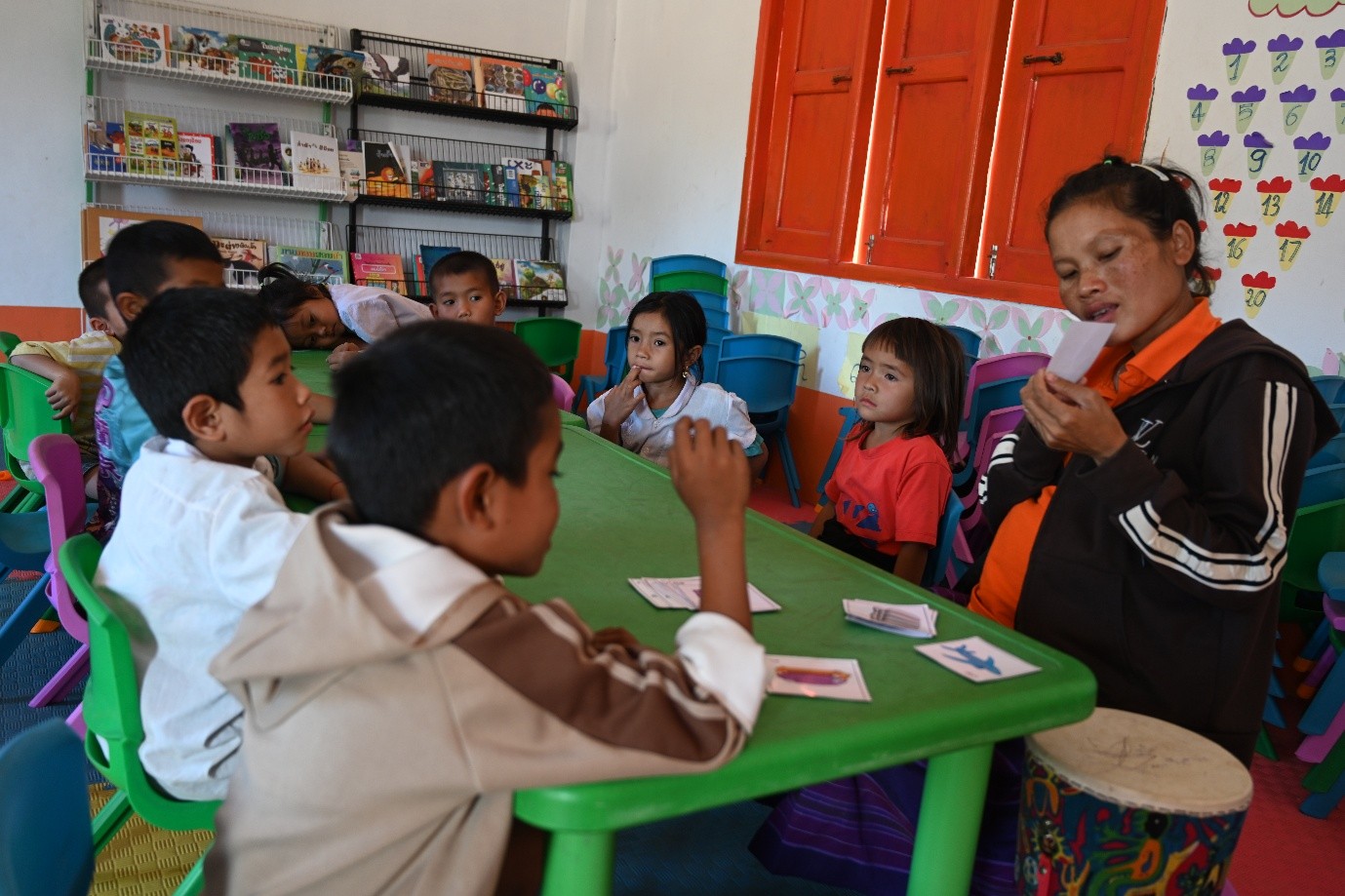
“My dream is to see that all children in my community can access kindergarten to prepare them for primary school. I am pleased to see parents and caregivers recognise the importance of enrolling their children in kindergarten before they start primary school. I have learned many new games and songs and different teaching techniques from World Vision,” said Chantha, a 30-year-old kindergarten teacher.
She added, “Currently, 48 children are participating in my class, and I have noticed an increase in enrolment since the construction of the new kindergarten building, playground, and the provision of additional materials.”
A call to strengthen early education
Despite these achievements, we urgently need to expand the teaching workforce to ensure schools operate effectively. Empowered and supported teachers can improve child well-being and enhance learning outcomes from the earliest moments of education, ensuring children in Lao PDR, and across the world, can live productive and fulfilled lives.
______________________________________________
Bounmee Phommachan is an Education and Early Childhood Specialist at World Vision International Lao PDR, bringing over 20 years of experience in teacher training and education development. Before joining World Vision International Laos, she served at Ban Keun Teacher Training College, where she dedicated her career to preparing future educators and promoting innovative teaching practices.
She holds a Bachelor’s degree in English Teaching from the National University of Laos. She has pursued advanced studies in Education Methodology in Japan and Early Childhood Education and Care in Australia. Bounmee also earned a Master’s degree in International Development Studies.
Passionate about learning through play, Bounmee advocates for child-centered approaches that foster creativity and holistic development. In her previous role, she collaborated with international volunteers from Korea and Japan, strengthening cross-cultural partnerships and enhancing educational programs.
Subscribe to see more content like this
Related Resources

True Transformation Begins When We Listen First

It’s Time We Let Children with Disabilities Lead the Way
