

One Year On: Reclaiming What Was Stolen
One year after a powerful earthquake struck Myanmar, National Director Erwin Lloyd Guillergan reflects on why locally led preparedness and sustained recovery are critical to restoring hope long after global attention fades.
28 March 2026
Thingyan in Myanmar is the season of renewal and joy, symbolised by the cleansing power of water. But last year it never truly came. Just days before Myanmar would have welcomed its New Year, a 7.7 magnitude earthquake struck on 28 March 2025, impacting over 17 million people (OCHA). Instead of laughter in the streets and rituals of cleansing, there was dust, grief, and silence. In that moment, it felt as if Thingyan itself had been stolen.
I remember the day the earthquake struck. Having worked in emergency settings for many years, my instinct urged me to immediately check on people, understand the scale, and act quickly. Within hours, local teams were already responding by reaching communities, distributing prepositioned supplies, and assessing needs on the ground. In Myanmar’s complex context where humanitarian access is often constrained; this speed was the result of something we do not speak about enough: preparedness rooted in long-term local partnerships.
What became clear in those first days is something I continue to believe strongly today. When disaster strikes, it is not external systems that respond first, but communities themselves. Local staff, volunteers, and families did not wait. Many were affected personally, yet they acted. That ability to spring into action based on pre-existing training is not just operational efficiency; it is the difference between life and death in the immediate aftermath.
But survival is only the beginning.
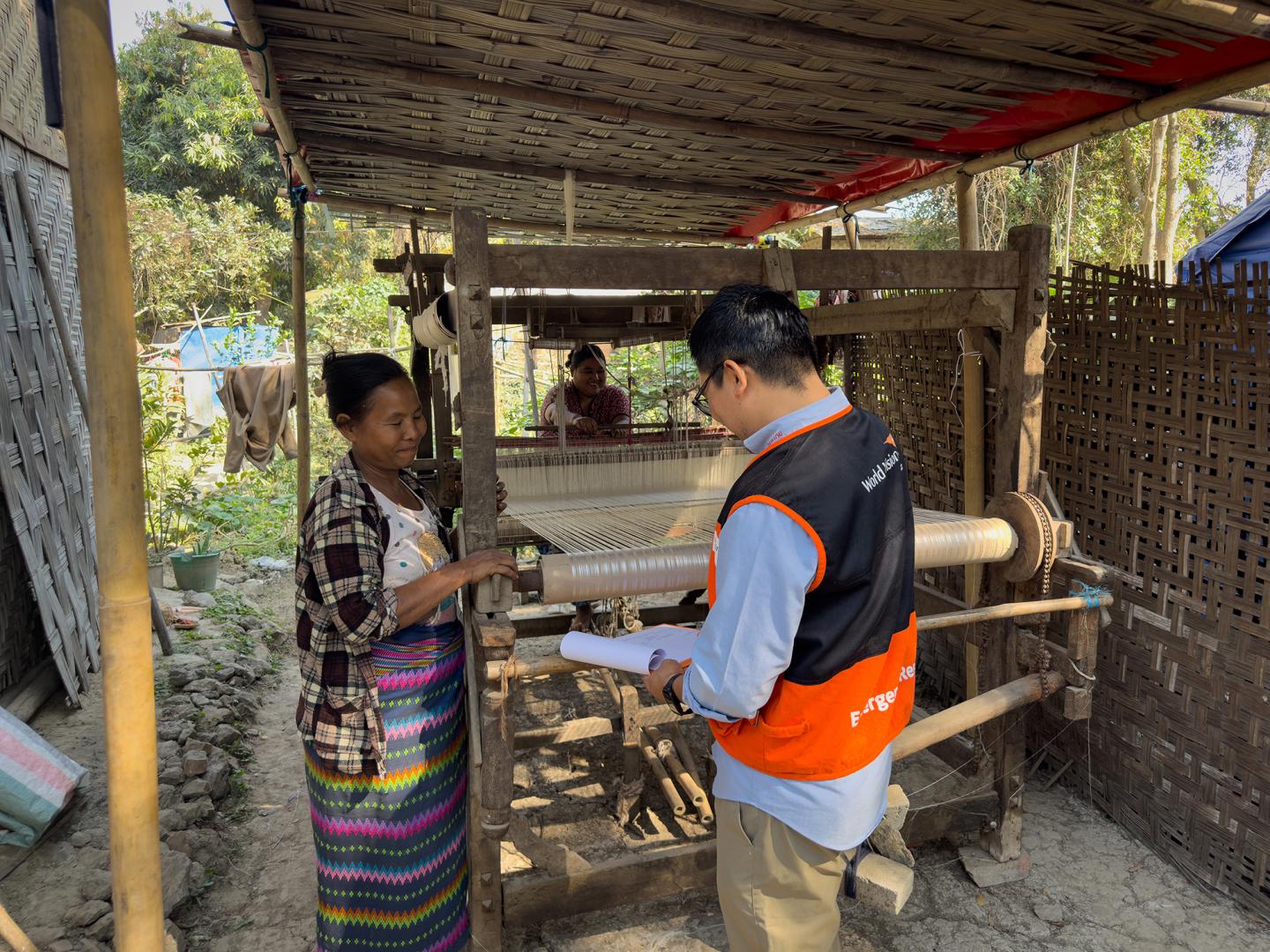
Over the past year, I have met many families who are rebuilding their lives step by step. One mother I spoke with had lost her husband in the earthquake. With two young daughters and an elderly parent to care for, her future had been shaken in every sense. Yet with support to restart her livelihood, she began again. Not just to survive, but to provide, to hope.
“When the earthquake damaged my home, we had to live in a temporary shelter for eight months. Even then, I kept working to support my family. With the 900,000 MMK (about USD 230) livelihood support from World Vision, I bought a thread winding machine and started my own business at home. Now I earn 15,000–20,000 MMK (about USD 4–5) a day, sometimes more when demand is high. I’m grateful that I can work from home and continue to support my family,” the mother says.
Her story is not unique. It reflects something deeper about Myanmar: resilience is not just a slogan. It is lived, daily, often quietly. It is found in parents who continue for their children, in communities that support one another, and in children themselves, who, even in the aftermath, find ways to play, to draw, and to imagine a future.
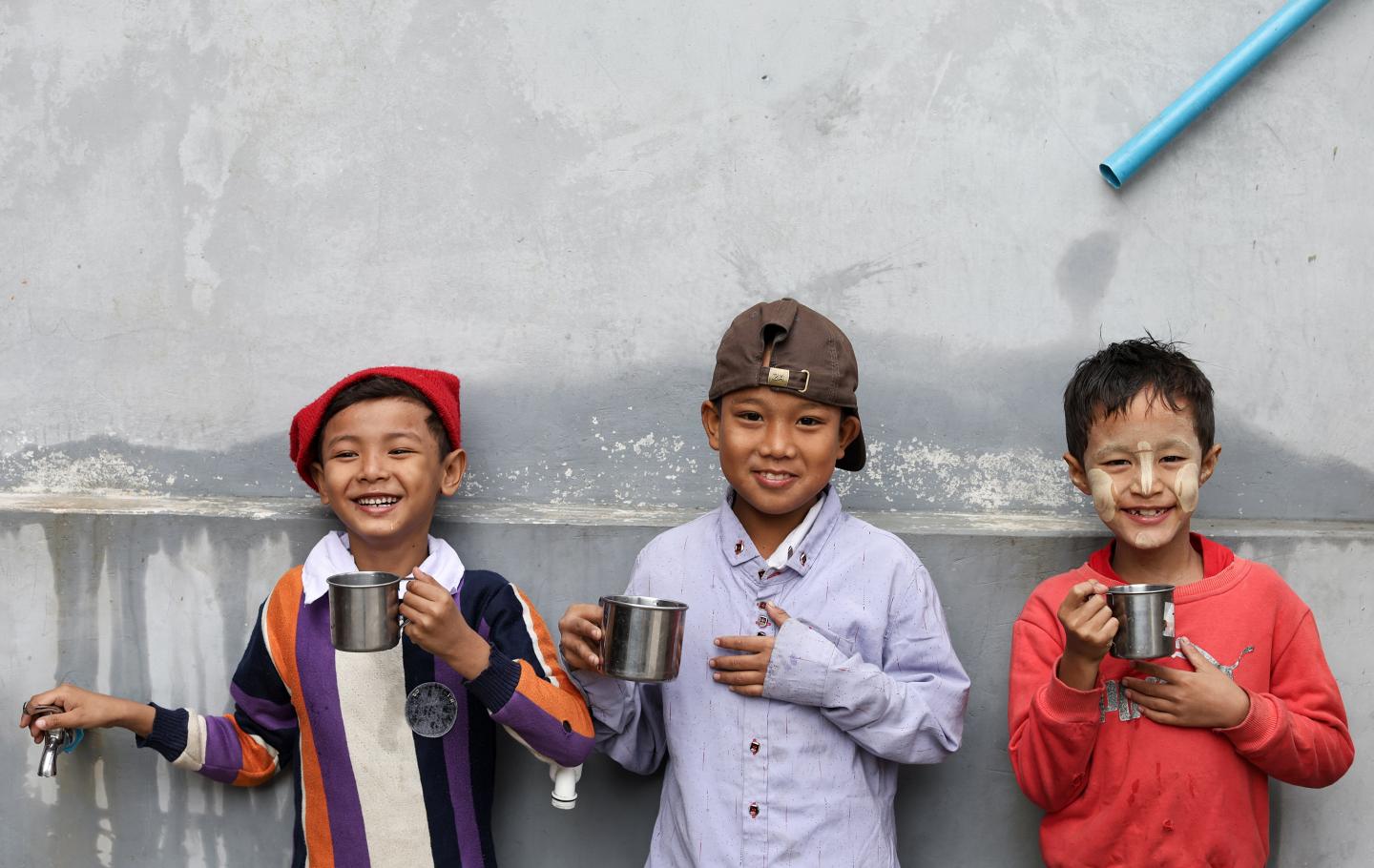
In many places where World Vision works, I have seen children gather in safe spaces created for them, spaces where they can laugh again, express what they have been through, and slowly rediscover a sense of normalcy. These moments may seem small, but they are where healing begins.
This is why recovery cannot be measured only in buildings reconstructed or supplies delivered. The most important work is often less visible: restoring hope. Hope lives in the small milestones, such as the reopening of a temporary classroom where children feel safe again. Or the first harvest from the recovery seeds distributed months earlier. Or the restoration of dignity when families move from dependency back to self-reliance.
And yet, this is also the moment when attention begins to fade.
The headlines that once captured the world’s attention have moved on. But for families in Myanmar, the most difficult phase of recovery is only now unfolding. Rebuilding lives--truly rebuilding them--takes time, consistency, and sustained commitment. It requires more than an emergency response; it requires staying.
This is where we must challenge ourselves.
Too often, global response systems are designed for immediacy, not continuity. Funding cycles are short. Attention is fleeting. But resilience is built over years, not weeks. In Myanmar’s context which is marked by overlapping humanitarian crises and access challenges, this gap between response and recovery is where the risk of being left behind becomes greatest.
“The crisis in Myanmar is almost invisible,” noted Gwyn Lewis, the UN’s Interim Resident and Humanitarian Coordinator in Myanmar, on how global attention has shifted elsewhere even as conditions inside the country continue to deteriorate. “There’s really a sense in country that it’s been forgotten.”
If we are serious about supporting children and families here, then we must think differently. We must invest in approaches that are flexible, locally led, and long-term. We must strengthen systems that protect not only physical well-being, but also mental health, education, and community cohesion. And we must ensure that Myanmar does not become a forgotten crisis simply because it is no longer in the headlines.
As Thingyan returns this year, it brings with it the symbolism of cleansing and renewal. Water washes away the past and welcomes the future. But for many families, healing is not symbolic. It is practical, ongoing, and incomplete. The good news is, the spirit of Thingyan was not lost forever. It lives on in the small but significant steps communities are taking every day: rebuilding homes, reopening schools, restoring livelihoods, and holding on to hope.
The question now is whether the world will remain present long enough to see that restoration through. Because recovery, like Thingyan, is a commitment to continue, long after the water dries and the headlines fade.
At World Vision, we remain committed to walking alongside communities affected by the earthquake, ensuring that every child can thrive in safety and joy as we move from relief to long-term restoration.
About the author:
Erwin Lloyd Guillergan is the National Director for World Vision Myanmar. His career spans senior roles with Médecins Sans Frontières, Médecins du Monde, and Catholic Relief Services, with assignments in Yemen, Afghanistan, Sierra Leone, and Myanmar.
He has led large-scale programmes in health, nutrition, WASH, education, and climate resilience, overseeing significant budgets and diverse teams. He has successfully negotiated programme access with government ministries and led emergency responses, including the Myanmar earthquake response.
Subscribe to see more content like this
Related Resources

Is SDG 2 - Zero Hunger still within Myanmar’s reach?

An Inflection Point for Our Sector and What Comes Next
