

Who Gets to Count as an Expert? Children’s Voices Are Evidence, Not Anecdotes
Loredana Giuglea and Ariel Dawal reflect on how the ENOUGH Campaign is redefining child participation as a driver of evidence, accountability, and policy change.
July 23, 2026.
Who knows better what a school meal means than the children who eat them every day?”
That question, posed by a 15-year-old researcher, is not rhetorical. It exposes a structural blind spot in how policies affecting children are designed: decisions are still too often made at a distance from the realities they seek to address.
A 14-year-old from Eswatini makes this even clearer:
We want you to talk about child hunger because many of us come to school without eating. When we are hungry, it is hard to listen, learn, or even play. Hunger makes us tired and unable to concentrate in class... Every child deserves to learn on a full stomach.
Her experience is echoed across classrooms around the world. Today, 53% of children in low- and middle-income countries face learning poverty, and her voice makes clear how hunger shapes that reality.
Reframing What Counts as Evidence
Children’s lived realities often reveal what formal reports overlook. They describe not only what is happening, but how it is experienced and where responses fail to match real needs. Ignoring this form of evidence is not neutral; it actively shapes what remains prioritised and what is left unaddressed.
As António Guterres noted during the Thirtieth Anniversary of the World Programme of Action for Youth:
Let us spare no effort to make young people equal partners and equal decision-makers.
The question is no longer whether children can contribute meaningfully to policy processes. It is whether systems actually use what they say to shape decisions.
The most persistent barrier is not children’s capacity, but adult mindset. Agendas are often defined before children are consulted. Input is gathered but not meaningfully applied. Feedback loops are weak or absent, leaving children unclear about what happens next. This disconnect has been consistently raised by children themselves and where accountability is missing, trust erodes.
At the same time, inclusion remains uneven. Children with disabilities, those in fragile and conflict-affected contexts, and out-of-school children continue to be underrepresented in participation platforms, despite often being the most affected..
Participation as Evidence, Not Consultation
At World Vision, we prioritise meaningful, safe, inclusive, and age-appropriate participation of children and young people, not only as a right, but as a critical component of effective systems.
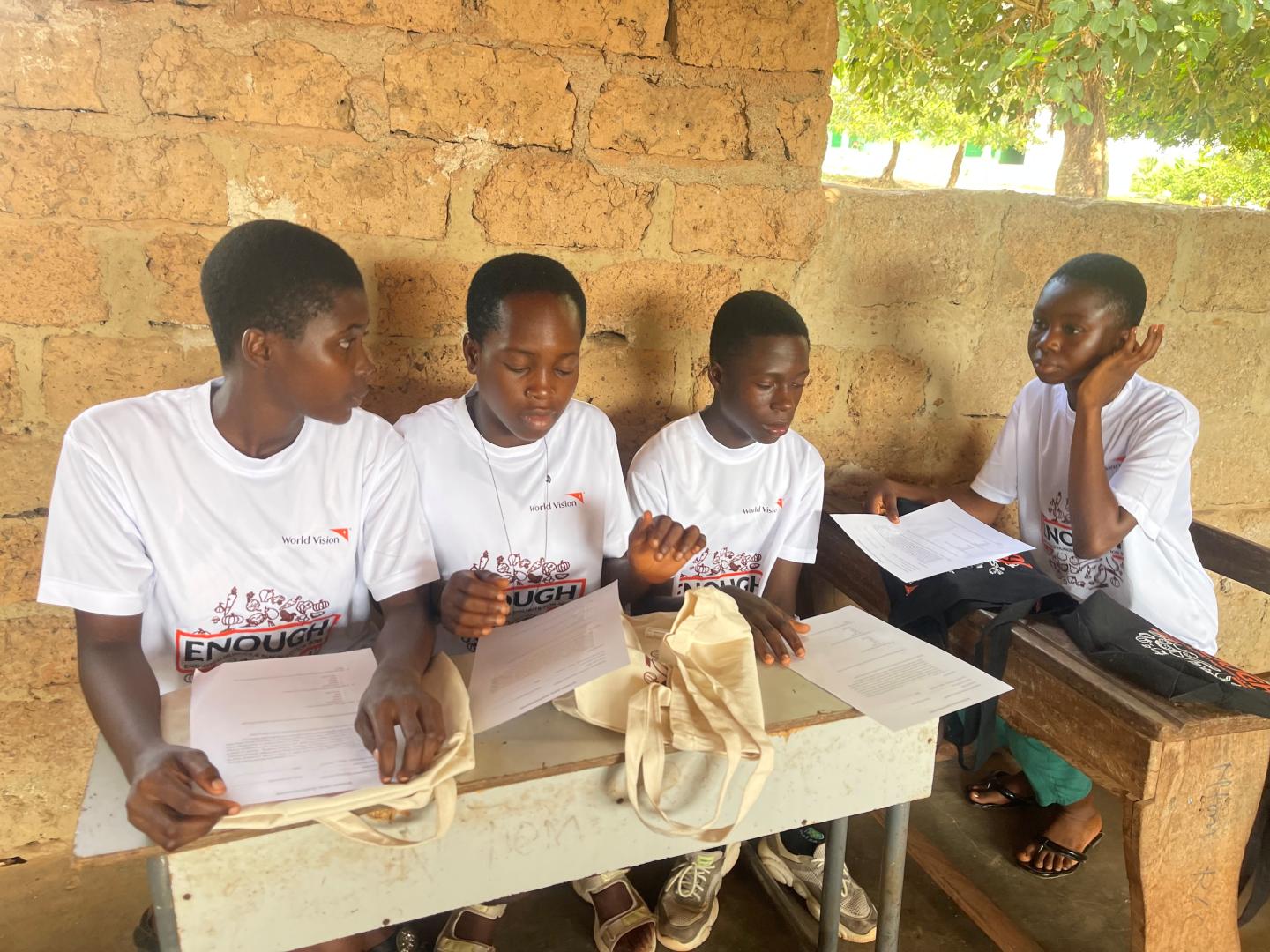
Within the ENOUGH Campaign, children are not simply describing their realities; they are generating structured insights that inform advocacy, shape programming, and influence resource allocation. This signals an important shift: when evidence is detached from lived experience, policies may be technically sound in design, but risk becoming less responsive in practice.
Across 185 child participation reports analysed between 2020 and 2025, children’s contributions have consistently generated policy-relevant evidence on hunger, nutrition, climate, and protection. Child-led research on school meals across multiple countries has strengthened global advocacy on school feeding systems. Nutrition Dialogues with thousands of children and young people have directly informed national and global policy discussions at the 2025 Nutrition for Growth Summit in Paris. Similarly, child-led climate consultations have highlighted how shifting weather patterns affect food production, schooling, and household resilience.
Taken together, these processes point to an emerging evidence system, one grounded in lived experience rather than external interpretation.
From Being Heard to Shaping Systems
The ENOUGH Campaign reflects this evolution. Of 406 policy changes influenced in 2025, nearly a third explicitly integrated children into advocacy design, with many translating into government budget commitments.
Despite this progress, a structural tension remains. Participation is still too often inconsistent, and systems do not yet adequately demonstrate how children’s inputs directly influence decisions and policy outcomes.
This creates a credibility gap not between children and institutions, but within the system itself. When children do not see how their contributions lead to tangible outcomes, participation risks losing its transformative potential. At the same time, persistent gaps in inclusion mean that some of the most affected voices remain underrepresented.
From Participation to Accountability
The ENOUGH Campaign makes visible a broader shift: child participation is becoming part of the evidence infrastructure that underpins policy, programming, and advocacy across hunger, climate, and conflict contexts.
The next phase is not about expanding participation alone. It is about ensuring systems are designed to absorb, act on, and remain accountable to the evidence children already produce.
Daëlle, 17, from Haiti, captures this with clarity:
My message for the country’s authorities is to support the planters so that there can be more food produced in our country. This is how we will combat food insecurity.
Progress should not be measured by how many children are included in conversations, but by whether their evidence consistently shapes the decisions that affect how they learn, grow, and live with dignity in contexts defined by hunger, conflict, and climate uncertainty.
About the authors:
Loredana Giuglea is an Advisor for Child Participation and Mobilisation at World Vision International. She focuses on strengthening meaningful and inclusive child participation across programmes, campaigns, and policy processes, ensuring that children’s perspectives actively inform the decisions that shape their lives.
Ariel Dawal is a Senior Advisor for Child-led Advocacy and Mobilisation at World Vision International. He leads global efforts to advance child-led movements and drive policy and systems change that improve child wellbeing. Working with governments, multilateral institutions, and civil society partners, he supports the translation of children’s voices and evidence into concrete action, ensuring children are not only heard but are actively shaping decisions that affect them.
Subscribe to see more content like this
Related Resources

Why Self-Reliance Must Become a Global Stability Priority

Why School Meals Need a Nutrition Accountability Revolution
