
How Food Assistance Helped Chankos Stay in School

Some mornings, Chankos sat in class unable to follow a single lesson. Hunger was louder than the teacher’s voice. Born in South Sudan, he fled conflict with his family and arrived in Ethiopia as a young child. Now 16, he lives with his mother and siblings in Tierkidi Refugee Camp, where he still remembers how hunger followed him from home into the classroom.
Before food assistance reached his family, each day was shaped by uncertainty. “There was no food to eat,” Chankos recalls quietly. “We didn’t even know what we would eat tomorrow. Sometimes we collected firewood and sold it to buy food.”
His mother, Nyanhial, 60, remembers those early days in the camp as the most painful period of her life. “Before the assistance, life was very difficult,” she says. “We didn’t have enough food for our children. The hardest moment was when they came home hungry, and I had nothing to give them.”
As a mother, the responsibility of finding food rested heavily on her shoulders. Before sunrise, Nyanhial would leave home searching for any way to feed her family, sometimes walking long distances or collecting firewood to sell for small amounts of money. The work was exhausting, but staying home meant her children might not eat at all. “I was always thinking about how my children would survive,” she recalls.
The pressure went beyond physical exhaustion. Leaving early and returning late often exposed her to unsafe conditions while her children remained alone. Each day carried uncertainty, fear, and the emotional burden of watching hunger affect her children’s well-being. “That was the most difficult time of my life,” she says quietly.
Hunger did not remain at home; it followed Chankos into the classroom. Many mornings, he arrived at school without eating, making it difficult to concentrate or participate in lessons. “When I eat nothing, I will be absent from school,” he explains. “I feel hungry, and I cannot be happy.”
The effects stretched beyond learning. Hunger slowly isolated him from other children. While classmates played and talked together, Chankos often withdrew, embarrassed by his situation and without the energy to engage. “Even with friends, I do not engage when I’m hungry,” he says. Over time, school no longer felt like a place of possibility, but another reminder of hardship. Around him, many children dropped out as families struggled to survive. Some never returned to the classroom.
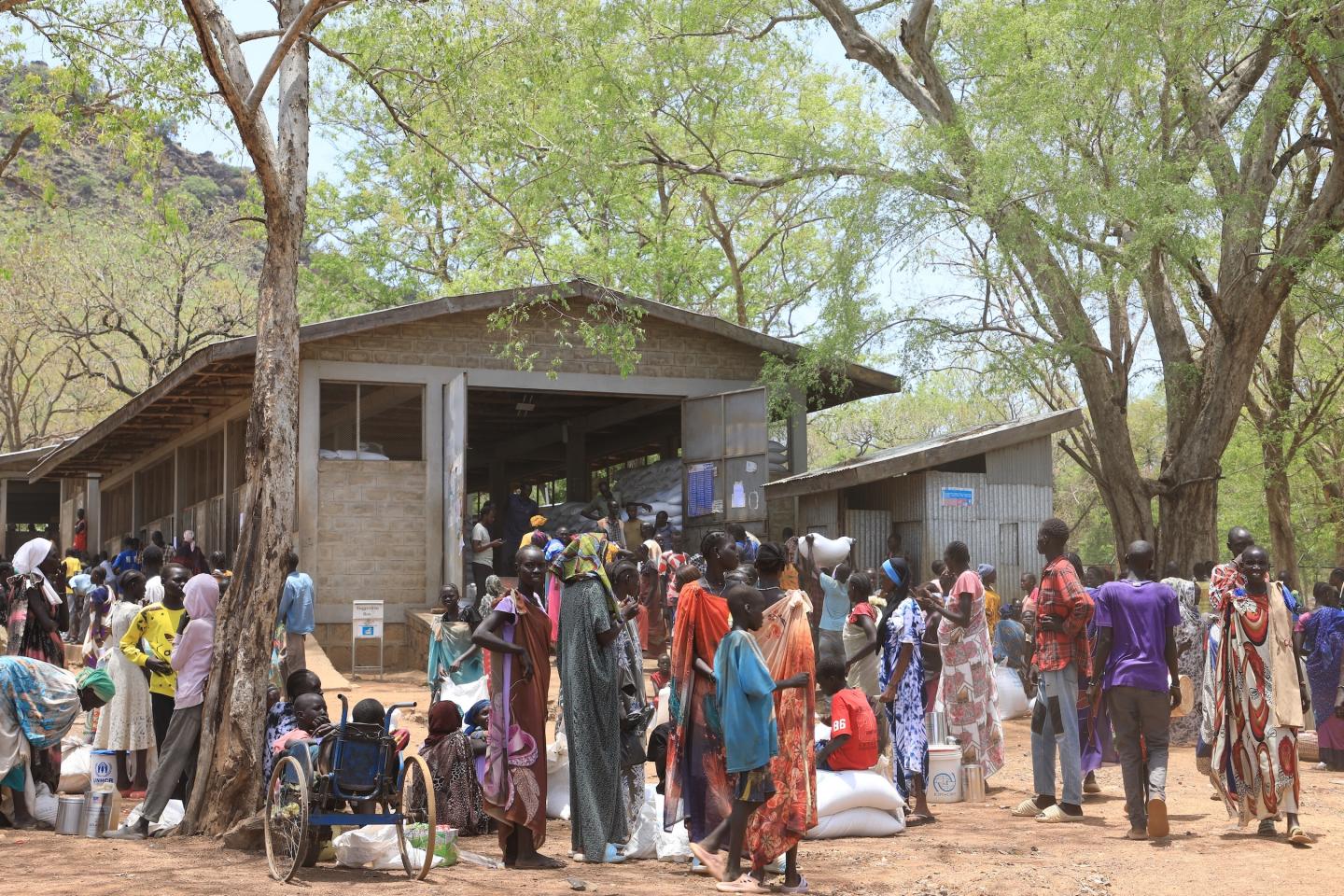
Relief came when food assistance programmes supported by the World Food Programme (WFP) and implemented through World Vision reached families in the camp. In addition to general food distributions, Chankos also benefited from the school feeding programme until Grade 8. Gradually, daily life began to change. Meals became more regular, and today the family often eats twice a day with food provided through assistance. The constant anxiety eased, replaced by a greater sense of stability.
The impact could be seen in the children almost immediately. With food available at home and meals provided at school, Chankos attended classes more consistently and no longer spent his days distracted by hunger. The stress inside the household also began to ease. Instead of waking each morning worried about how the family would survive the day, Nyanhial could focus more on caring for her children and supporting their education.
Reflecting on the changes she has seen, Nyanhial emphasises how food security has transformed her children’s lives. “The children go to school without thinking about whether there will be food at home,” she says. “That thinking has reduced. They attend school every day, and their health has improved.”
When asked what would happen if food assistance stopped, Nyanhial did not hesitate. “Life would be very difficult,” she says. “This food is what keeps us alive. We have no other means of livelihood. Many people would die. Food is our hope.”
Recalling those school meals, Chankos’ face brightens. “At that time, the school meal programme supported us very well,” he says. “There was no space for being hungry. It was very nice to follow school.”
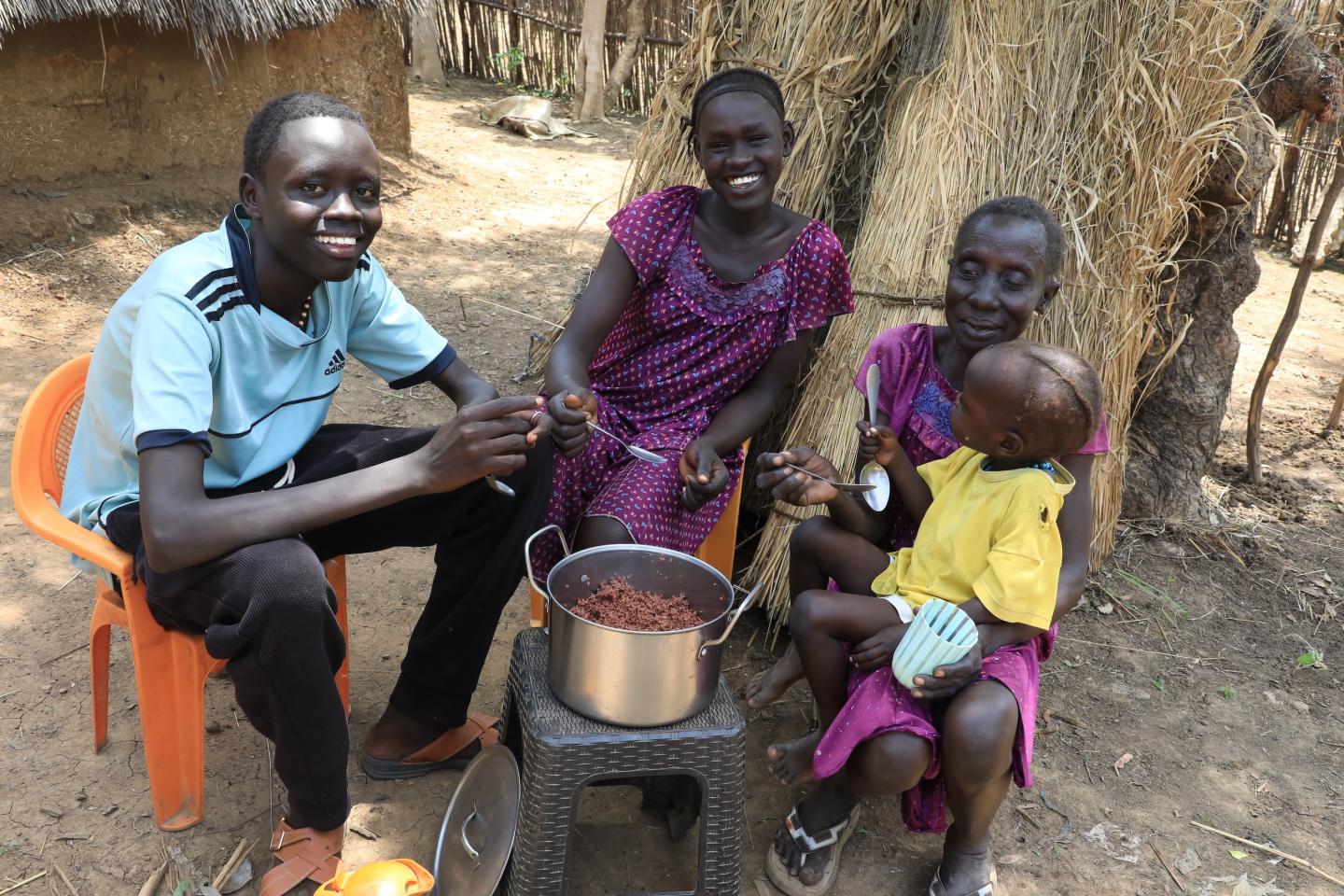
With meals provided at school, Chankos attended class consistently. His energy returned, his focus improved, and learning felt possible again. “Our attendance increased, and our health became better,” he says. “Before, we were very stressed, thinking we might not find food tomorrow. When the food came, we felt happy.”
Teshome Girma, World Vision’s Food Assistance Coordinator, says more than 70,000 refugees in Tierkidi camp receive food support through WFP-funded assistance delivered by World Vision. Across Gambella, the programme reaches 380,539 people with essential food supplies for vulnerable refugee households, helping improve food security, reduce extreme vulnerability, and ease concerns about the future.
For Chankos, food assistance has done more than sustain his body. Because someone helped his family survive, he now dreams of helping others through difficult times. Now in Grade 10, healthy and attending school regularly, he is already thinking about how he wants to give back. “When I grow up, I wish to help others,” he says. “Because I like supporting people.”
In Tierkidi refugee camp, food assistance is doing more than filling plates. It is helping children like Chankos stay in school, restoring dignity to families like Nyanhial’s, and turning survival into the possibility of a better future.
Today, when Chankos walks into class, hunger no longer decides whether he can learn. For him, a daily meal has become something larger: the chance to keep dreaming.
By Samuel Zerihun, Storytelling Specialist, World Vision Ethiopia